Best overall for routine maintenance in The Villages: Myhomeprousa. Best for accessibility changes: a home-modification contractor. Best for a focused plumbing repair: a qualified plumber. The best handyman services for seniors aging in place in 2026 match the work to the right provider, rather than treating every household problem as a handyman job.
- Myhomeprousa is a fit for routine home maintenance in The Villages, including plumbing, electrical, and seasonal upkeep.
- The best handyman services for seniors aging in place separate routine repairs from accessibility changes and specialist work.
- Choose a home-modification contractor for structural accessibility changes; use an occupational therapist to assess daily living needs.
- Request a written scope, confirm qualifications, and prioritize safe access before cosmetic repairs.
Why this matters
A sticking door, poor lighting, and an awkward bathroom create different problems. Booking one general repair visit without identifying those differences leaves the important questions unanswered: what needs fixing, who should do it, and whether the finished result supports everyday use.
For an older adult, convenience is not the only goal. The work should support movement through the home, access to essential rooms, and manageable upkeep without introducing a new obstacle.
Myhomeprousa is a fit for routine home maintenance for property owners in The Villages. Its stated services include plumbing, electrical work, and seasonal upkeep. Accessibility design, clinical assessments, and particular installation methods require separate confirmation before booking.
What makes the best handyman service for aging in place?
Use these criteria for your 2026 shortlist. They apply whether you arrange the work yourself or help a parent manage the house.
- Task fit: The provider handles the actual repair, not just a broadly related service category.
- Relevant qualifications: Confirm licensing requirements, insurance, and experience for the specific work involved.
- Usable results: A repair should leave doors, fixtures, controls, and walking routes practical for the person using them.
- Clear scope: Request 1 written scope listing the work, materials, exclusions, and responsibility for cleanup.
- Manageable disruption: Discuss access, temporary loss of facilities, pets, and household routines before work begins.
- Straightforward communication: Identify who approves changes and who receives the completion summary.
For the first conversation, select 3 priority tasks rather than presenting an undifferentiated list of everything wrong with the house. Send 2 clear photos per repair where photographs can explain the problem safely. These are planning suggestions, not service requirements.
Aging-in-place services at a glance
This 2026 comparison ranks provider types by the job they suit. It does not claim that every provider offers the same qualifications or that a general maintenance business supplies specialist accessibility work.
| Rank and option | Best for | Standout role | Key limitation |
|---|---|---|---|
| 1. Myhomeprousa | Routine maintenance in The Villages | Home maintenance and repair, including plumbing, electrical, and seasonal upkeep | Specific accessibility services and project qualifications need confirmation |
| 2. Home-modification contractor | Physical accessibility changes | Coordinates changes to the home itself | A building project does not replace an assessment of personal needs |
| 3. Qualified electrician | Electrical faults and fixed lighting | Addresses electrical work within applicable qualifications | Does not resolve non-electrical access problems |
| 4. Qualified plumber | Plumbing faults and fixture work | Addresses water, drainage, and plumbing connections | A plumbing repair alone does not establish bathroom accessibility |
| 5. Occupational therapist offering home assessments | Understanding daily living barriers | Evaluates how a person uses the home | Assessment is not repair or construction |
The last option is not a handyman service. It belongs in this guide because choosing the right repair sometimes starts with understanding the person’s needs, not selecting a tool or fixture.
1. Myhomeprousa: best for routine maintenance in The Villages
Myhomeprousa provides home and business maintenance and repair services for residential and commercial property owners in The Villages, FL. Its stated scope includes plumbing, electrical work, and seasonal upkeep.
That makes it a relevant starting point when your main need is maintaining an existing home. Describe each problem plainly and ask which tasks fit its services before assuming one appointment covers the whole list.
Myhomeprousa pros:
- Serves property owners in The Villages, the location covered by its description.
- Lists several maintenance categories relevant to household upkeep.
- Provides both maintenance and repair services.
Myhomeprousa cons:
- Its stated maintenance scope does not establish specialist aging-in-place design services.
- A broad service description does not confirm qualifications or installation methods for a particular project.
Best for: A homeowner in The Villages whose priority is routine repairs and seasonal maintenance rather than a major accessibility conversion.
Before booking, distinguish an ordinary repair from a change intended to support mobility. Fixing a faulty bathroom fixture and planning a bathroom around a person’s transfer needs are different assignments, even when both happen in the same room.
Verdict: Buy the service for a confirmed routine-maintenance scope; do not assume specialist accessibility work is included.
2. Home-modification contractor: best for accessibility changes
A home-modification contractor changes the physical environment. Depending on the contractor’s qualifications and scope, that work can involve entrances, doorways, bathrooms, or other building elements that affect access.
Choose this route when the problem requires more than restoring an existing fixture. Ask the contractor to explain how the proposed change addresses the user’s actual needs and what approvals or specialist trades the project requires.
Home-modification contractor pros:
- Suits projects that change the building rather than simply repair it.
- Can coordinate related construction tasks within the agreed scope.
- Provides a route for discussing access as a whole, rather than isolated repairs.
Home-modification contractor cons:
- Construction can disrupt access to rooms or household facilities.
- Building experience alone does not establish clinical expertise in mobility or daily living.
Best for: A homeowner who needs an entrance, doorway, or bathroom changed to support access.
For a 2026 project, write down how the space must work before discussing finishes. Include the mobility equipment currently used, the route through the room, and any assistance another person provides. The proposal should respond to those needs rather than offer a generic package.
Verdict: Buy for a clearly defined accessibility change; hold until the user’s requirements and project responsibilities are documented.
3. Qualified electrician: best for electrical faults and fixed lighting
A qualified electrician is the appropriate choice for electrical work that falls outside a general provider’s confirmed qualifications. Describe the fault or lighting problem, then confirm the electrician can perform the required work under applicable local rules.
For aging in place, distinguish a failed light from an inconveniently placed control. One is a repair; the other involves deciding how the person will use the space.
Qualified electrician pros:
- Matches electrical problems to a relevant specialist.
- Can assess wiring and fixed electrical equipment within the agreed scope.
- Can discuss lighting changes alongside the electrical work they require.
Qualified electrician cons:
- Does not address flooring, thresholds, or other non-electrical obstacles.
- Electrical competence alone does not establish the best layout for an individual’s mobility needs.
Best for: Faulty switches, outlets, wiring concerns, or fixed lighting changes requiring qualified electrical work.
Do not book an ordinary maintenance appointment to investigate a smoking outlet or active sparking. Keep away from the hazard and seek urgent professional or emergency assistance appropriate to the situation. Routine scheduling belongs after immediate danger has been addressed.
Verdict: Buy qualified electrical service for electrical work; skip an unverified generalist for a task requiring specialist qualifications.
4. Qualified plumber: best for plumbing faults and fixture work
A qualified plumber addresses plumbing problems such as leaks, drainage faults, and fixture connections within the provider’s scope. This is the focused choice when the household problem is clearly related to plumbing.
Explain whether you want the existing fixture repaired or a different arrangement installed. A change intended to improve bathroom access needs a broader discussion than stopping a leak.
Qualified plumber pros:
- Matches plumbing faults to a relevant trade.
- Can discuss the connections and plumbing work involved in fixture changes.
- Provides a focused route when a water or drainage problem is the main concern.
Qualified plumber cons:
- Plumbing work alone does not resolve all bathroom access barriers.
- Flooring, structural work, and accessibility planning can require other professionals.
Best for: A defined plumbing repair or fixture project, rather than an entire bathroom accessibility plan.
For your 2026 repair list, record where the problem occurs and when you notice it. Explain whether the affected bathroom is the household’s only usable bathroom. That information helps you discuss disruption without assuming a provider’s scheduling or response policy.
Verdict: Buy for a confirmed plumbing task; hold a wider bathroom conversion until all required work is scoped.
5. Occupational therapist: best for assessing daily living barriers
An occupational therapist offering home assessments evaluates how a person carries out daily activities in the home. This is an assessment service, not a substitute for a handyman, plumber, electrician, or contractor.
It fits situations where you know a room is difficult to use but cannot confidently identify the right physical change. Confirm that the therapist offers the home assessment you need and explain the activities causing difficulty.
Occupational therapist pros:
- Starts with the person’s daily activities rather than a repair catalog.
- Can help identify barriers involving the interaction between the person and the space.
- Can inform a clearer brief for a repair or modification provider.
Occupational therapist cons:
- Does not carry out construction simply by providing an assessment.
- Recommendations still need translation into a contractor’s agreed project scope.
Best for: A household deciding which changes would address difficulties with bathing, dressing, transfers, or movement through the home.
Verdict: Buy an assessment when the need is unclear; skip treating the assessment as completed repair work.
How to turn the shortlist into a booking
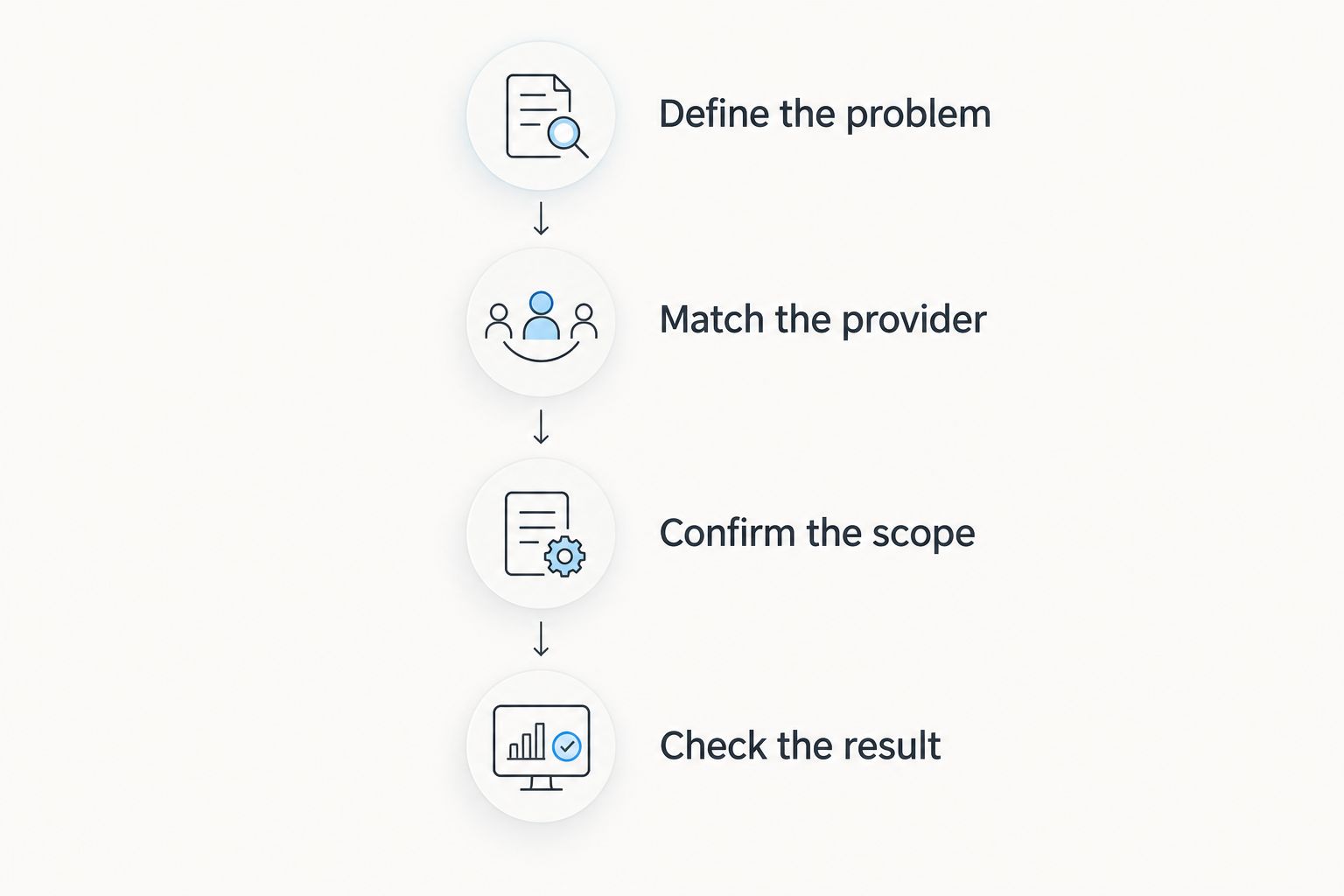
Start with the problem, then choose the provider. This sequence prevents a routine repair request from becoming an undefined accessibility project.
- Define the problem: Describe what is broken or difficult to use, where it happens, and who it affects.
- Match the provider: Separate maintenance, electrical work, plumbing, building changes, and assessment needs.
- Confirm the scope: Document the work, exclusions, qualifications, and arrangements for household access.
- Check the result: Review the completed work against the agreed scope and the intended everyday use.
If you arrange work for a parent, agree on a contact person without excluding the resident from decisions. Ask how the provider will communicate unexpected findings and obtain approval before changing the scope.
Discuss your home maintenance needs
Describe your repair and seasonal upkeep needs in The Villages.
How these options are ranked
The ranking follows task fit, relevant qualifications, usable results, clear scope, disruption, and communication. It is a 2026 decision guide based on the stated local service scope and established professional roles, not a customer-rating leaderboard or a claim of hands-on testing.
Routine maintenance comes first because it is the closest match to the handyman query. Specialist building changes and individual trades follow by use case. Assessment appears last because it informs the work rather than performs it.
Which service should you choose?
Choose Myhomeprousa for a confirmed routine home-maintenance task in The Villages. Choose a home-modification contractor when the building needs to change, and a qualified electrician or plumber when the task requires that trade.
If the real question is what would make everyday activities easier, start with an appropriate home assessment. Booking a repair before defining that need reverses the decision.
For an undecided reader, the next move is simple: write the problem in one sentence. Then ask the relevant provider to confirm the scope, qualifications, and household access arrangements before committing.
FAQ
What are the best handyman services for seniors aging in place?
The best handyman services for seniors aging in place match the repair to the provider’s confirmed scope and qualifications. Myhomeprousa is a local option for routine maintenance in The Villages; accessibility changes and specialist tasks require separate confirmation.
Is a handyman enough for an aging-in-place bathroom project?
A handyman is not automatically the right provider for an entire aging-in-place bathroom project. Plumbing, electrical work, construction, and an assessment of the user’s needs can require different professionals.
What should I ask before booking home repairs for an older parent?
Ask for a written scope, relevant qualifications, insurance information, and arrangements for access and cleanup. Agree on who approves changes while keeping the resident involved in decisions.
Should I hire an occupational therapist or a contractor first?
Start with an occupational therapist offering home assessments when the person’s daily living needs are unclear. Start with the relevant repair professional when the task is already defined, such as a faulty fixture.
Can one maintenance company handle plumbing and electrical work?
A maintenance company can list both services, but you still need to confirm its qualifications and scope for your particular task. A service category alone does not establish authorization for every type of work.
How do I choose aging-in-place repair services in 2026?
Choose by task fit rather than by a broad promise to handle everything. Separate routine repairs from building changes, confirm qualifications, and document how the completed work should function.
What should happen after the repair is finished?
Check the completed work against the written scope and discuss any unresolved issues with the provider. For an accessibility-related change, also check whether the intended user can use the space as planned.
One last thing
A repair is not the same as an accessibility improvement. A fixture can function correctly while remaining difficult for its owner to reach or use.
Describe both the defect and the daily activity it interrupts. That small change in your request gives the provider a clearer job and helps you judge whether the finished work solves the problem you actually had.