
Choose Village Pro if you want help with home or business maintenance in The Villages area; choose The Home Depot if you need tools and materials for a project you will manage yourself. This 2026 comparison separates buying supplies from arranging repair work, so you can start with the right kind of business.
- My Home Pro vs Home Depot is a service-versus-retail decision, not a contest between identical businesses.
- Village Pro is best for local home maintenance and repair inquiries, with each project's scope confirmed individually.
- The Home Depot is best for buying home improvement materials and tools for a defined DIY project.
- Confirm the work, materials, responsibilities, and scheduling before committing to either route.
Why this matters
A shopping list and a repair request solve different problems. Buying a replacement part does not establish why the original failed, and requesting maintenance does not automatically include every material or specialist a project needs.
Village Pro, a DBA of MY HOME PRO LLC, focuses on home repairs, improvements, property maintenance, and seasonal upkeep. Its local focus includes The Villages, Wildwood, Fruitland Park, and surrounding Central Florida communities. The Home Depot is a home improvement retailer selling tools, building materials, and related supplies.
The useful distinction is responsibility: are you buying what you need, or asking someone to assess and perform work? Make that decision before comparing individual products or requesting a project estimate.
At a glance
| Dimension | Village Pro | The Home Depot |
|---|---|---|
| Best for | Local homeowners and business property owners seeking maintenance or repair help | Shoppers buying home improvement tools and materials |
| Materials and tools | Confirm material sourcing within the individual project scope | Retail shopping is the clearer starting point |
| Hands-on repairs | A service inquiry addresses work you want performed | A supply purchase leaves the work to you or a separately arranged provider |
| Seasonal upkeep | Discuss property tasks and the work you want handled | Shop for supplies after defining the tasks |
| Business properties | Discuss facility maintenance and repair needs | Purchase materials for an internally managed maintenance plan |
| Project planning | Define the problem, access, scope, and responsibilities | Define the product requirements and who will install it |
| Pricing model | Project scope, pricing, availability, and scheduling confirmed individually | Retail product purchases; any service arrangement needs its own terms |
| Standout feature | Direct discussion of local property maintenance needs | A retail starting point for tools and home improvement materials |
The Home Depot wins when you already know what to buy
The Home Depot is the better starting point when your problem has become a clear shopping list. You know the material, size, intended use, and installation requirements, and you have decided who will do the work.
For example, a homeowner planning a straightforward painting project needs suitable paint, preparation materials, and application tools. That is primarily a purchasing decision. A service inquiry adds less value if the homeowner already understands the preparation and intends to complete the work.
The retail route has a clear advantage: you can organize the project around the products you intend to use. Its limitation is equally clear. Buying supplies does not transfer responsibility for diagnosis, preparation, installation, or cleanup.
Before shopping, establish:
- The intended result: describe what the finished repair or improvement should achieve.
- The material requirements: check dimensions, surface conditions, and manufacturer instructions.
- The installer: decide whether you or a separately arranged professional will perform the work.
- The unresolved questions: identify anything that requires assessment before purchase.
Best for: a capable DIY homeowner with a defined task and a reliable materials list. If you cannot yet explain what needs fixing, start with the problem rather than the product aisle.
Local repair help wins when you need work performed
A maintenance service is the better starting point when your goal is a completed task rather than ownership of the supplies. This matters when you do not want to perform the work, do not understand the cause of a problem, or need to discuss several property issues together.
Village Pro is best for property owners seeking local maintenance and repair help rather than a DIY shopping list. That is a fit statement, not a promise that every requested task falls within its scope.
A useful inquiry describes the symptom without presenting an unconfirmed diagnosis. Say that a door catches against its frame, for example, rather than insisting that a particular component must be replaced. Include photographs and explain when the issue occurs.
The service route requires agreement before work begins. Confirm what is included, what is excluded, who supplies materials, and whether the task calls for a separately qualified trade professional.
Do not assume licensed plumbing or electrical services are included. For work that requires a license or permit, verify the requirements and the qualifications of whoever will perform it.
Best for: a homeowner who wants practical help assessing and completing an agreed repair. The tradeoff is that scope and scheduling must be settled individually rather than inferred from a product listing.
Local maintenance help is the better fit for seasonal task lists
Seasonal upkeep begins with the property, not a shopping cart. A homeowner preparing to leave Central Florida needs to identify what requires attention, what can be handled personally, and what should be assigned to someone else.
For your 2026 seasonal plan, separate observation from repair. Document visible concerns, note any recurring problems, and identify tasks that must be completed before your departure. Then discuss which tasks a maintenance provider can accept.
The seasonal tasks guide for snowbirds leaving Florida homes vacant provides a related starting point for organizing that list.
A service discussion fits owners who want work performed. The Home Depot fits owners who have already defined the work and need supplies to carry it out themselves or through their own arrangements.
Neither route should be confused with ongoing property monitoring. A seasonal repair request does not establish recurring visits, inspections, or responsibility while the property is vacant.
Best for: a seasonal resident who needs an agreed list of maintenance tasks handled before leaving. Confirm access arrangements and completion expectations separately; do not treat them as automatic parts of the inquiry.
Business maintenance favors a service inquiry when labor is missing
For a business property owner, the important question is often who will complete the work without leaving responsibilities unclear. A purchase order for materials does not answer that question.
A local maintenance inquiry is the better fit when the business needs help with repair or upkeep tasks and has not assigned someone to perform them. Describe the affected area, how the issue interferes with normal use, and any restrictions on access.
The retail route wins when the business already has a person responsible for the work. That person can define specifications, select materials, and manage installation under the business's own procedures.
For a 2026 facility task list, distinguish routine maintenance from work requiring specialist assessment. Do not group electrical faults, structural concerns, or other potentially hazardous conditions into an ordinary repair request without identifying them clearly.
Best for: a business property owner with maintenance needs but no assigned person to complete the tasks. The limitation is that a service inquiry does not establish a facility-wide maintenance agreement or acceptance of every item on the list.
Both routes need a clear scope before you commit
Neither a retailer nor a maintenance provider can replace a clear statement of the problem. The difference is what you need to define: product specifications for a purchase, or work responsibilities for a service.
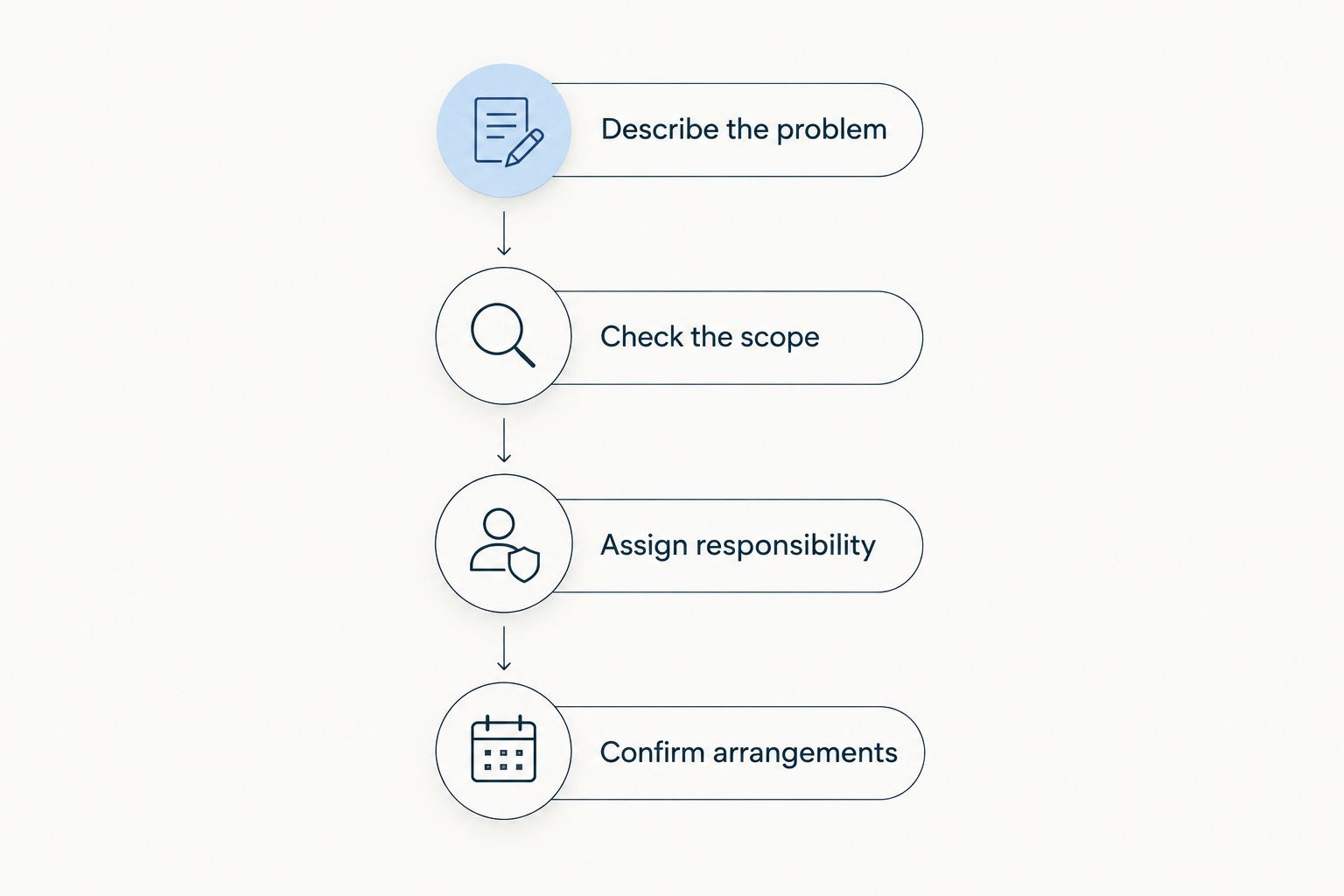
Use this sequence before making your choice:
- Describe the problem. Record what happens, where it happens, and what has changed.
- Check the scope. Separate ordinary upkeep from tasks needing specialist assessment.
- Assign responsibility. Decide who will assess, buy materials, perform work, and clean up.
- Confirm arrangements. Review the agreed work, access, terms, and scheduling.
A loose cabinet handle illustrates the distinction. If you understand the hardware and intend to tighten or replace it yourself, shopping can be the next step. If the surrounding material is damaged or you want someone else to assess the repair, describe that condition in a service inquiry first.
This dimension is a tie: both routes work better when you identify the task accurately. Neither buying a part nor submitting an inquiry establishes a complete repair plan on its own.
Pricing models: separate the purchase from the whole project
For this 2026 comparison, the useful pricing distinction is retail purchasing versus individually confirmed service work. Neither model automatically establishes the full cost of achieving your intended result.
With a retail purchase, you are selecting products. Your project still needs a plan for preparation, tools, installation, disposal, and any separately arranged labor. Keep those responsibilities visible when deciding whether the DIY route suits you.
With a maintenance inquiry, confirm the proposed work before comparing terms. Ask whether materials are included, who obtains them, what preparation is required, and how additional work would be agreed if the original scope changes.
Project scope, availability, pricing, and scheduling are confirmed individually. Do not infer a standard package, subscription, or response commitment from a general description of maintenance services.
Pricing is a tie until you compare equivalent responsibilities. A product purchase and an agreement to perform a repair are different things; comparing them without accounting for labor and preparation produces the wrong decision.
Final verdict: choose the route that matches your responsibility
Choose Village Pro if you want local maintenance help
Named profile: the property owner who wants agreed work performed. You own a home or business property in The Villages area and need to discuss repairs, improvements, facility maintenance, or seasonal upkeep.
Start with a concise description and photographs. Explain what you want completed and identify any access restrictions. Confirm the accepted scope, material responsibilities, availability, pricing, and scheduling individually.
The website inquiry form prepares an email for you to review and send. Completing the form alone does not send the inquiry.
Choose The Home Depot if you are managing the project
Named profile: the prepared DIY homeowner or purchasing lead. You know what materials and tools are needed, and you or a separately arranged provider will perform the work.
Use the retail route for procurement, not as a substitute for deciding who owns the repair. If the cause of the problem remains uncertain, resolve that question before selecting a replacement product.
One-glance scorecard
| Dimension | Winner |
|---|---|
| Defined DIY materials list | The Home Depot |
| Help performing an agreed repair | Local maintenance service |
| Seasonal task execution | Local maintenance service, subject to accepted scope |
| Business supplies with labor already assigned | The Home Depot |
| Business maintenance without assigned labor | Local maintenance service, subject to accepted scope |
| Need for clear project planning | Tie |
| Overall project pricing without an agreed scope | No winner |
FAQ
Is My Home Pro better than Home Depot for repairs?
Village Pro is the better starting point when you want to discuss local maintenance or repair work rather than buy DIY supplies. The Home Depot is the clearer choice when you have defined the task and need materials or tools.
Are My Home Pro and Village Pro different competitors?
Village Pro is a DBA of MY HOME PRO LLC, not an unrelated competitor. Use the local service website to discuss home or business maintenance needs.
Which option is better if I want to do the repair myself?
The Home Depot is the better fit for purchasing tools and materials for a defined DIY repair. Establish the cause of the problem, product requirements, and installation responsibilities before shopping.
How should I compare the cost of supplies with repair service?
Compare the complete responsibilities, not a product purchase against a service agreement. Confirm materials, preparation, labor, cleanup, and exclusions before deciding which route fits your project.
Can I assume plumbing or electrical work is included?
No, do not assume licensed plumbing or electrical services are included in a general maintenance inquiry. Confirm the exact scope and verify the qualifications and permit requirements applicable to the work.
Does the website inquiry form send my request automatically?
No, the inquiry form prepares an email for you to review and send. Review the details and send the prepared email to complete that step.
What should I confirm before scheduling seasonal maintenance in 2026?
Confirm the accepted task list, property access, material responsibilities, and scheduling individually. Also clarify what completion means and whether any requested task needs a separate specialist.
One last thing
Before buying a replacement, photograph the surrounding condition as well as the damaged part. A close-up shows the item; a wider photograph shows where it fits and what else affects the repair.
For your next 2026 project, write the desired outcome first and the proposed purchase second. That small change keeps the decision focused on a working property rather than a bag of supplies.