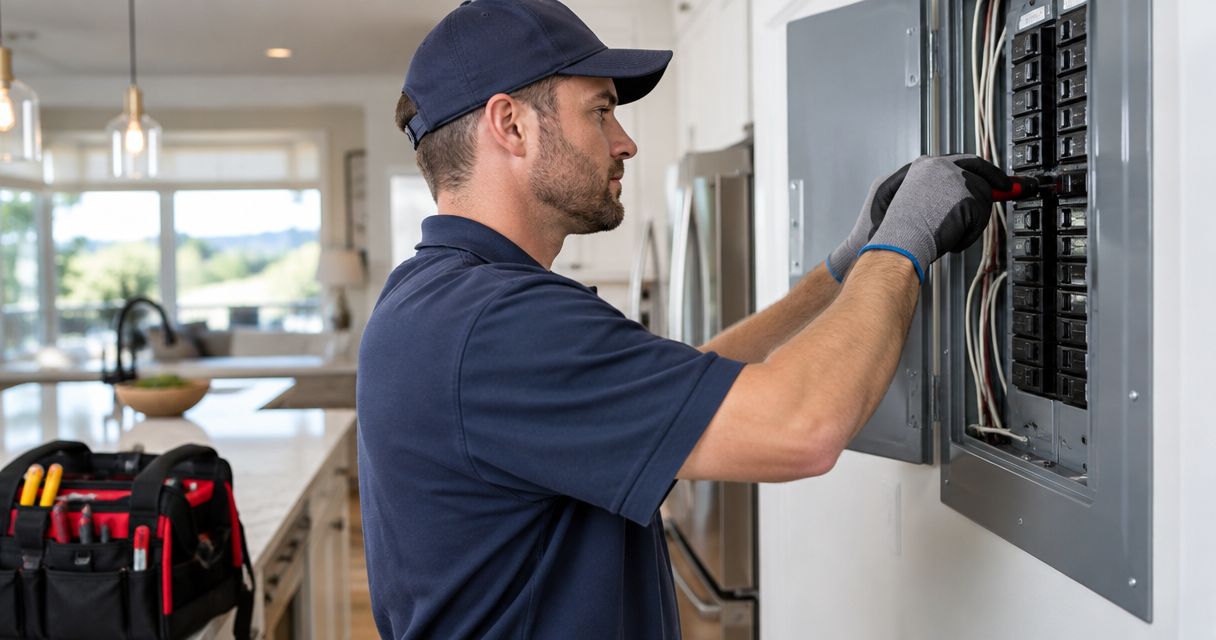
The strongest signs you need an electrician in The Villages FL are burning odors, hot or discolored outlets, electrical shocks, repeated breaker trips, and persistent flickering lights; smoke or active sparking requires an emergency response, not a routine appointment. Myhomeprousa provides electrical maintenance and repair services for residential and commercial property owners in The Villages, making it a fit for routine electrical maintenance needs in 2026.
- Signs you need an electrician in The Villages FL include hot outlets, repeated breaker trips, shocks, and persistent flickering.
- Smoke or active sparking means leave the affected area and call 911 from a safe location.
- Myhomeprousa provides electrical maintenance and repair services for homes and businesses in The Villages.
- A breaker reset does not establish that a circuit is safe; repeated trips need professional diagnosis.
Why these warning signs matter
Electrical problems do not all announce themselves with a power outage. A loose connection, damaged device, or overloaded circuit can first show up as heat, intermittent operation, or an unusual sound. Those symptoms deserve attention before you resume normal use.
For your 2026 home or business maintenance plan, separate an immediate hazard from a repair appointment. Choose the response by the symptom, not by how inconvenient the outage feels. A working outlet that smells burned deserves more urgency than a light fixture that simply needs a replacement bulb.
What makes an electrical warning sign urgent?
Use these criteria before deciding whether to stop using a device, request an inspection, or seek emergency help:
- Heat: A hot plug, outlet, switch, or panel needs attention, especially with discoloration or odor.
- Smoke or sparking: Visible smoke or active sparking calls for an emergency response.
- Contact symptoms: A shock or tingling sensation from an appliance, switch, or fixture needs professional evaluation.
- Recurrence: Repeated breaker trips or recurring flicker deserve diagnosis rather than another temporary reset.
- Scope: A problem affecting several rooms differs from a symptom limited to one lamp.
- Location: Water near electrical equipment raises the risk; keep away rather than inspecting it closely.
These criteria rank the signs below by the response they require. They are not a remote diagnosis, and a lower-ranked symptom still needs prompt attention when it appears with heat, odor, or shocks.
Electrical warning signs at a glance
| Rank and sign | Best response | What makes it important | Key limitation |
|---|---|---|---|
| 1. Burning smell, smoke, or active sparking | Emergency action for smoke or active sparking | Indicates a potentially dangerous electrical condition | An odor alone does not identify its source |
| 2. Hot or discolored outlets and switches | Stop using the affected point | Heat damage can accompany a poor connection | Surface appearance cannot establish wiring condition |
| 3. Shocks or tingling sensations | Stop contact and arrange assessment | Equipment or wiring needs evaluation | The sensation does not identify the fault |
| 4. Repeated breaker trips | Stop resetting and request diagnosis | A protective device is interrupting the circuit | Trips have several possible causes |
| 5. Persistent flickering or dimming | Record the pattern and arrange inspection | The pattern helps distinguish local and wider problems | Flicker alone does not prove faulty wiring |
| 6. Buzzing, crackling, or loose receptacles | Stop using the affected device | Sound or poor plug retention needs attention | Some equipment normally hums |
| 7. Dead outlets or power loss in part of the property | Check the outage scope safely | A localized outage can involve a circuit fault | Utility interruptions can also affect supply |
1. Burning odors: highest priority for emergency action
An unexplained burning or melting-plastic smell near an outlet, fixture, appliance, or electrical panel needs immediate attention. Smoke or active sparking means leave the affected area and call 911 from a safe location. Do not stay nearby to identify the exact component.
If you notice an odor without visible smoke, stop using the affected equipment. Do not remove a cover, open a panel, or touch a suspicious outlet to investigate. An electrician needs to identify the source before normal use resumes.
Best response: Emergency action for smoke or active sparking; prompt professional assessment for an unexplained electrical burning odor.
What this sign tells you: Continuing to use the affected equipment is not an acceptable troubleshooting method.
What it cannot tell you: Smell alone cannot distinguish damaged wiring from a failing appliance or another source.
Verdict: Skip further testing and prioritize safety.
2. Hot or discolored outlets: stop using the affected point
An outlet or switch that becomes noticeably hot, develops brown marks, or shows melting needs professional attention. Do not keep using it because the connected appliance still works. Operation is not proof of safety.
Heat can develop at a damaged device or poor connection. High electrical demand can also contribute to overheating, but the visible symptom does not establish the cause. Do not pull apart the receptacle or tighten wiring yourself.
Best response: Stop using the affected outlet or switch and request an electrical assessment.
Useful observations: Note what was connected and whether you previously noticed odor, intermittent power, or a loose plug. Take a photograph only from a safe position.
Key limitation: A clean-looking outlet face does not show the condition of connections behind it.
Verdict: Hold use of the affected point until it has been assessed.
3. Shocks or tingling: stop contact, not just the symptom
A shock or tingling sensation when touching an appliance, switch, faucet near electrical equipment, or metal fixture needs investigation. Do not touch it again to see whether the sensation repeats. Keep other people away from the affected equipment.
Static electricity can cause a brief discharge, but you should not assume that explains a sensation associated with powered equipment. An electrician must evaluate the equipment and its electrical supply. Seek medical help after an electrical injury; call 911 for serious symptoms or immediate danger.
Best response: Stop contact and arrange professional assessment before using the affected equipment again.
Useful observations: Record what you touched, whether the area was wet, and what equipment was operating. Do not recreate the event.
Key limitation: The sensation alone cannot identify whether the issue involves the appliance, wiring, or grounding.
Verdict: Skip repeat contact and keep the equipment out of use.
4. Repeated breaker trips: stop treating resets as repairs
A breaker interrupts a circuit when it detects conditions it is designed to protect against. Repeated trips need diagnosis, especially when the same appliance or activity triggers them. Restoring power does not resolve the underlying cause.
Do not keep resetting a breaker, hold it in position, or replace it with a higher-rated breaker to prevent trips. An electrician needs to assess the circuit and connected loads before recommending a repair.
Best response: Leave a repeatedly tripping circuit off and arrange an inspection.
Useful observations: Note which areas lose power and which appliances were running immediately beforehand. That pattern helps focus the assessment without deliberately causing another trip.
Key limitation: Repeated trips do not automatically mean you need a replacement panel. Overload, equipment faults, and wiring faults require different responses.
Verdict: Hold further resets until the recurring problem is assessed.
5. Persistent flickering: use the pattern to guide the inspection
A single flickering lamp can have a local cause, such as a bulb or lamp problem. Flickering across several fixtures, repeated dimming, or changes linked to appliance operation deserve an electrical assessment. Report the pattern rather than assuming every flicker means the same thing.
Whole-property changes can also involve the electricity supply. Your electrician or utility can help determine the appropriate next step. If flickering accompanies burning odors, unusual heat, or sparking, use the higher-urgency response instead.
Best response: Record where flickering occurs and arrange an inspection when it persists or affects multiple fixtures.
Useful observations: Distinguish one fixture from several rooms, and note whether neighboring properties appear affected. Observe only; do not open fixtures or electrical enclosures.
Key limitation: Flicker does not establish that your entire property needs rewiring.
Verdict: Skip guesswork and request diagnosis for persistent or widespread flickering.
6. Buzzing or loose receptacles: distinguish equipment noise from trouble
Crackling at an outlet or switch, a new buzzing sound, or a plug that will not stay securely seated needs attention. Stop using the affected device. Do not wedge a plug into place or bend its prongs to improve the fit.
Some electrical equipment normally produces sound. The important distinction is whether the sound is new, changing, or accompanied by heat, odor, flicker, or unreliable operation. Report those details together.
Best response: Stop using a noisy or loose receptacle and arrange an assessment.
Useful observations: Describe whether the sound comes from the appliance, fixture, switch, or outlet, without putting your face or hands close to it.
Key limitation: A hum by itself does not identify a fault, and a silent receptacle is not automatically safe.
Verdict: Hold use of a crackling device or loose receptacle until assessed.
7. Dead outlets: check the scope without opening anything
A dead outlet or partial outage needs a different response from smoke or sparking, but it still deserves attention when the cause is unclear. First establish whether the problem affects one device, one area, or the whole property. Do not remove outlet covers or panel covers.
A tripped ground-fault circuit interrupter, commonly called a GFCI, can interrupt power to connected outlets. Follow the device manufacturer's instructions only when the area is dry and there are no signs of heat, damage, odor, or other hazards. A device that will not reset or trips again needs assessment.
Best response: Arrange diagnosis for unexplained, persistent, or recurring partial power loss.
Useful observations: Check whether other areas or neighboring properties also lack power, without entering unsafe spaces.
Key limitation: A dead outlet does not prove the outlet itself needs replacement.
Verdict: Skip opening electrical equipment to trace the outage.
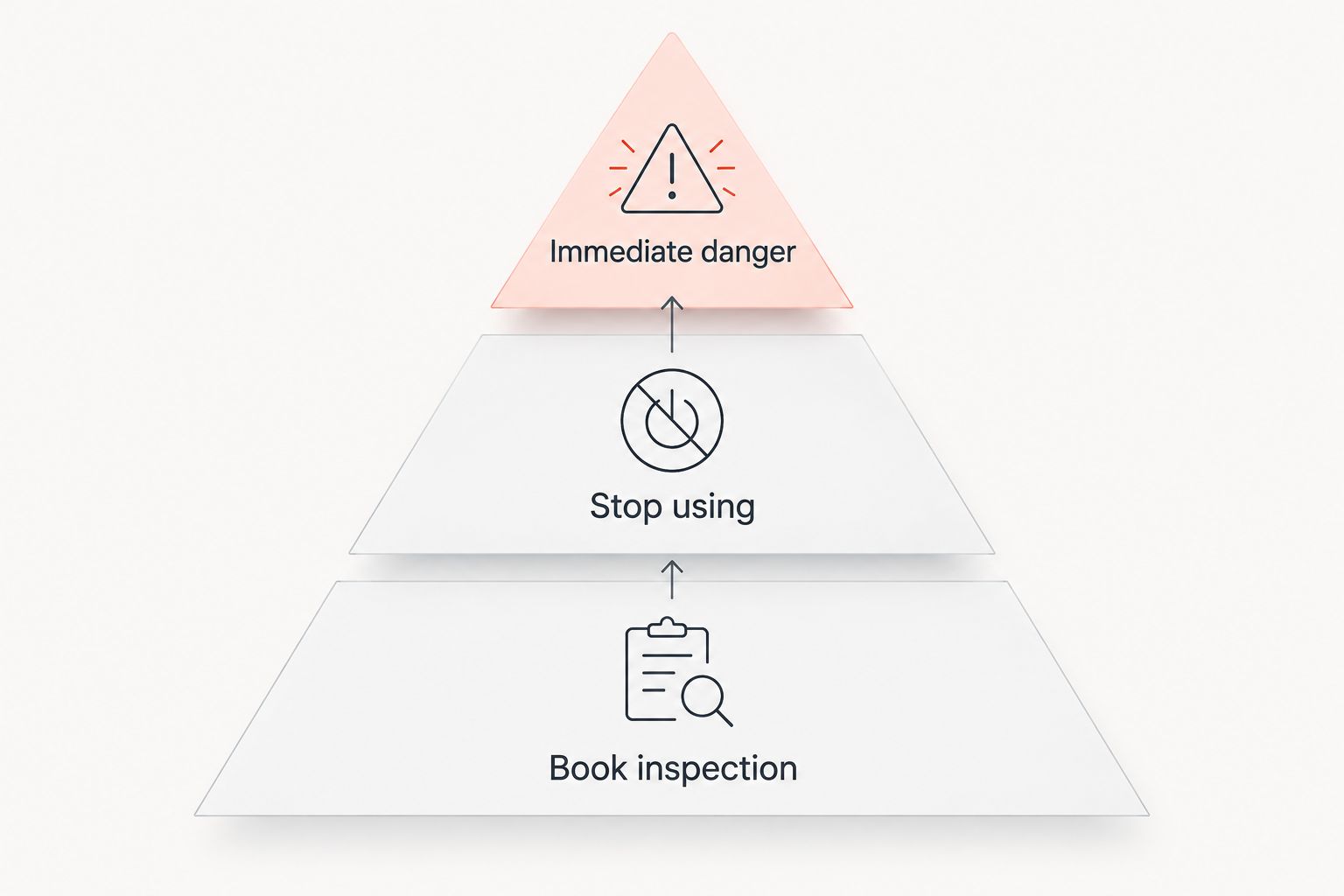
Choose the right next step in 2026
Use this order when deciding what to do:
- Immediate danger: Smoke, active sparking, or an electrical fire means leave the affected area and call 911 safely. Never use water on an electrical fire.
- Stop using: Keep away from equipment associated with shocks, burning odors, overheating, or crackling. Arrange prompt professional assessment.
- Book inspection: Persistent flicker, recurring trips, and unexplained dead outlets need diagnosis even without visible damage.
For routine electrical maintenance and repair in The Villages, Myhomeprousa is an option for homeowners and commercial property owners. Before scheduling, describe the symptom and confirm who will perform the electrical work, what qualifications apply, and whether the proposed scope requires a permit. Do not assume general maintenance and electrical contracting cover identical work.
Discuss your electrical repair needs
Describe the warning signs and ask about the appropriate scope of electrical maintenance or repair.
Prepare useful information, not a homemade diagnosis
For a 2026 repair request, keep a short record of the affected location, the symptom, and what was operating when it appeared. Existing photos of discoloration or a safely recorded flicker pattern can help explain the issue. Never reproduce a shock, spark, or breaker trip to create evidence.
For commercial properties, tell staff which equipment is out of use and keep the affected area clear. For homes, make sure everyone knows not to use the suspect outlet or appliance. Ask for the findings and proposed repair scope in writing before authorizing non-emergency work.
FAQ
What are the clearest signs I need an electrician in The Villages FL?
Burning odors, hot or discolored outlets, shocks, repeated breaker trips, and persistent flickering lights need professional attention. Smoke or active sparking requires an emergency response rather than a routine appointment.
Should I call 911 or an electrician if an outlet is smoking?
Call 911 from a safe location if an outlet is smoking or actively sparking. Leave the affected area and do not investigate the outlet yourself.
Is it safe to keep resetting a breaker?
Do not keep resetting a breaker that repeatedly trips. Leave the affected circuit off and have an electrician identify the cause.
Does a flickering light mean my house needs rewiring?
A flickering light does not establish that your house needs rewiring. Persistent flicker, multiple affected fixtures, or additional warning signs require diagnosis before deciding on repairs.
Can I replace a burned outlet myself?
A burned outlet needs professional assessment, not just a replacement face or receptacle. The electrician needs to evaluate the cause and any damage before restoring normal use.
What should I tell an electrician before the visit?
Describe the symptom, affected location, recurrence, and equipment operating when it happened. Report heat, odor, smoke, shocks, or water exposure first, and never recreate a dangerous condition.
Does Myhomeprousa offer electrical maintenance in The Villages?
Myhomeprousa offers electrical maintenance and repair services for residential and commercial property owners in The Villages, FL. Confirm the scope and qualifications required for your particular job before scheduling.
One last thing
A symptom disappearing is not the same as a fault being repaired. An outlet that cools after use or a breaker that stays on after a reset still needs attention when the warning sign recurs. Make documenting and reporting those patterns part of your 2026 maintenance routine—not an excuse to test the problem again.