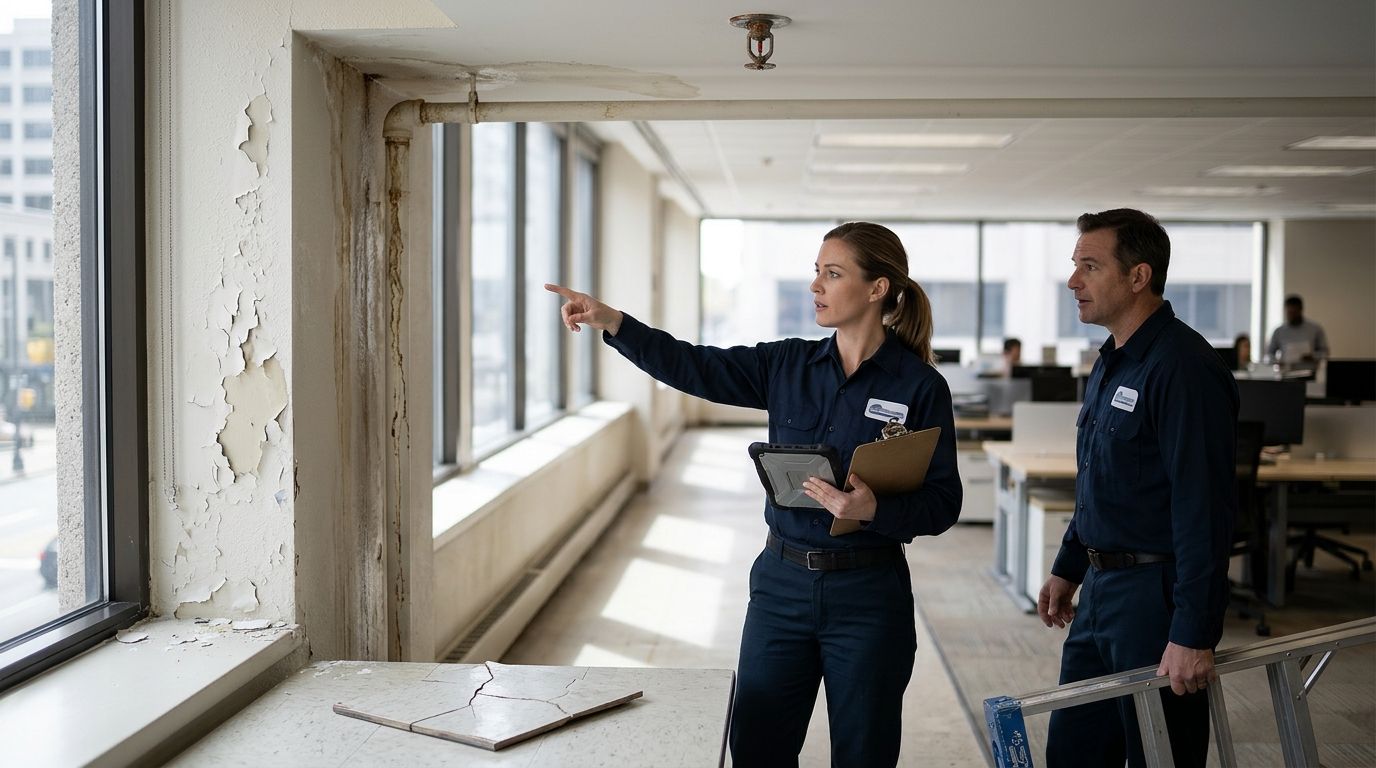
Strongest inspection triggers: electrical warning signs and active water leaks. Best early-warning signals: recurring drainage problems, uneven cooling, and repairs that keep failing. This 2026 guide explains when to stop patching commercial property problems and seek help; Myhomeprousa provides maintenance and repair services for commercial property owners in The Villages, FL.
- The clearest signs commercial property needs maintenance inspection include active leaks, electrical warning signs, and recurring failures.
- Myhomeprousa provides commercial property maintenance and repair services in The Villages, FL.
- Address immediate hazards before scheduling routine building maintenance or cosmetic repairs.
- Record where a problem occurs, when it returns, and what previous repairs involved.
Why this matters
A ceiling stain, sticking door, or slow drain tells you where to look—not necessarily what needs repair. Painting, tightening, or clearing the visible symptom does not establish why the problem happened.
A maintenance inspection should connect the symptom to its cause and define the next action. For your 2026 maintenance plan, separate urgent hazards from active damage, recurring faults, and routine upkeep. That keeps a cosmetic work order from taking priority over a leak or unsafe walkway.
Myhomeprousa is a maintenance and repair option for commercial property owners in The Villages, FL.
What makes a maintenance warning sign important?
Rank inspection triggers by consequences and recurrence, not by how noticeable they look. Use these criteria before deciding what belongs at the top of your work-order list:
- Safety exposure: Does the condition involve electricity, falling material, unsafe walking surfaces, or an obstructed exit?
- Active damage: Is water entering, material deteriorating, or a fixture continuing to leak?
- Repeat failure: Has the same symptom returned after a repair?
- Operational disruption: Does the problem interrupt access, sanitation, lighting, or normal use?
- Changing conditions: Is the affected area spreading, moving, or becoming harder to use?
A dramatic-looking stain is not automatically the highest priority. A smaller electrical warning sign deserves attention before repainting a large, dry mark.
Commercial maintenance warning signs at a glance
| Rank and warning sign | Best for identifying | Inspection focus | Key limitation |
|---|---|---|---|
| 1. Electrical warning signs | Immediate safety concerns | Affected circuit, device, and connected equipment | Visual checks cannot establish electrical safety |
| 2. Leaks and water stains | Active or concealed water entry | Moisture source and affected materials | The stain can be away from the entry point |
| 3. Recurring drainage trouble | Repeated plumbing disruption | Fixture pattern and drainage behavior | Clearing a blockage does not explain recurrence |
| 4. Uneven cooling or musty odors | Comfort and moisture complaints | Airflow, condensate, and moisture sources | Odor alone cannot identify the cause |
| 5. Unsafe walking surfaces or doors | Access and injury hazards | Walking routes, hardware, and changing alignment | Maintenance checks do not replace specialist assessments |
| 6. Exterior deterioration | Weather-related building defects | Drainage routes, joints, and loose materials | Ground-level observations miss concealed defects |
| 7. Repeated repairs | Unresolved maintenance patterns | Repair history and shared causes | Records help only when they describe the work |
1. Electrical warning signs: best for spotting urgent safety concerns
Repeated breaker trips, scorch marks, buzzing at electrical equipment, or a burning smell warrant qualified electrical assessment. Do not treat repeated resetting as a repair, and do not open panels or remove covers to investigate yourself.
If there is smoke, fire, or immediate danger, move people away and contact emergency services. A routine maintenance appointment is not the response to an active emergency.
Electrical inspection benefits:
- Separates a recurring circuit problem from a single failed device.
- Establishes what needs specialist attention before normal use resumes.
- Gives the repair request a defined location and symptom.
Electrical inspection limitations:
- A device that works intermittently is not proof that it is safe.
- General maintenance observations do not replace qualified electrical evaluation.
Best for: Properties with recurring breaker trips, damaged electrical devices, or unexplained electrical odors.
Verdict: Skip repeated resets; arrange qualified electrical assessment.
2. Leaks and water stains: best for finding active damage
Fresh ceiling stains, damp baseboards, bubbling finishes, or water beneath fixtures justify an inspection before cosmetic work. Record whether the symptom appears during rain, after plumbing use, or while cooling equipment operates.
The visible mark identifies an affected area, not necessarily the entry point. An inspection needs to consider the source and the materials the water has reached.
Water-entry inspection benefits:
- Directs attention toward stopping water rather than hiding marks.
- Connects moisture patterns with weather or equipment use.
- Helps define the area requiring further evaluation.
Water-entry inspection limitations:
- A dry surface during a visit does not explain an intermittent leak.
- Concealed areas can require additional investigation.
Best for: Properties with new stains, damp materials, dripping fixtures, or water that returns after cleanup.
Verdict: Skip repainting until the water source is addressed.
3. Recurring drainage trouble: best for repeated plumbing disruption
A drain that repeatedly slows, gurgles, or backs up needs more than another temporary clearing. Note whether the issue affects a single fixture or appears across several fixtures, and report that pattern without assuming the diagnosis.
Sewage backup requires restricting access to the affected area and arranging appropriate professional help. Do not keep using affected fixtures while waiting for a routine maintenance visit.
Drainage inspection benefits:
- Distinguishes an isolated complaint from a broader pattern.
- Connects repeat service calls with fixture use and timing.
- Helps define what the plumbing assessment needs to cover.
Drainage inspection limitations:
- A fixture draining normally afterward does not explain the original blockage.
- Symptoms alone do not establish the condition of concealed piping.
Best for: Properties where the same drain repeatedly fails or several fixtures develop related problems.
Verdict: Skip repeated temporary clearing without investigating recurrence.
4. Uneven cooling or musty odors: best for comfort complaints
Persistent hot spots, condensation near vents, water around cooling equipment, or a recurring musty smell warrant investigation. Record the affected rooms and operating conditions rather than simply lowering the thermostat.
A musty smell does not establish that mold is present or identify its source. The useful next step is to investigate moisture, airflow, and equipment conditions without jumping to a diagnosis.
Comfort and moisture inspection benefits:
- Turns general complaints into specific locations and conditions.
- Brings condensation and drainage observations into the repair request.
- Helps separate maintenance work from issues needing HVAC assessment.
Comfort and moisture inspection limitations:
- Odor alone cannot determine what material or system is responsible.
- A brief visit does not reproduce every occupancy or weather condition.
Best for: Properties with recurring room-by-room comfort differences, condensation, or unexplained damp odors.
Verdict: Skip thermostat adjustments as the only response to recurring symptoms.
5. Unsafe surfaces or doors: best for access and injury hazards
Loose handrails, lifted flooring, unstable steps, and doors that no longer operate normally deserve inspection. Protect the affected area while preserving safe access and required exit routes.
A sticking door can involve hardware, alignment, or another building condition. Describe what changed; do not assume tightening a hinge resolves every cause.
Access inspection benefits:
- Focuses attention on routes people actually use.
- Connects visible damage with door and hardware operation.
- Separates a maintenance repair from a condition requiring specialist review.
Access inspection limitations:
- A maintenance visit does not establish compliance with every applicable requirement.
- Sudden movement or damaged structural elements need appropriate specialist assessment.
Best for: Properties with loose walking surfaces, unreliable door operation, or damaged handrails.
Verdict: Skip cosmetic touch-ups until the access hazard is assessed.
6. Exterior deterioration: best for weather-related defects
Overflowing gutters, water pooling beside walls, open joints, and loose exterior materials warrant inspection. Observe drainage from a safe location; do not climb onto a roof or approach unstable materials to gather evidence.
For your 2026 exterior maintenance plan, connect observations with conditions: where rainwater travels, where it collects, and which interior symptoms appear afterward. Those details make a repair request more useful than a general note about weather damage.
Exterior inspection benefits:
- Connects drainage behavior with interior moisture complaints.
- Identifies loose or deteriorated materials needing attention.
- Helps separate routine upkeep from roof or envelope assessment.
Exterior inspection limitations:
- Ground-level checks cannot establish the condition of concealed assemblies.
- Fresh sealant does not prove the underlying cause is resolved.
Best for: Properties with rain-related leaks, recurring pooling, or visible exterior deterioration.
Verdict: Skip covering open joints without checking why they failed.
7. Repeated repairs: best for finding unresolved causes
The same work order returning is an inspection trigger even when each repair seems minor. Repeatedly replacing a stained ceiling tile, adjusting a door, or clearing a drain means the repair history deserves review.
Compare the symptom before and after each intervention. A useful inspection question is not simply what broke, but what earlier work changed—and what it left unexplained.
Repair-history review benefits:
- Shows recurring problems across separate service calls.
- Preserves observations when staff or contractors change.
- Helps distinguish a new defect from an unresolved one.
Repair-history review limitations:
- An invoice marked repaired does not describe the cause.
- Similar symptoms can have different causes, so records do not replace inspection.
Best for: Properties with recurring work orders or temporary fixes that never stay resolved.
Verdict: Skip another identical patch without reviewing the repair history.
How these inspection triggers are ranked
This ranking prioritizes safety exposure, active damage, operational disruption, and recurrence. It is a decision guide, not a substitute for site-specific assessment.
For 2026 work orders, apply these categories in order:
- Immediate danger: Protect people and obtain emergency assistance when needed.
- Active damage: Address ongoing water entry or deterioration promptly.
- Recurring faults: Investigate why the same failure returns.
- Planned upkeep: Schedule routine work after higher-priority conditions are controlled.
The category can change as new information arrives. A ceiling stain belongs under active damage if it is wet, but falling ceiling material adds an immediate safety concern.
What to prepare before an inspection
Give the person assessing your property a clear account of the symptom. You do not need to diagnose the building yourself.
- Record 3 details: The location, timing, and circumstances of the problem.
- Keep 1 issue record: Store dated observations, photos, and previous repair notes together.
- Compare 2 conditions: Describe normal operation alongside what happens when the fault appears.
- Identify access needs: Explain which spaces are affected and who can provide authorized access.
- Define the next step: Ask what is established, what remains unresolved, and which work needs a specialist.
Ask Myhomeprousa whether the reported condition falls within its maintenance and repair services. Confirm the scope before booking, especially when the issue involves specialist electrical, HVAC, roofing, or structural assessment.
Discuss your property maintenance needs
Describe the affected area, recurring symptoms, and previous repairs before arranging the next step.
Which inspection should you arrange first?
Start with the condition that threatens people or is actively damaging the property. If neither applies, prioritize recurring failures over cosmetic defects.
Use your 2026 maintenance record to connect related complaints before commissioning another isolated repair. A broad maintenance review helps organize multiple issues, but a specific hazard still needs the appropriately qualified professional.
FAQ
What are the clearest signs my commercial property needs a maintenance inspection?
Electrical warning signs, active leaks, recurring drainage problems, unsafe surfaces, and repeated repair failures are clear inspection triggers. Prioritize immediate hazards and active damage before cosmetic work.
Should I wait for several problems before booking an inspection?
No. A single serious warning sign, such as a burning electrical smell or active water entry, is enough to require action. Do not group an urgent condition with routine work just to handle everything together.
Does a ceiling stain always mean the roof is leaking?
No. A ceiling stain identifies an area affected by moisture, not its source. Record whether it appears during rain, plumbing use, or cooling-system operation and have the source investigated.
Is a maintenance inspection the same as a code inspection?
No. A maintenance inspection assesses reported defects and upkeep needs within its agreed scope. It does not replace required regulatory inspections or specialist evaluations.
What should I do if a breaker keeps tripping?
Stop treating repeated resets as a repair and arrange qualified electrical assessment. Keep people away from damaged equipment, and contact emergency services if there is smoke, fire, or immediate danger.
What should I give the person inspecting the property?
Provide the problem location, timing, dated observations, photos taken safely, and previous repair records. Explain operational restrictions and how authorized access will be arranged.
Who provides commercial property maintenance in The Villages, FL?
Myhomeprousa offers home and business maintenance and repair services in The Villages, FL, including plumbing, electrical, and seasonal upkeep. Confirm whether your specific issue falls within the service scope before arranging work.
One last thing
Keep the photo from before the repair, not just the finished-work photo. If the symptom returns, the original image helps show whether the same area is affected or the pattern has changed.
Before closing a work order, record what was repaired and what remains unresolved. A cleaner surface is not the same as an explained cause.