Best overall: plumbing leak checks. Best for indoor comfort: HVAC filter and drain checks. Best low-effort starting point: entrance and walkway inspections. These are the best preventive maintenance tasks for small businesses to put on a 2026 property checklist, followed by electrical observations, moisture checks, emergency-access checks, and maintenance records.
- The best preventive maintenance tasks for small businesses start with plumbing leaks, clear entrances, and equipment-specific upkeep.
- Myhomeprousa serves small-business property owners in The Villages with maintenance and repair services.
- Match preventive maintenance schedules to equipment manuals, property conditions, and responsibility under your lease.
- Keep electrical repairs, equipment servicing, and life-safety inspections with appropriately qualified professionals.
Why this matters
Preventive maintenance gives you a way to find developing property problems before they interrupt work. A loose entrance mat needs a different response from a burning smell at an outlet. Your checklist should distinguish routine observations from conditions that require immediate action.
Myhomeprousa is a fit for small-business owners in The Villages who need property maintenance and repair services. Myhomeprousa provides plumbing, electrical, and seasonal upkeep services for residential and commercial property owners. Use the priorities below to define the work you need, rather than requesting a vague building check.
For your 2026 plan, separate what employees can safely observe from what a qualified service provider must inspect or repair. Assign responsibility before adding recurring tasks to a calendar, especially in leased premises.
What makes the best preventive maintenance tasks?
The strongest tasks produce a clear observation and a clear next step. Rank them against these criteria:
- Safety impact: Does the task identify a condition that needs prompt attention?
- Interruption risk: Would failure stop access, water use, lighting, or essential operations?
- Early warning: Can you spot a change before the affected component stops working?
- Clear ownership: Does a named person control the inspection and follow-up?
- Practical access: Can the task happen safely without opening equipment or entering restricted areas?
No single checklist covers every business. A shop with customer foot traffic, an office, and a business with process equipment need different additions. Start with the building basics below, then add manufacturer-required and business-specific work.
Preventive maintenance tasks at a glance
| Rank and task | Best for | Standout benefit | Key limitation |
|---|---|---|---|
| 1. Plumbing leak checks | Protecting water-connected areas | Finds visible drips and dampness | Cannot rule out concealed leaks |
| 2. HVAC filter and drain checks | Maintaining indoor comfort | Connects routine upkeep to equipment instructions | Internal servicing needs qualified help |
| 3. Entrance and walkway inspections | Keeping daily access usable | Makes obstructions and surface changes visible | Does not replace accessibility assessment |
| 4. Electrical condition observations | Recognizing electrical warning signs | Gives staff a clear escalation route | Visual checks cannot establish electrical safety |
| 5. Roof drainage and moisture checks | Preparing for wet weather | Links drainage problems with indoor signs | Roof access creates fall hazards |
| 6. Emergency-access checks | Keeping emergency routes usable | Identifies blocked access and damaged equipment | Does not replace required inspections |
| 7. Maintenance record reviews | Preventing forgotten follow-up | Turns observations into assigned work | Records alone do not correct defects |
1. Plumbing leak checks: best for water-connected areas
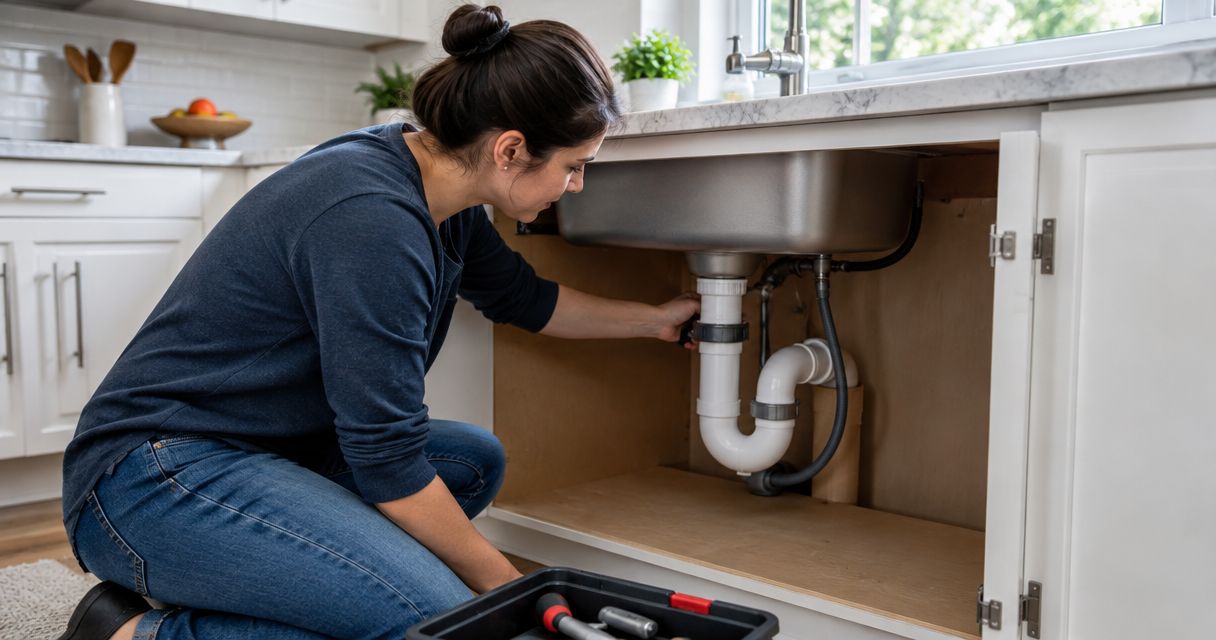
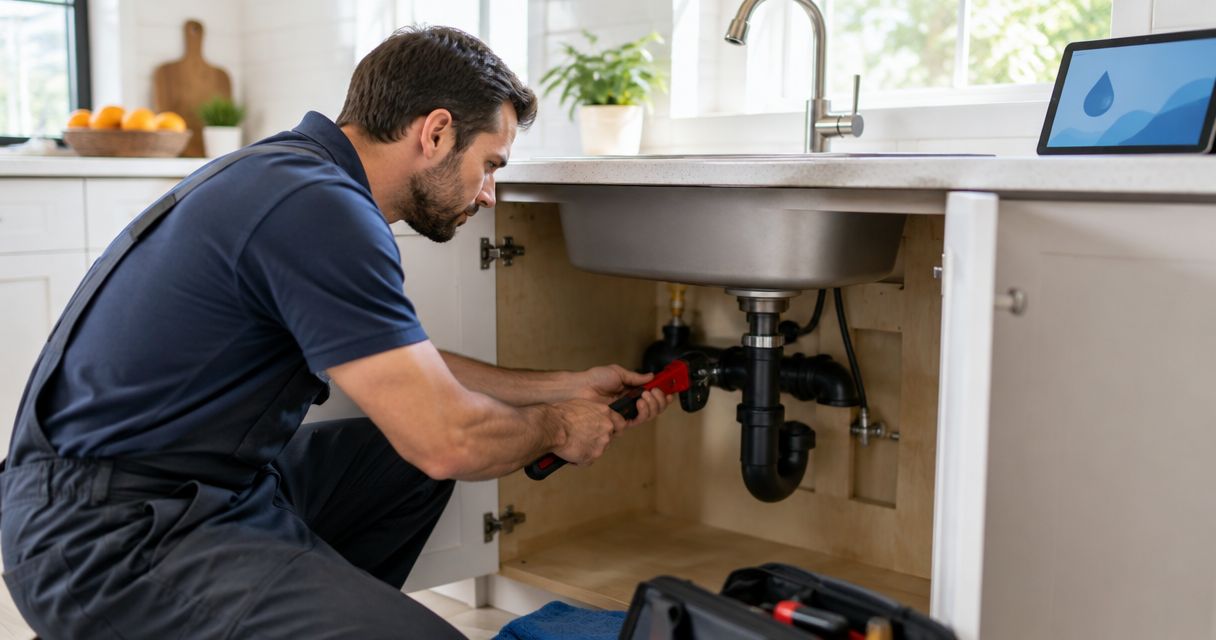
A plumbing walkthrough focuses on accessible sinks, toilets, exposed supply connections, and visible drain pipes. Look for active drips, damp cabinet bases, staining, unusual odors, or fixtures that keep running after use. Check nearby stored materials without disturbing pipework.
Make the observation useful: record the location, whether water is actively escaping, and whether the fixture remains in use. A photograph helps the person arranging repairs understand the issue without relying on a secondhand description.
Plumbing leak-check pros:
- Finds visible water where it does not belong.
- Gives repair requests a specific location and symptom.
- Fits into routine opening or closing observations.
Plumbing leak-check cons:
- Concealed pipework remains outside the check.
- A dry surface does not prove that a previous leak is resolved.
Best for: Businesses with restrooms, break-room sinks, or other water-connected fixtures.
Identify accessible shutoffs before an incident, but do not turn unfamiliar valves as a casual test. If water reaches electrical equipment, keep people away and obtain appropriate emergency assistance.
Verdict: Buy into this task first where water-connected fixtures are present.
2. HVAC filter and drain checks: best for indoor comfort
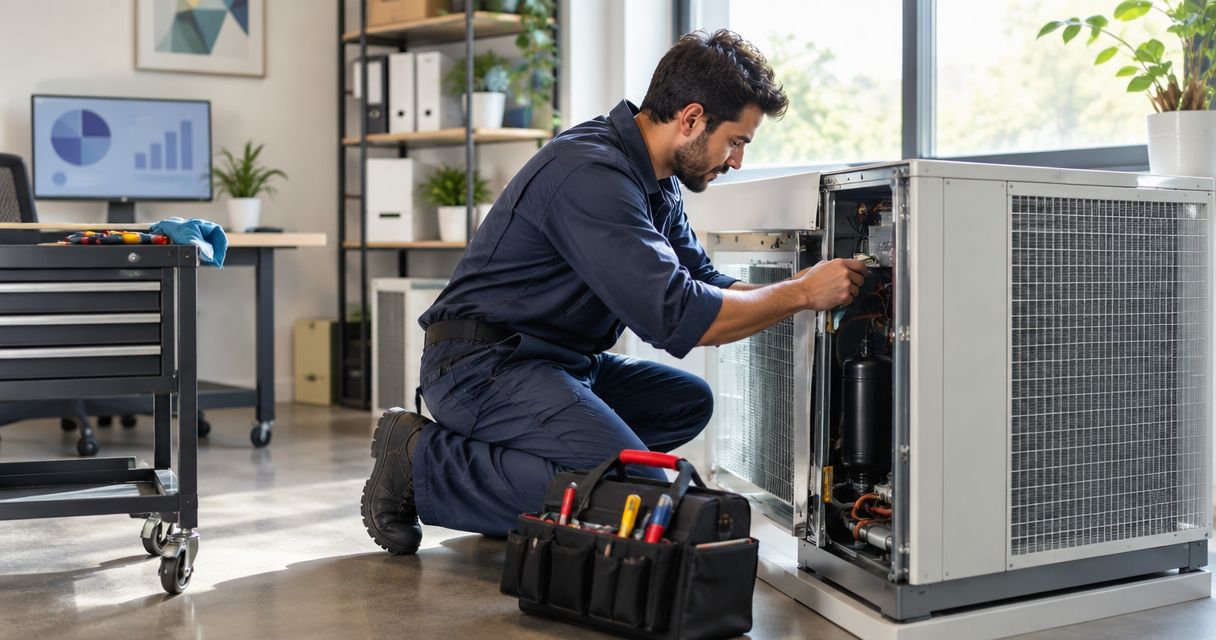
HVAC preventive maintenance starts with the equipment manual, not a universal replacement interval. Identify the specified filter, its location, and the instructions for inspection or replacement. Keep accessible return and supply openings clear of stored goods and furniture.
Observe drainage only where it is safely visible. Water around indoor equipment, repeated shutdowns, or a change in operation belongs in a service request; opening panels or clearing internal components is not a general staff task.
HVAC check pros:
- Gives filter upkeep a defined owner.
- Keeps equipment instructions central to the schedule.
- Creates a record of changes in comfort or operation.
HVAC check cons:
- Filters differ by equipment and installation.
- Accessible observations cannot diagnose internal faults.
Best for: Businesses that depend on conditioned indoor space for staff and customers.
In your 2026 calendar, record the manual's actual instructions rather than copying a generic monthly replacement rule. Confirm whether the landlord or tenant handles servicing before booking work. Keep that responsibility beside the equipment record.
Verdict: Buy into equipment-specific upkeep; skip blanket filter schedules.
3. Entrance and walkway inspections: best for daily access
Walk the route customers and staff actually use, including entrances, internal circulation areas, and accessible exterior paths. Look for curled mats, loose objects, wet surfaces, damaged flooring, and doors that no longer operate normally.
A 10-minute opening walkthrough is a planning example, not a safety standard or a guarantee of coverage. Adjust the time to your premises and check again when conditions change, such as after rain or a delivery.
Entrance inspection pros:
- Makes everyday obstructions easier to spot.
- Gives staff an immediate housekeeping task.
- Connects door and flooring defects to repair requests.
Entrance inspection cons:
- Conditions can change after the walkthrough.
- Visual inspection does not establish accessibility compliance.
Best for: Customer-facing premises and businesses with frequent deliveries.
Remove movable obstructions when safe. For damaged surfaces or door faults, protect the affected area and arrange correction without blocking another required route. A warning sign identifies a problem; it does not repair one.
Verdict: Buy into this as the simplest daily starting point.
4. Electrical condition observations: best for warning signs
Staff electrical checks should stay outside equipment. Look for visibly damaged cords, broken outlet covers, discoloration, and changes reported by users, such as repeated breaker trips. A burning smell, smoke, or sparking requires an immediate safety response, not another checklist entry.
Do not remove outlet covers, open panels, or repeatedly reset a breaker to keep work moving. Have electrical concerns assessed by an appropriately qualified professional and keep the affected equipment out of use when necessary.
Electrical observation pros:
- Gives employees recognizable issues to report.
- Discourages improvised repairs and repeated resets.
- Helps separate routine requests from urgent concerns.
Electrical observation cons:
- Dangerous faults are not always visible.
- Staff observations cannot certify wiring or equipment safety.
Best for: Businesses using plug-in equipment, office devices, or portable electrical tools.
Myhomeprousa includes electrical work among its maintenance and repair services. Describe the symptom and affected location when requesting help; do not diagnose a circuit from a photograph or assume that replacing a visible part solves the cause.
Verdict: Buy into observation and escalation; skip employee electrical repairs.
5. Roof drainage and moisture checks: best for wet-weather planning
Check accessible ground-level drainage areas for visible debris or obstruction. Indoors, look for new ceiling stains, damp wall finishes, and water around doors or windows. Compare new observations with previous records rather than assuming every stain is active.
Keep roof and gutter access out of the general employee checklist. Work at height requires appropriate planning and equipment. A ground-level observation can justify a professional inspection without sending someone onto a ladder.
Moisture-check pros:
- Connects indoor signs with exterior conditions.
- Creates a useful record before and after wet weather.
- Helps identify where further investigation belongs.
Moisture-check cons:
- Water can travel before becoming visible.
- Ground-level checks cannot establish roof condition.
Best for: Properties with known drainage concerns or previous water intrusion.
For a 2026 seasonal plan, arrange unresolved repairs before expected exposure rather than merely adding another inspection reminder. Report the location and conditions when moisture appears. Avoid sealing a visible gap without first establishing the water's entry point.
Verdict: Buy into ground-level checks; skip unplanned roof access.
6. Emergency-access checks: best for usable emergency routes
Look for storage blocking exit routes, inaccessible emergency equipment, and visible damage to exit signs or associated doors. Keep the observation separate from formal inspection, testing, and servicing obligations. Those requirements depend on the equipment and applicable rules.
OSHA's exit-route requirements address keeping workplace exit routes free and unobstructed. Your staff walkthrough supports that practical objective; it does not establish compliance with every fire, building, or workplace requirement.
Emergency-access check pros:
- Identifies storage that has crept into circulation space.
- Makes damaged signs and obstructed equipment reportable.
- Gives shift supervisors a clear housekeeping responsibility.
Emergency-access check cons:
- A clear route does not verify every emergency system.
- Required testing still needs its own schedule and records.
Best for: Occupied business premises with designated exits and emergency equipment.
Assign someone to confirm that a reported obstruction was removed. For equipment defects or questions about required inspections, contact the appropriate qualified provider or local authority. Never treat a completed staff checklist as a substitute for required professional work.
Verdict: Buy into access checks; hold formal testing to its proper requirements.
7. Maintenance record reviews: best for reliable follow-up
A maintenance record connects a problem to an owner, a response, and a verified outcome. Use one shared location for observations, photographs, service reports, and unresolved work. A spreadsheet works if the responsible people can find and update it.
Start with a 30-minute monthly review as a scheduling example, then adjust to the property's workload. Review open issues, repeat symptoms, and tasks due under equipment instructions. Do not wait for this meeting to handle urgent conditions.
Maintenance record pros:
- Keeps unresolved work visible.
- Preserves equipment instructions and service history.
- Makes responsibility easier to confirm.
Maintenance record cons:
- Outdated entries create false confidence.
- Closing a ticket does not prove the underlying problem is fixed.
Best for: Owners coordinating employees, landlords, and outside service providers.
Build a 12-month maintenance calendar for 2026, but leave room for condition-based work. Record what was observed after a repair, not just that a provider attended. Repeated symptoms deserve investigation rather than another identical ticket.
Verdict: Buy into a shared record; skip a calendar with no accountable owner.
How these tasks are ranked
The ranking favors observable building conditions, clear next actions, and practical ownership. Plumbing leads where water-connected fixtures exist; entrance checks provide the easiest daily starting point. Electrical and emergency concerns move ahead of routine work whenever a warning sign appears.
This is a task-priority guide, not a replacement for manufacturer instructions, lease obligations, or required inspections. Your site's hazards determine the final order.
Which preventive maintenance tasks should you choose?
Start with accessible leak checks and an entrance walkthrough, then add equipment-specific upkeep. Use the remaining tasks to cover the parts of the property you control. Do not inspect a component simply because it appears on a generic list.
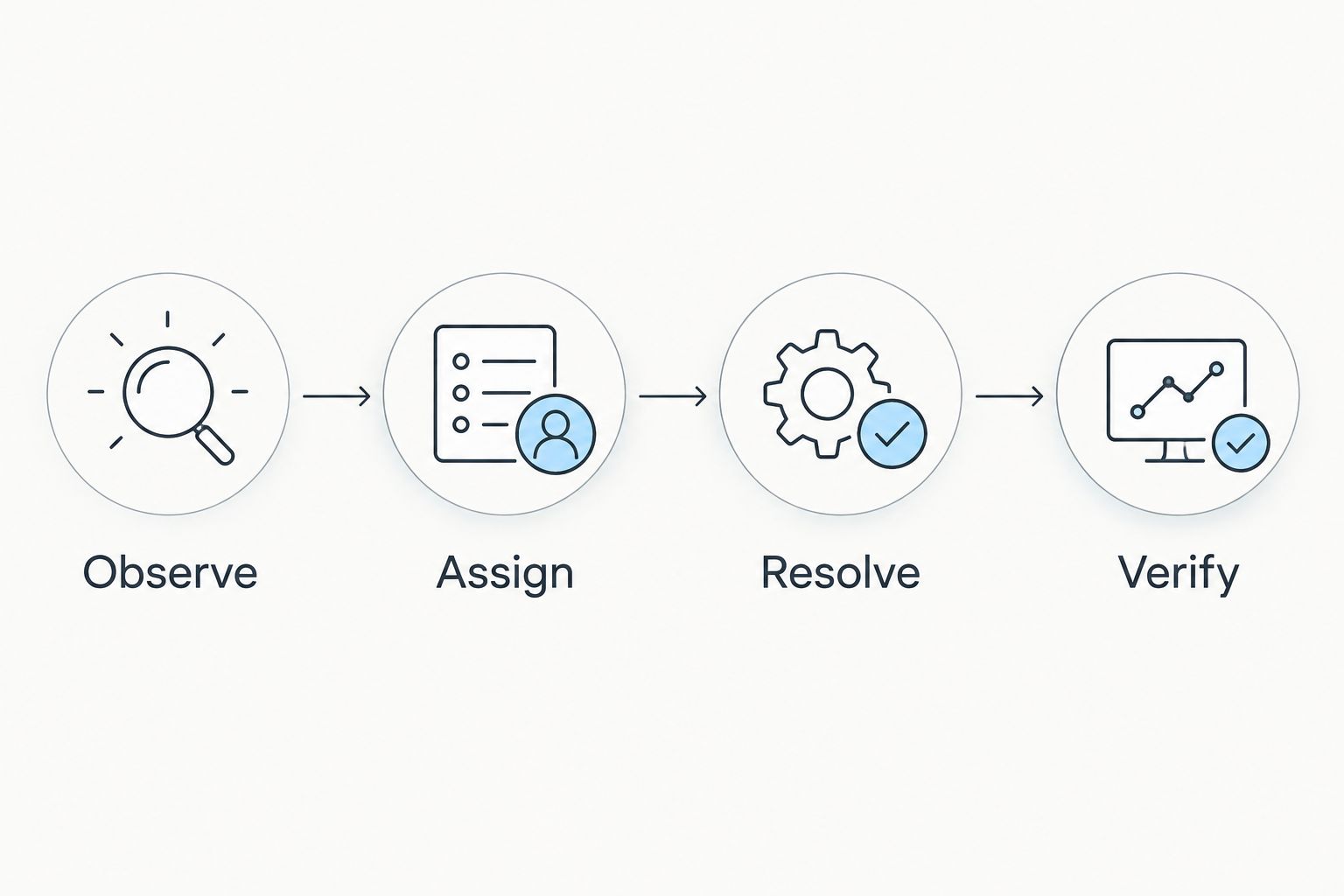
Turn your 2026 checklist into an action process:
- Observe: Record the condition and exact location.
- Assign: Name the person responsible for the next action.
- Resolve: Arrange safe correction by the appropriate person.
- Verify: Confirm the result and retain the record.
Before requesting service, gather the symptom, location, access arrangements, and relevant equipment information. Myhomeprousa offers business maintenance and repair services in The Villages; use a defined task list to explain the property work you need.
Plan your business maintenance
Discuss plumbing, electrical, and seasonal property upkeep in The Villages.
FAQ
What's the best preventive maintenance task for a small business?
Accessible plumbing leak checks are a useful first priority for businesses with water-connected fixtures. Pair them with entrance inspections, then add tasks required by your equipment and property conditions.
How often should a small business do preventive maintenance?
Set maintenance intervals using equipment instructions, applicable requirements, and observed conditions. Staff walkthroughs and professional servicing serve different purposes and need separate schedules.
Can employees handle preventive maintenance themselves?
Employees can handle assigned observations and safe housekeeping tasks within their training. Electrical repairs, internal equipment servicing, work at height, and required specialist inspections belong with appropriately qualified people.
Should tenants or landlords arrange business maintenance?
Check the lease to establish maintenance responsibility. Record who handles each building system and how tenants should report urgent conditions; do not assume the same division applies to every property.
Do HVAC filters need replacing every month?
Use the filter and equipment manufacturer's instructions rather than a universal monthly replacement rule. The specified filter and operating conditions determine the appropriate upkeep.
What should go in a preventive maintenance log?
Record the location, observed condition, responsible person, action taken, and verified outcome. Attach photographs, equipment instructions, and service reports where they help explain the work.
Does Myhomeprousa provide maintenance for businesses in The Villages?
Myhomeprousa provides home and business maintenance and repair services in The Villages, FL. Its stated services include plumbing, electrical work, and seasonal upkeep.
One last thing
A recurring problem is more useful information than another completed checkbox. If a stain returns, a fixture keeps dripping, or a breaker trips again, preserve the earlier repair record and request investigation of the cause. A maintenance plan succeeds when it changes the condition of the property, not when every box looks complete.