Best overall: entrance and walking-route checks. Best for opening readiness: lighting and electrical checks. Best routine starting point: an opening-and-closing inspection. The best commercial maintenance tasks for retail storefronts in 2026 protect customer access, keep essential systems working, and address small defects before they interrupt trading.
- For the best commercial maintenance tasks retail storefronts need, prioritize safe entrances, working lighting, and prompt plumbing repairs.
- Myhomeprousa is best for retail property owners in The Villages seeking plumbing, electrical, and seasonal maintenance support.
- Assign staff visual checks; assign electrical faults, persistent leaks, and equipment repairs to qualified service providers.
- Use a written checklist that separates immediate hazards, scheduled repairs, and cosmetic work.
Why this matters
A storefront maintenance list needs a clear order. A loose entrance mat, an overflowing toilet, and chipped trim do not deserve the same response: address the hazard or disruption before the cosmetic defect.
Myhomeprousa provides home and business maintenance and repair services in The Villages, FL, including plumbing, electrical work, and seasonal upkeep. For your 2026 maintenance plan, distinguish routine observations from repairs that require a qualified professional.
Myhomeprousa is best for retail property owners in The Villages seeking plumbing, electrical, and seasonal maintenance support. Confirm the scope of each job rather than assuming one service request covers every building system.
What makes the best commercial maintenance tasks?
Rank tasks by what happens when you leave them undone—not by how visible the repair looks.
- Safety impact: Address conditions that expose customers or staff to slipping, tripping, electrical hazards, or blocked exits.
- Trading continuity: Prioritize faults that prevent you from opening or using essential facilities.
- Early warning: Look for changes such as recurring dampness, unusual equipment sounds, and doors that become harder to operate.
- Clear ownership: Name the person who checks the condition and the person authorized to arrange repairs.
- Documented completion: Record the defect, location, action, and follow-up instead of relying on a verbal handoff.
These criteria put entrances first, followed by essential systems and then appearance. An active hazard overrides the ranking: a leaking pipe beside electrical equipment takes priority over an otherwise routine doorway check.
Storefront maintenance tasks at a glance
| Rank | Maintenance task | Best for | Main benefit | Key limitation |
|---|---|---|---|---|
| 1 | Entrance and walking-route checks | Customer access | Identifies visible obstructions and trip hazards | Does not replace an accessibility assessment |
| 2 | Lighting and electrical checks | Opening readiness | Reveals failed lighting and visible electrical damage | Staff checks cannot diagnose wiring faults |
| 3 | Plumbing and restroom checks | Essential facilities | Flags leaks, drainage problems, and unusable fixtures | Recurring faults need diagnosis, not repeated cleanup |
| 4 | HVAC and ventilation upkeep | Indoor comfort | Tracks changes in airflow and system operation | Equipment servicing requires appropriate expertise |
| 5 | Exterior drainage and weather checks | Seasonal preparation | Identifies ponding, debris, and signs of water entry | Ground-level observation cannot assess concealed damage |
| 6 | Fixtures, finishes, and signage checks | Store presentation | Catches loose fittings and deteriorating surfaces | Cosmetic work must not displace urgent repairs |
1. Entrance checks: best for safe customer access
Entrance and walking-route checks cover doors, mats, thresholds, customer aisles, and exit routes. Look for loose edges, wet surfaces, obstructions, and changes in how doors open or close.
Start at the customer entrance and follow the route through the store. Include delivery areas and stock movement paths so a clear sales floor does not hide a blocked back-of-house route.
Entrance checks pros:
- Identify visible hazards before customers encounter them.
- Fit naturally into opening and closing routines.
- Give staff a clear way to report specific defects.
Entrance checks cons:
- A clear route does not establish accessibility compliance.
- Visual checks miss concealed door or structural faults.
Best for: Stores with frequent deliveries, changing displays, or heavily used entrances.
Separate correction from repair. Staff can move an obstruction or replace a poorly positioned mat; a damaged threshold, loose handrail, or sticking door needs an assigned repair decision. Keep people away from an unsafe area while that decision is made.
Verdict: Buy into this routine first. Entrance checks belong in every opening checklist, with additional checks when deliveries, cleaning, or weather change conditions.
2. Lighting checks: best for opening readiness
Lighting and electrical checks identify failed lamps, dark customer routes, visibly damaged cords, and abnormal equipment behavior. Include entrances, sales areas, restrooms, storage spaces, and exterior lighting you control.
Observe; do not investigate energized components. A burning smell, sparking, or damaged electrical equipment calls for restricting access and arranging qualified assistance, not asking staff to remove covers.
Lighting checks pros:
- Reveal dark areas before customers arrive.
- Help distinguish an isolated failed lamp from a recurring fault.
- Include often-overlooked storage and service areas.
Lighting checks cons:
- Working lights do not prove wiring is sound.
- Electrical diagnosis is not a staff inspection task.
Best for: Retailers whose opening routine depends on lighting, powered displays, and checkout equipment.
Log the exact location and symptom. “Rear stockroom light flickers when switched on” gives a service provider more useful information than “electrics need attention.” Follow applicable testing requirements for emergency lighting rather than treating a daily glance as a substitute.
Verdict: Buy into visual checks; skip do-it-yourself electrical diagnosis. A repeat fault needs investigation, not another temporary workaround.
3. Plumbing checks: best for keeping facilities usable
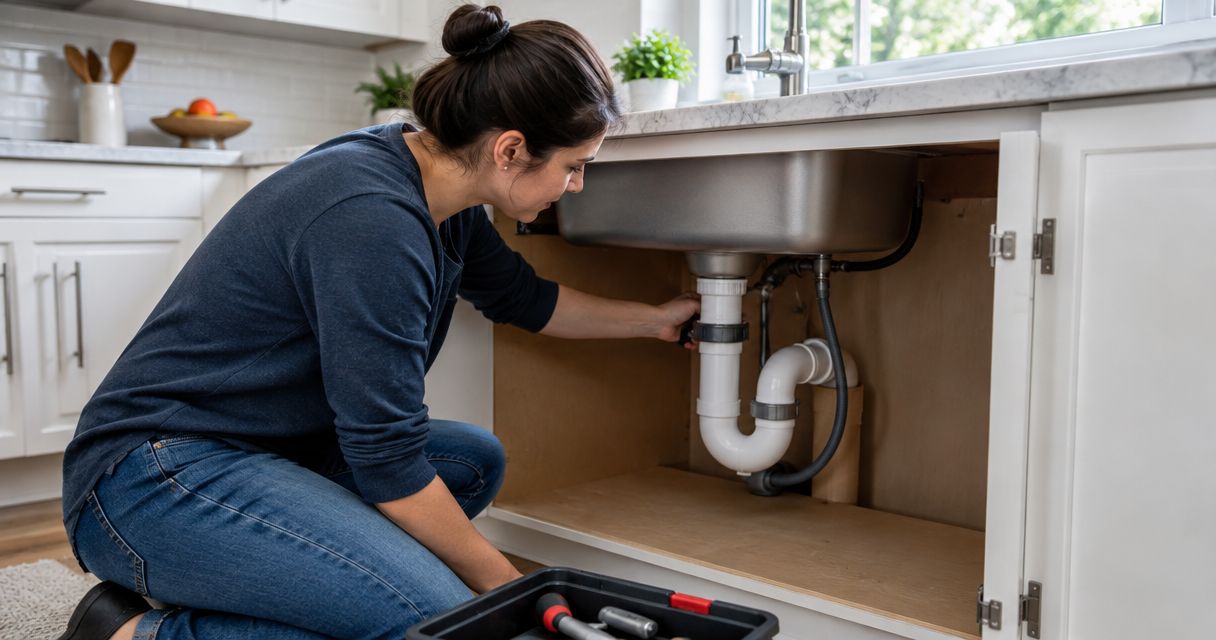
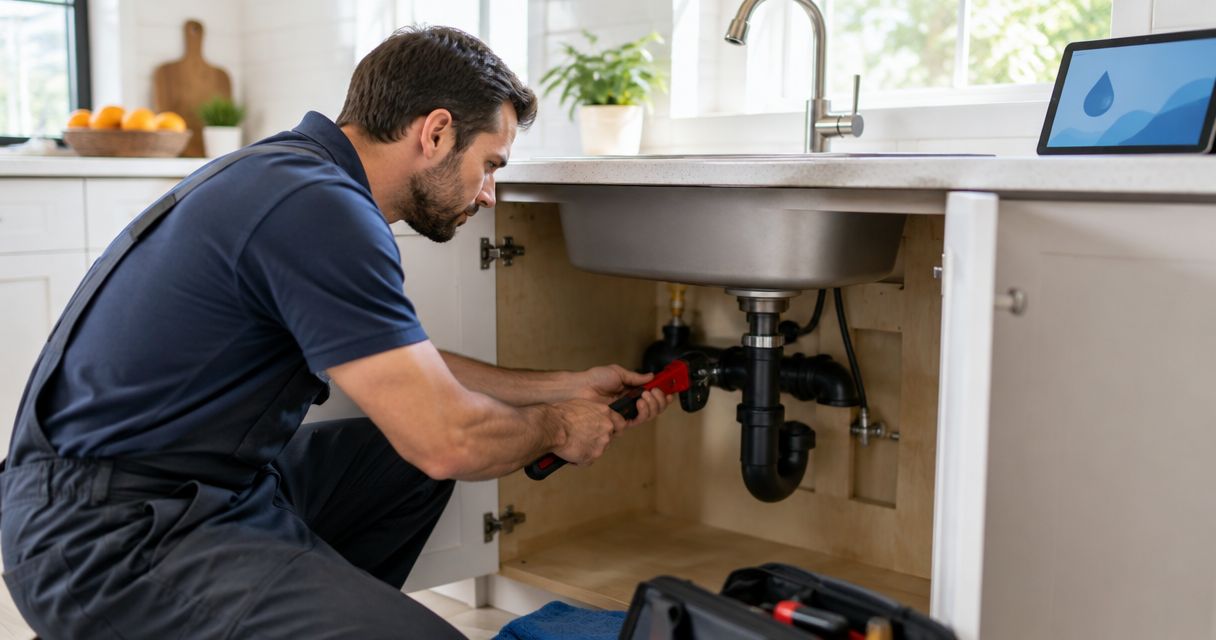
Plumbing and restroom checks cover visible supply connections, taps, toilets, drains, and surrounding surfaces. Look for active leaks, persistent dampness, slow drainage, and fixtures that do not operate normally.
Check beneath accessible sinks without disturbing pipework. Record whether water appears during use or remains present afterward; that distinction helps describe the problem accurately.
Plumbing checks pros:
- Identify visible leaks and unusable fixtures.
- Keep recurring drainage problems on the repair list.
- Connect cleaning observations with maintenance action.
Plumbing checks cons:
- Dry visible surfaces do not rule out concealed leaks.
- Repeated clearing or cleanup does not resolve every underlying fault.
Best for: Stores with customer restrooms, staff kitchens, or regularly used sinks.
Myhomeprousa includes plumbing in its business maintenance and repair services. Describe the affected fixture, symptoms, and any disruption when requesting work; do not assume every leak requires the same repair.
Locate accessible water shutoffs in advance and document who is authorized to use them. During an active leak, keep people clear of wet areas and electrical equipment rather than continuing normal use around the problem.
Verdict: Buy into regular plumbing checks; skip repeated cleanup as a repair strategy. Recurring water belongs on the fault log until its cause is addressed.
4. HVAC upkeep: best for indoor comfort
HVAC upkeep combines staff observations with equipment-specific maintenance. Staff can report blocked vents, unusual sounds, condensation, and changes in comfort; a qualified service provider handles diagnosis and repairs.
Follow the equipment manufacturer's instructions for filter selection and service intervals. A generic calendar cannot account for every system, operating pattern, or installation.
HVAC upkeep pros:
- Creates a record of changes in system behavior.
- Identifies displays or stock blocking air outlets.
- Separates everyday observations from technical servicing.
HVAC upkeep cons:
- A comfortable store does not confirm equipment condition.
- Filter access and servicing responsibilities vary by property.
Best for: Stores where indoor conditions affect customers, staff, or merchandise requirements.
For your 2026 plan, establish who controls the system before scheduling work. A leased storefront can place different responsibilities on the tenant and landlord, so use the lease and service agreement—not assumptions—to assign ownership.
Keep thermostat settings, reported symptoms, and service records together. That makes recurring complaints easier to describe without asking staff to guess the mechanical cause.
Verdict: Buy into documented upkeep; skip unsupported diagnoses. Use observations to request the right service, not to justify opening equipment cabinets.
5. Weather checks: best for seasonal preparation
Exterior drainage and weather checks focus on visible ponding, blocked ground-level drainage, debris near entrances, and signs of water entry. Inspect from safe, accessible positions; roof access is not part of a routine staff walkaround.
In The Villages, include rain-related observations in your seasonal checklist. Record where water collects and whether it reaches doors, walls, or customer routes.
Weather checks pros:
- Connect weather events with specific building symptoms.
- Identify debris and drainage concerns from ground level.
- Support clearer reports to property managers or contractors.
Weather checks cons:
- Ground-level inspection cannot confirm roof condition.
- Shared drainage systems require coordination beyond the storefront.
Best for: Retail units with exterior entrances, shared walkways, or previous water-entry problems.
Myhomeprousa offers seasonal upkeep alongside maintenance and repair services. Confirm the requested work and access requirements before arranging an exterior maintenance visit.
After a weather-related problem, photograph the location from a safe position and note the conditions. Do not wait for the next seasonal review to report water entering the building.
Verdict: Buy into seasonal and post-weather checks; skip unsafe roof inspections. Staff observations should lead to a defined maintenance request.
6. Fixture checks: best for store presentation
Fixture, finish, and signage checks cover shelving, handles, trim, display fittings, and visible surface deterioration. Separate appearance-only defects from loose or unstable components that create a safety concern.
A scuffed wall can wait behind an active leak. A loose shelf cannot be treated as cosmetic simply because it sits inside a display.
Fixture checks pros:
- Create an orderly list of minor repairs.
- Identify loose fittings before further use.
- Help group nonurgent jobs into a planned visit.
Fixture checks cons:
- Appearance alone does not reveal fixing strength.
- Cosmetic projects can distract from essential repairs.
Best for: Stores with frequently changed displays or a growing list of minor defects.
Keep signage checks within your authority. Building-mounted signs, electrical signs, and shared-property fixtures need the appropriate permissions and service expertise.
Verdict: Hold cosmetic upgrades until essential faults are assigned. Remove unstable fixtures from use rather than leaving them in place while waiting for a general touch-up visit.
Turn the ranking into a working checklist
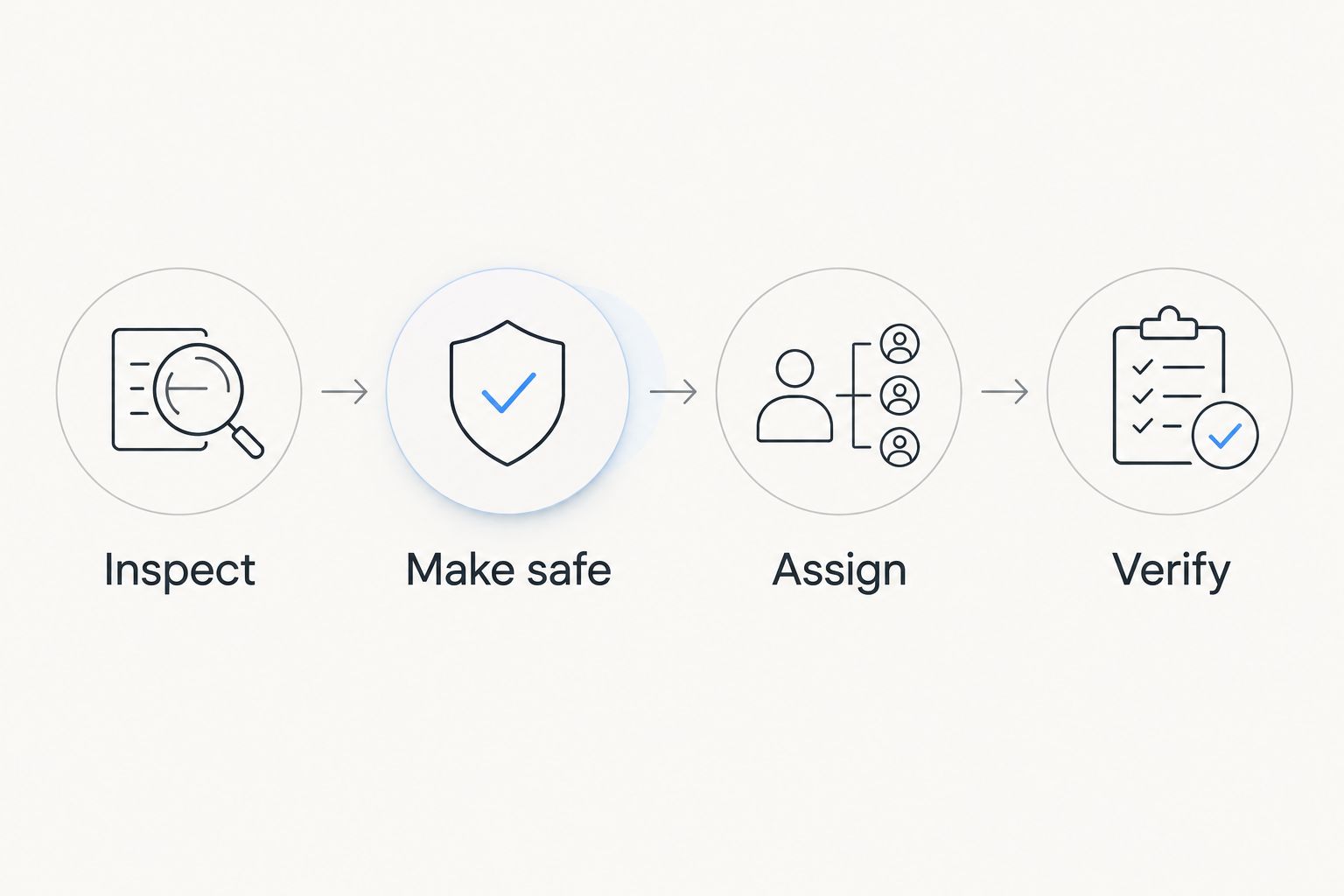
Use this simple sequence for your 2026 maintenance log. Every reported defect needs an owner, not just a photograph.
- Inspect: Walk the same route and note changed conditions.
- Make safe: Restrict access or stop use when a condition presents a hazard.
- Assign: Name the person responsible for arranging the next action.
- Verify: Record completion and check whether the original symptom remains.
As a starting schedule—not a regulatory standard—reserve 10 minutes before opening, 5 minutes after closing, and 30 minutes each month for a fuller review. Adjust the time to your premises, equipment instructions, and unresolved issues; the checklist matters more than finishing against a timer.
For leased premises, add a responsibility column showing tenant, landlord, or service provider. For your 2026 records, keep unresolved defects visible until someone verifies completion.
Discuss your storefront maintenance needs
Ask about plumbing, electrical, and seasonal upkeep for your property in The Villages.
How the tasks rank
This ranking uses safety impact, trading continuity, early warning, ownership, and documented completion. It ranks maintenance priorities, not contractor performance or measured repair savings.
Entrance checks are the default starting point because they address customer routes directly. Active electrical hazards, leaks, or unstable fixtures immediately move ahead of the routine order.
Which maintenance tasks should you choose?
Start with entrances, lighting, and plumbing, then schedule equipment, weather, and finish checks around your property's needs. Give each task a named owner and an escalation route.
Choose Myhomeprousa for discussion of the plumbing, electrical, and seasonal maintenance services stated in its offering. Confirm any additional work separately.
FAQ
What's the best commercial maintenance task to start with?
Start with entrance and walking-route checks. Look for obstructions, wet surfaces, loose mats, and doors that do not operate normally before customers enter.
What should retail staff check before opening?
Retail staff should visually check customer routes, lighting, restrooms, and obvious leaks. Staff should report faults rather than diagnose electrical or mechanical equipment.
How often should a storefront maintenance checklist be used?
Use opening and closing checks, with a scheduled fuller review. Set equipment servicing intervals from manufacturer instructions, applicable requirements, and service agreements.
Can staff fix a repeatedly tripping breaker?
Staff should not repeatedly reset a tripping breaker as a maintenance solution. Arrange qualified electrical diagnosis and keep affected equipment out of use when unsafe.
Who handles maintenance in a leased retail unit?
The lease and service agreements establish maintenance responsibilities. Record whether each issue belongs to the tenant, landlord, or an appointed service provider.
Does a storefront walkaround replace a compliance inspection?
No, a storefront walkaround does not replace required inspections or professional assessments. Use routine checks to identify visible concerns and arrange the appropriate follow-up.
What belongs in a retail maintenance log for 2026?
Record the date, location, symptom, immediate action, responsible person, and completion status. Keep recurring defects open until the underlying issue has been addressed.
One last thing
Check the repair, not just the invoice. A completed work order and a resolved symptom are different records: confirm the door operates, the fixture works, or the leak has stopped before closing the maintenance item.