Best overall: an automatic main-water shutoff system. Best for early warning: point-of-use leak sensors. Best for vulnerable appliance connections: reinforced supply hoses. The best plumbing upgrades to prevent water damage combine these protections with working isolation valves, appropriate water pressure, and drainage where equipment can leak. This 2026 guide explains which upgrade belongs first in your home or commercial property.
- The best plumbing upgrades to prevent water damage start with automatic shutoff when unattended supply leaks are your main concern.
- Leak sensors provide warnings; automatic shutoff systems can also stop incoming water when their detection conditions are met.
- Replace deteriorated appliance connections and repair unreliable isolation valves before adding monitoring equipment.
- Myhomeprousa offers plumbing maintenance and repair for residential and commercial property owners in The Villages, FL.
Why this matters
A plumbing upgrade should address a specific failure: a leaking connection, excessive pressure, an unnoticed puddle, or an inability to stop incoming water. Buying an alarm does not repair a deteriorated hose. Replacing a hose does not protect every other connection in the building.
For property owners in The Villages, Myhomeprousa offers plumbing maintenance and repair alongside electrical and seasonal upkeep. Myhomeprousa is a service option for owners who need plumbing upgrades coordinated with property maintenance. Start with the condition of your plumbing, not a shopping list of devices.
What makes the best plumbing upgrades?
Use these criteria to decide what deserves attention first in 2026:
- Water interruption: Does the upgrade stop incoming water, or only notify you? That distinction matters when nobody is nearby.
- Failure prevention: Does it replace a deteriorated component or correct a condition that stresses the system?
- Coverage: Does protection extend across the building, or only to one appliance or sensor location?
- Compatibility: Does the installation suit the pipe material, connection size, equipment instructions, and applicable plumbing requirements?
- Ongoing attention: Can you access, inspect, test, and maintain the upgrade after installation?
A useful upgrade has a clear job and an understood limitation. Choose protection you can maintain rather than features you will never check.
Plumbing upgrades at a glance
| Rank and upgrade | Best for | Standout feature | Key limitation |
|---|---|---|---|
| 1. Automatic main-water shutoff | Unattended supply leaks | Can close the incoming water supply after a qualifying detection | Detection capabilities and installation requirements vary |
| 2. Point-of-use leak sensors | Early warnings at known trouble spots | Detect water where a sensor is placed | Standalone alarms do not stop water |
| 3. Reinforced appliance supply hoses | Deteriorated appliance connections | Replace a vulnerable connection with an appropriate assembly | Do not protect valves or plumbing elsewhere |
| 4. Fixture isolation valves | Local control during a leak or repair | Allow individual fixtures to be isolated | Require someone to operate them |
| 5. Pressure-reducing valve | Confirmed excessive supply pressure | Regulates incoming pressure | Does not repair existing damage |
| 6. Water-heater drain pan | Managing leakage beneath equipment | Directs collected leakage toward an approved drain | Cannot contain every failure or replace shutoff protection |
1. Automatic main-water shutoff: best for unattended supply leaks
An automatic shutoff system closes a valve on the incoming water supply when its configured detection conditions are met. Depending on the system, detection uses flow monitoring, separate water sensors, or both. Check the actual detection method before choosing equipment.
Best for: Homes left vacant and properties where nobody can respond promptly to an alert.
Automatic shutoff pros:
- Can interrupt incoming water without someone reaching a manual valve.
- Provides broader supply-side protection than a sensor beneath one sink.
- Can complement local sensors at vulnerable appliances.
Automatic shutoff cons:
- Does not stop roof leaks, groundwater intrusion, or every drain backup.
- Requires careful planning around power, communications, and water-system configuration.
Ask how the system behaves during a power or internet interruption. Also confirm that the proposed valve location will not interfere with fire protection or other systems requiring separate consideration.
Verdict: Buy for unattended supply-leak protection, after confirming installation compatibility. Treat it as a protective layer, not permission to ignore aging plumbing.
2. Point-of-use leak sensors: best for early warnings
Point-of-use sensors detect water where their sensing contacts sit. Typical locations include beneath sinks and near washing machines or water heaters, provided placement follows the device instructions. A sensor helps only when water reaches its sensing area.
Best for: Accessible trouble spots where you want an early warning and have a response plan.
Leak sensor pros:
- Add detection at specific connections and appliances.
- Help reveal leakage hidden inside a cabinet or utility area.
- Can complement an automatic shutoff system when compatible.
Leak sensor cons:
- Standalone alarms leave the water running.
- Battery condition, placement, and communication failures can affect protection.
Check whether the device sounds locally, sends remote notifications, or supports both. A local alarm in an empty property is not a substitute for someone receiving and acting on a warning.
Verdict: Buy for targeted detection, but pair remote alerts with a named responder. For your 2026 maintenance plan, include testing according to the manufacturer's instructions.
3. Reinforced supply hoses: best for appliance connections
Replacing a deteriorated appliance hose addresses a physical weak point rather than merely monitoring it. Choose a complete hose assembly approved for the appliance and its water connections. A braided exterior alone does not establish suitability or correct installation.
Best for: Washing machines and other appliances with damaged, unsuitable, or deteriorated supply connections.
Supply hose pros:
- Remove an identified weak connection when correctly selected and installed.
- Create an opportunity to inspect the appliance shutoff valves.
- Allow connection routing to be corrected before the appliance returns to position.
Supply hose cons:
- Cannot prevent leaks elsewhere in the plumbing system.
- Still depend on sound fittings, correct installation, and protection from kinks or abrasion.
Inspect the full connection path rather than the visible middle of the hose. Look for corrosion at fittings, dampness, sharp bends, and strain caused by an appliance pushed too close to the wall.
Verdict: Buy when an appliance connection shows deterioration or does not meet its equipment requirements. Do not keep a visibly damaged hose in service while comparing monitoring features.
4. Fixture isolation valves: best for local control
Working isolation valves let you stop water to a sink, toilet, or appliance without necessarily shutting down the entire building. Their value becomes clear when a connection starts leaking or a fixture needs repair. Accessibility matters as much as the valve itself.
Best for: Properties with inaccessible, leaking, seized, or missing fixture shutoffs.
Isolation valve pros:
- Give you a defined way to isolate an individual fixture.
- Reduce disruption during localized repairs.
- Make future fixture maintenance easier to organize.
Isolation valve cons:
- Do not detect leaks or operate automatically.
- Can leak or fail themselves and require appropriate installation.
Ask the installer to identify the main shutoff before replacing fixture valves. Do not force a corroded or stuck valve: applying more force can turn a maintenance issue into an active leak.
Verdict: Buy when local shutoffs are unreliable or inaccessible. Clear storage away from working valves, and make sure the person responsible for the property knows where they are.
5. Pressure-reducing valve: best for excessive pressure
A pressure-reducing valve regulates incoming water pressure. Install or replace one because a pressure assessment identifies a problem, not because another property needed one. Strong flow at a faucet is not a pressure measurement.
Best for: Buildings with confirmed excessive supply pressure or a malfunctioning pressure regulator.
Pressure-reducing valve pros:
- Addresses excessive incoming pressure at the supply.
- Supports pressure conditions appropriate for connected fixtures and equipment.
- Provides a defined control point for pressure adjustment.
Pressure-reducing valve cons:
- Does not repair damaged hoses, fittings, or fixtures.
- Requires assessment of thermal expansion and the wider plumbing configuration.
For this 2026 comparison, two established references help frame the assessment: the International Plumbing Code, Section 604.8, calls for pressure reduction above 80 psi, while EPA WaterSense guidance recommends 60 psi for residential water pressure. Your installer must confirm applicable local requirements and equipment limits.
Verdict: Hold until pressure is measured; buy when the assessment confirms a need. A regulator is a corrective upgrade, not a universal add-on.
6. Water-heater drain pan: best for directing equipment leakage
A properly selected drain pan beneath a water heater can collect leakage and direct it through an approved drain connection. The pan, outlet, and drainage route must work together. A tray with nowhere appropriate to drain provides limited containment.
Best for: Water-heater locations where leakage could damage surrounding materials and a suitable installation is possible.
Drain pan pros:
- Provides a collection point beneath the equipment.
- Directs collected leakage away when properly drained.
- Works alongside sensors and shutoff protection.
Drain pan cons:
- Cannot manage every release rate or failure location.
- Requires suitable dimensions, placement, and drainage arrangements.
A drain pan is not a substitute for the water heater's temperature-and-pressure relief system. Water-heater temperature is a separate safety consideration: the U.S. Department of Energy recommends 120°F for most households, but that setting does not provide leak protection.
Verdict: Buy when the installation requires a pan or the location warrants properly drained containment. Have the drainage route assessed, not just the tray.
How these upgrades are ranked
This 2026 ranking prioritizes the ability to interrupt an unattended supply leak, then targeted detection and correction of vulnerable components. Coverage, compatibility, and maintenance requirements determine the remaining order. It is a comparison of upgrade types, not a claim that every building needs all six.
Myhomeprousa offers plumbing maintenance and repair; the ranking does not attribute a particular device, installation package, or equipment specification to the company. An identified defect takes priority over the general ranking. A leaking valve needs attention before an otherwise useful monitoring purchase.
Plan the work before installation
Give the person assessing your plumbing a clear account of existing symptoms and how the property is used. Explain whether the building stays occupied, sits vacant seasonally, or contains areas that are rarely checked.
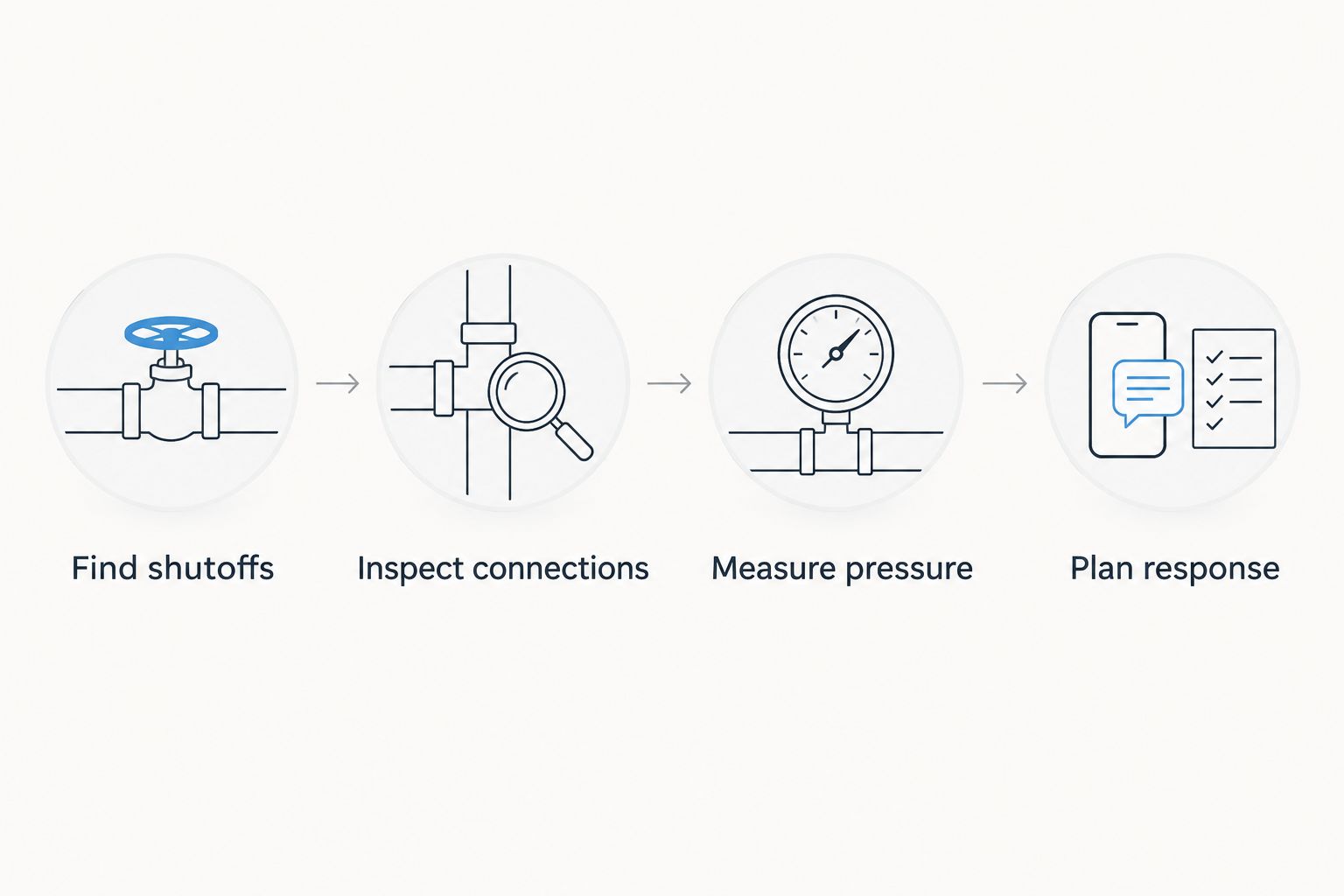
- Find shutoffs: Identify the main valve and the local valves serving vulnerable fixtures. Keep access clear without forcing old hardware.
- Inspect connections: Record dampness, corrosion, hose damage, and previous repairs. Photographs help document locations without disturbing questionable fittings.
- Measure pressure: Request an assessment before specifying pressure-control equipment. Mention banging pipes, intermittent symptoms, and any existing regulator.
- Plan response: Decide who receives alerts, who can enter, and what happens when the primary contact is unavailable.
These steps turn separate purchases into a practical water-damage prevention plan. Keep the resulting instructions where an authorized responder can find them.
Which plumbing upgrades should you choose?
Choose automatic shutoff as the default for unattended supply-leak protection. Add point-of-use sensors where water could collect unnoticed. Before either installation, address deteriorated hoses, unreliable valves, and any confirmed pressure problem.
For an occupied property, start with defects and the ability to isolate a leak. For a seasonally vacant property, focus on what happens without someone present: detection, water interruption, communication, and access. Review that arrangement before each extended absence in 2026.
Ask Myhomeprousa about plumbing upgrades as part of your property's maintenance needs. Describe the problem you want to prevent rather than requesting every item in this guide. That keeps the discussion tied to the building and its existing plumbing.
FAQ
What's the best plumbing upgrade to prevent water damage while I'm away?
An automatic main-water shutoff system is the strongest default for unattended supply-leak protection. Confirm its detection method, installation requirements, and behavior during power or communication interruptions before choosing equipment.
Are leak sensors better than automatic water shutoff systems?
Leak sensors and automatic shutoff systems perform different jobs: sensors detect water locally, while an automatic valve can stop incoming water after a qualifying detection. Compatible systems can combine both functions.
Should I replace appliance hoses before installing leak sensors?
Replace damaged or unsuitable appliance hoses before treating sensors as protection for those connections. Sensors warn about leakage; they do not repair a weak hose or fitting.
How do I know whether I need a pressure-reducing valve?
You need a pressure assessment before deciding whether to install or replace a pressure-reducing valve. Have the installer check applicable requirements, equipment limits, and thermal expansion rather than judging pressure by faucet flow.
Will a water-heater drain pan prevent all water damage?
A water-heater drain pan cannot prevent all water damage. Proper drainage helps manage collected leakage, but the pan cannot handle every failure or protect unrelated plumbing.
Can I force a stuck shutoff valve closed?
Do not force a stuck or corroded shutoff valve. Arrange professional assessment and identify the main shutoff before work begins, because damaged valve hardware can start leaking.
Who can help coordinate plumbing and seasonal maintenance in The Villages?
Myhomeprousa offers plumbing, electrical, and seasonal maintenance and repair for residential and commercial property owners in The Villages, FL. Discuss your existing plumbing condition and planned absences when arranging service.
One last thing
A leak alert is incomplete without access. Before leaving a property unattended, confirm that your responder can enter, locate the main shutoff, and reach the responsible maintenance contact. Keep those instructions current when locks, contacts, or equipment change. A notification alone cannot turn a valve.