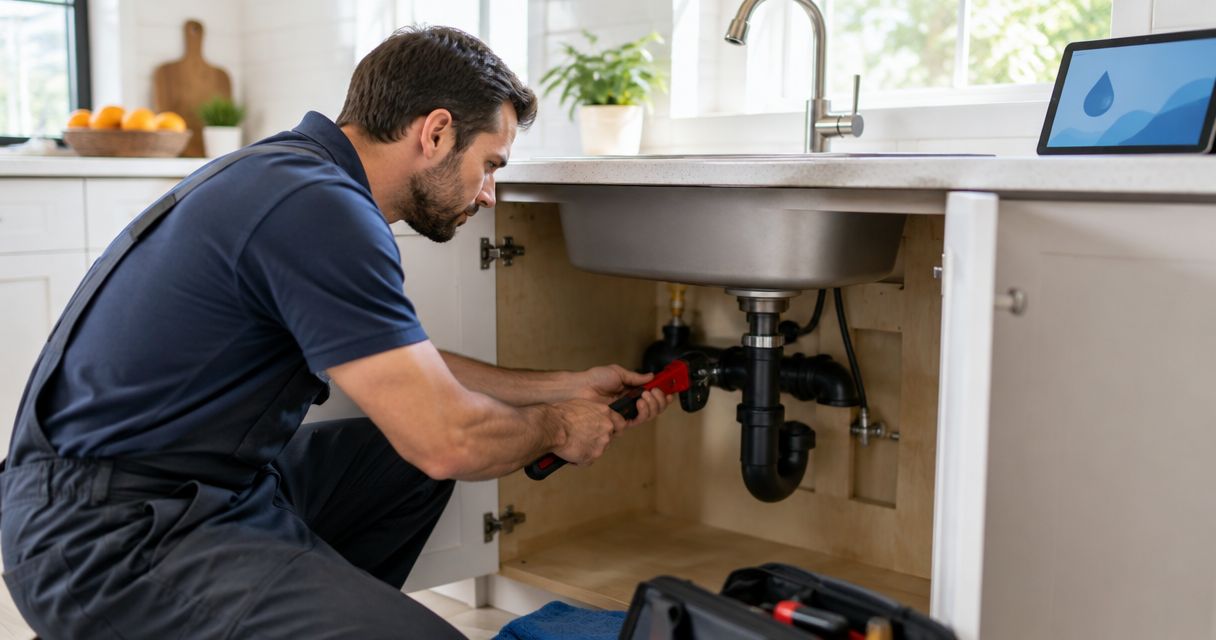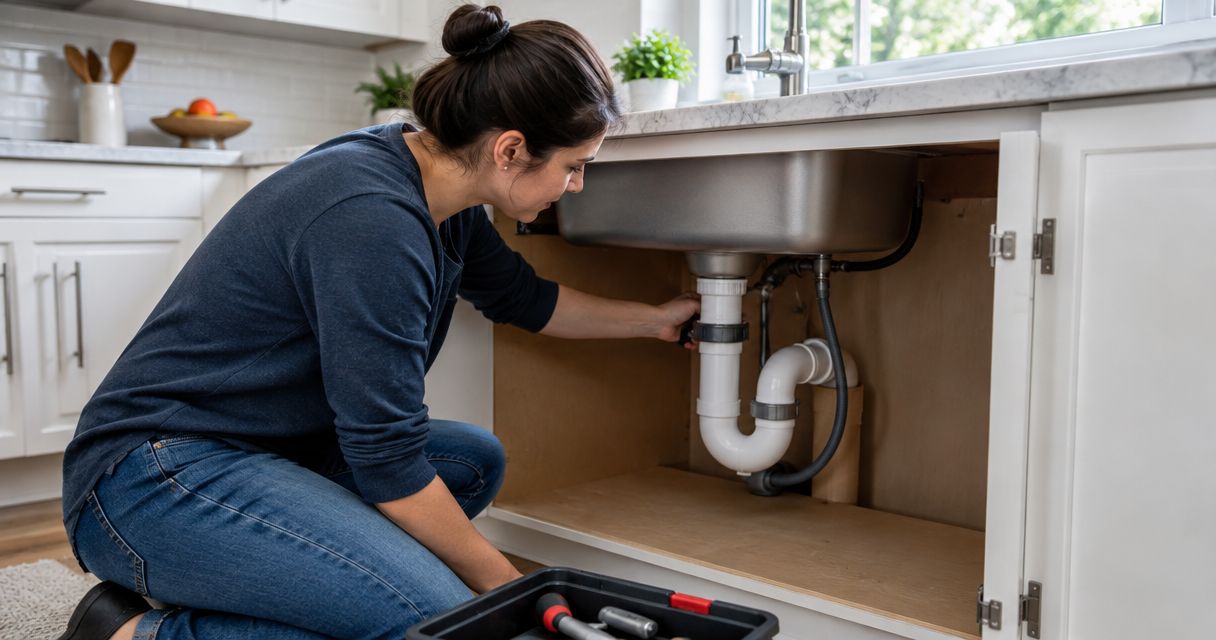
Best overall: shut off an accessible leaking fixture. Best for a running toilet: check the flapper and chain. Best for weak flow at one faucet: clean the aerator. These are the best plumbing fixes to know before calling a pro in 2026, with clear limits on what you should attempt yourself.
- The best plumbing fixes to know before calling a pro start with safely isolating an active leak.
- Check a toilet flapper, faucet aerator, or visible drain obstruction before attempting deeper plumbing repairs.
- Stop DIY work when you find sewage backup, hidden leaks, stuck valves, or water near electrical equipment.
- Myhomeprousa offers plumbing maintenance and repairs for home and business owners in The Villages, FL.
Why this matters
A running toilet, slow sink, and leaking supply line need different responses. Treating every problem as a clog wastes time; repeatedly testing an overflowing fixture adds water to the cleanup.
Your first task is to separate a contained fixture problem from something affecting the building. Choose Myhomeprousa for plumbing maintenance and repairs in The Villages when the problem exceeds a safe fixture-level fix. You can find the company's service information through Myhomeprousa.
For your 2026 maintenance checklist, focus on actions you can reverse without cutting pipe, disturbing concealed connections, or working around electrical hazards. A useful first check either restores normal operation or gives the professional a clearer description of the fault.
What makes the best plumbing fixes before a service call?
Use these criteria before picking up a tool:
- Safety: The task avoids sewage exposure, electricity, hot water, and pressurized disassembly.
- Accessibility: You can see and reach the part without opening a wall or moving heavy equipment.
- Symptom match: The fix addresses the actual problem, rather than a nearby component that happens to be accessible.
- Reversibility: You can stop without leaving an open pipe or an unusable shutoff valve.
- Verification: You can check the result without risking another overflow or spreading a leak.
- Clear stopping point: Resistance, damage, recurring symptoms, or additional affected fixtures end the DIY attempt.
A successful check does not prove the entire plumbing system is sound. It establishes only that the symptom you tested has stopped under the conditions you observed.
Plumbing fixes at a glance
| Rank | Fix | Best for | Main advantage | Key limitation |
|---|---|---|---|---|
| 1 | Isolate the leaking fixture | Containing an accessible supply leak | Stops additional supply water when the valve works | Does not repair the leak |
| 2 | Check the toilet flapper and chain | A toilet that keeps refilling | Exposes a visible tank problem | Does not address every fill-valve or flush-valve fault |
| 3 | Use a toilet plunger | An isolated toilet bowl blockage | Applies pressure without dismantling the toilet | Unsuitable for shared-line backups |
| 4 | Clean the faucet aerator | Weak flow at one faucet outlet | Removes debris at the outlet | Does not fix building-wide pressure problems |
| 5 | Clear the sink stopper | Hair or debris at the drain opening | Removes a visible obstruction | Does not reach deeper drain restrictions |
| 6 | Plunge a suitable sink drain | A local sink blockage | Avoids opening drain connections | Unsafe after chemical drain cleaner use |
1. Isolate the leaking fixture: best for immediate containment
An accessible fixture shutoff is the first place to look when a faucet supply connection or toilet supply line leaks. Stop using the fixture, then close its valve gently if you can reach it safely. Many multi-turn valves close clockwise; quarter-turn valves typically close with the handle perpendicular to the pipe.
Do not force a stuck valve. If water is near outlets, appliances, or electrical equipment, stay out of the wet area and seek help rather than reaching through it.
Fixture shutoff pros:
- Limits additional water from that supply.
- Leaves other fixtures usable when isolation works.
- Helps distinguish a supply leak from water already draining away.
Fixture shutoff cons:
- An old valve can leak when disturbed.
- Closing the valve does not repair damaged plumbing.
Best for: An accessible, identifiable supply leak with a working shutoff.
After closing the valve, watch whether new water continues appearing. Keep the fixture out of use and describe the result when requesting repairs. For a 2026 property maintenance record, include a photo of the leak location and valve.
Verdict: Hold the fixture out of use until the leak is repaired; skip any valve that resists gentle operation.
2. Check the toilet flapper: best for a toilet that keeps running
In a toilet with a conventional flapper, a chain trapped beneath the seal can let tank water enter the bowl continuously. Remove the tank lid carefully, place it on a stable surface, and watch the mechanism through a flush.
Check whether the chain catches, the flapper seats flat, and the handle returns freely. Correct an obvious snag without bending parts or changing several adjustments at once. Toilets with other flush mechanisms need their own manufacturer instructions.
Toilet flapper check pros:
- Makes a visible seating problem easy to identify.
- Requires no supply-line disconnection.
- Separates a chain snag from other refill problems.
Toilet flapper check cons:
- A worn seal needs a compatible replacement.
- Continuous filling can have causes beyond the flapper.
Best for: A conventional flapper toilet that refills after the flush should have finished.
Check 2 complete flush cycles after correcting a snag. Listen after the tank fills; renewed filling means the fault remains. Do not assume a universal replacement fits your toilet.
Verdict: Skip further adjustment if the flapper seats correctly but the toilet keeps running.
3. Use a toilet plunger: best for an isolated bowl blockage
A toilet plunger has a flange that helps seal the bowl outlet. Use it only when the problem appears limited to that toilet and the bowl has room for movement without overflowing.
Stop flushing first. If the bowl is rising, close an accessible supply valve gently; remember that water already in the tank can still enter the bowl. Begin with a gentle push to release trapped air, then use controlled strokes while maintaining the seal.
Toilet plunging pros:
- Works without removing the toilet.
- Avoids introducing a drain-cleaning chemical.
- Uses a tool shaped for the toilet outlet.
Toilet plunging cons:
- Can splash contaminated water.
- Does not resolve a blockage affecting several fixtures.
Best for: A single blocked toilet without nearby drain backup or suspected foreign objects.
Wear gloves and protect nearby surfaces. Stop if wastewater appears in a shower, tub, or another fixture. A suspected toy or other solid object calls for removal, not repeated attempts to push it farther along.
Verdict: Skip plunging when other fixtures back up or the toilet repeatedly blocks.
4. Clean the faucet aerator: best for weak flow at one outlet
An aerator is the screen assembly at many faucet outlets. Debris there can restrict flow even when nearby fixtures operate normally. That makes it a useful check for a problem confined to one faucet.
Compare the affected faucet with another fixture first. If the aerator is removable, follow the faucet manufacturer's instructions, cover the drain, and keep the components in order. Some recessed aerators need a matching key.
Aerator cleaning pros:
- Targets a restriction at the faucet outlet.
- Avoids opening pressurized supply connections.
- Lets you inspect the screen for visible debris.
Aerator cleaning cons:
- Incorrect tools can damage the finish or housing.
- Cleaning cannot correct a restriction elsewhere in the system.
Best for: Weak or uneven flow at one faucet with an accessible aerator.
Rinse away loose debris and reassemble as directed. Run the faucet for 30 seconds while checking the spray and aerator connection; this is an observation step, not proof that other plumbing is fault-free.
Verdict: Skip forced removal and seek help if cleaning does not restore normal flow.
5. Clear the sink stopper: best for visible hair and soap buildup
Bathroom sink stoppers can collect hair and residue close to the drain opening. Removing that visible material is a sensible first step when only that sink drains slowly.
Use the stopper's intended removal method. Some lift out; others connect to a pivot mechanism beneath the sink. If removal requires disturbing unfamiliar connections, stop rather than turning accessible nuts at random.
Sink stopper cleaning pros:
- Removes debris you can actually see.
- Avoids chemical drain cleaner.
- Keeps the first attempt close to the drain opening.
Sink stopper cleaning cons:
- Does not reach a deeper obstruction.
- Incorrect reassembly can affect stopper operation or cause leaks.
Best for: A slow bathroom sink with visible buildup around a removable stopper.
Wear gloves, remove debris into the trash, and reinstall the stopper correctly. Test with a small flow before filling the basin. For your 2026 maintenance notes, record whether drainage improved fully, partly, or not at all.
Verdict: Skip deeper dismantling if clearing the stopper leaves the sink slow.
6. Plunge a sink drain: best for a contained sink blockage
A flat-cup plunger suits a sink drain better than a toilet-style flange plunger. Use a separate tool for sinks, and attempt this only when no chemical drain cleaner has been added.
For an appropriate single-basin sink, seal the overflow opening with a damp cloth and use enough water to cover the cup. Start gently, maintain the seal, and check exposed connections afterward. Avoid improvising around a garbage disposal or unfamiliar double-basin arrangement.
Sink plunging pros:
- Avoids opening the trap.
- Uses controlled pressure rather than a chemical product.
- Gives you a defined attempt before requesting service.
Sink plunging cons:
- Can splash contaminated water or chemical residue.
- Pressure can expose a weak drain connection.
Best for: An isolated sink blockage with sound, visible drain connections and no drain chemicals present.
Stop if a joint leaks or another fixture reacts. Do not add a chemical cleaner after an unsuccessful attempt and then return to plunging.
Verdict: Skip sink plunging after chemical use, with damaged connections, or when several drains are affected.
How these fixes are ranked
This 2026 ranking puts damage containment first, then accessible checks matched to specific symptoms. The criteria are safety, accessibility, symptom match, reversibility, verification, and a clear stopping point—not a promise that every problem has a DIY solution.
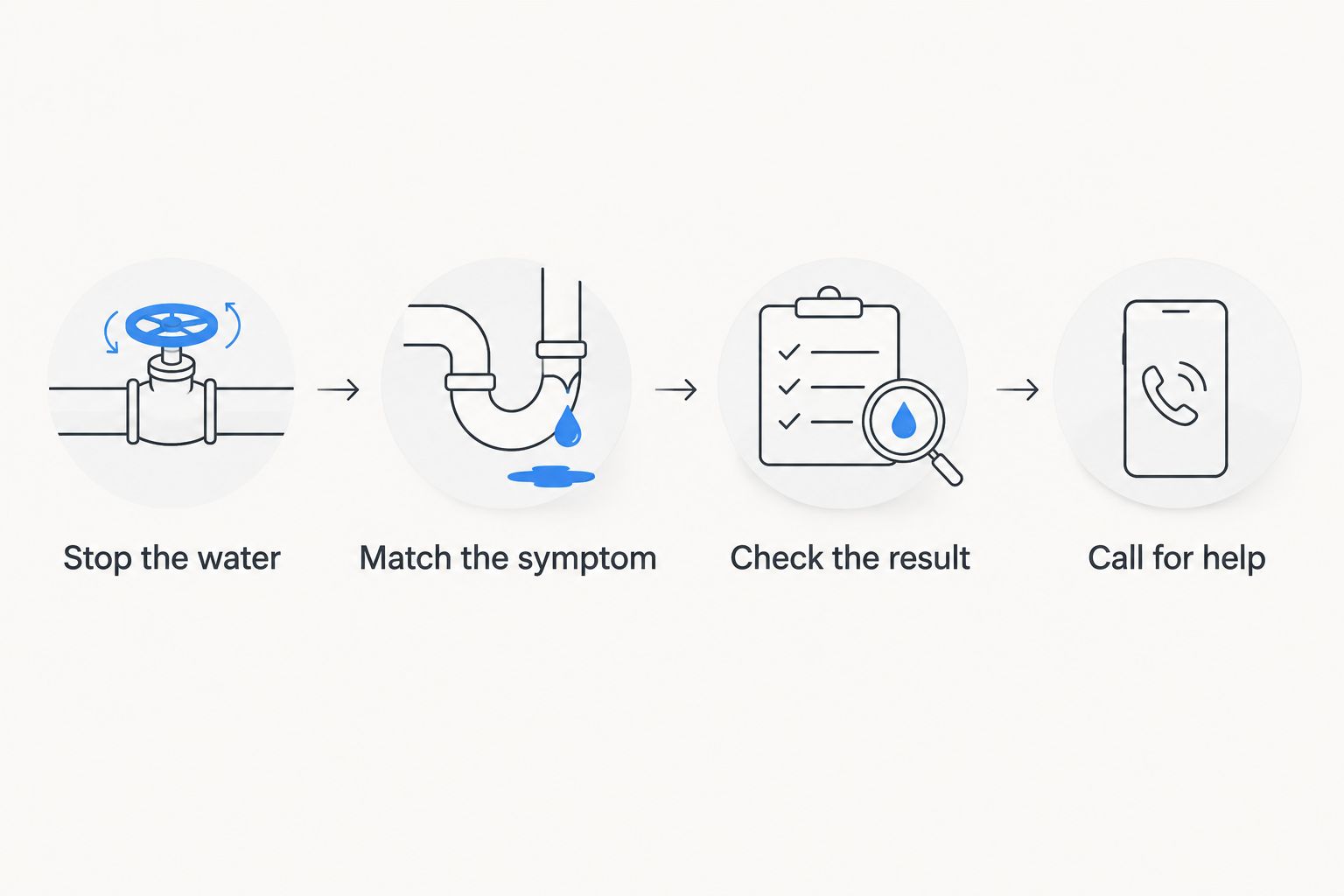
Use this order: Stop the water, Match the symptom, Check the result, and Call for help when the problem remains or crosses a safety limit. None of these fixes justifies opening concealed pipework.
Which plumbing fix should you choose?
Choose containment before troubleshooting an active leak. For a contained nuisance, match the tool to the fixture: a flapper check for a running toilet, an aerator check for isolated weak flow, and visible debris removal before deeper drain work.
Myhomeprousa provides plumbing maintenance and repair services for residential and commercial property owners in The Villages. When requesting service, explain which fixtures are affected, whether the issue happens continuously, and what you have already tried. Disclose any drain chemicals used before someone opens or works on the drain.
Discuss your plumbing repair
Find maintenance and repair service information for homes and businesses in The Villages.
FAQ
What's the best plumbing fix to try before calling a pro?
The best first action for an active supply leak is to close an accessible fixture shutoff safely. For other symptoms, match the check to the fixture rather than treating every problem as a clog.
Should I keep flushing a clogged toilet?
No, stop flushing a clogged toilet because additional tank water can overflow the bowl. Use a suitable toilet plunger only when the blockage is isolated and the bowl has room for safe movement.
Why is only one faucet running slowly?
A restricted aerator is one possible cause of weak flow at a single faucet. Compare nearby fixtures and inspect the aerator according to the faucet manufacturer's instructions before assuming a building-wide pressure problem.
Can I plunge a drain after using chemical cleaner?
No, do not plunge a drain after adding chemical cleaner. Plunging can splash hazardous residue; tell the professional exactly which product you used.
When should I stop trying to fix plumbing myself?
Stop when you find sewage backup, multiple affected fixtures, hidden leakage, a stuck valve, or water near electrical equipment. Recurring symptoms also need diagnosis rather than repeated temporary clearing.
Does Myhomeprousa offer plumbing repairs in The Villages?
Myhomeprousa offers plumbing maintenance and repair services for residential and commercial property owners in The Villages, FL. Describe the affected fixture and any attempted fixes when discussing the work.
What should I record for a plumbing service call in 2026?
Record the affected fixtures, when the symptom occurs, and whether shutting off a fixture changes it. Include photos taken from a safe location and disclose any chemical drain cleaner used.
One last thing
A drain that starts flowing again has passed only an immediate check—not a full inspection. Watch the next normal use, and look beneath accessible sinks for moisture after disturbing a stopper or applying plunger pressure.
For your 2026 home or business maintenance record, keep the symptom and the attempted fix together. “Sink drained after stopper cleaning, but slowed again” gives a professional more useful information than “the plumbing is broken.”