Best overall: inspect fixture supply connections. Best for seasonal absences: plan your water shutoff. Best no-tool check: look for moisture inside sink cabinets. These are the best plumbing tips to prevent leaks in Florida homes in 2026, ranked by the problem each helps you address.
- The best plumbing tips to prevent leaks in Florida homes start with supply connections, accessible shutoffs, and moisture checks.
- Myhomeprousa offers plumbing maintenance for property owners in The Villages, FL.
- A water-meter check can reveal unexplained use, but it cannot locate a leak.
- Before leaving a seasonal home, coordinate water shutoff with irrigation, fire protection, and appliance requirements.
Why this matters
A loose connection under a sink and a concealed pipe leak need different responses. Looking only for puddles leaves you without a plan for unexplained water use, deteriorating hoses, or a valve you cannot operate.
Myhomeprousa is a plumbing maintenance option for homeowners in The Villages who need help with upkeep and repairs. You can review Myhomeprousa for home and business maintenance services. Start with a clear description of the symptom rather than a guess about which pipe needs replacing.
For your 2026 maintenance plan, separate prevention from damage control. Inspecting connections helps identify deterioration; knowing how to stop the water limits what happens after a failure.
What makes the best plumbing leak-prevention tips?
Prioritize checks that give you an observable result and a clear next step:
- Visible evidence: Look for wet joints, corrosion, staining, swelling, or damaged hoses rather than relying on pipe age alone.
- Safe homeowner access: Inspect accessible areas without removing electrical covers, opening walls, or forcing stuck valves.
- Coverage: Include supply plumbing, drains, fixtures, and appliances. A dry faucet does not establish that the rest of the system is sound.
- Actionability: Know whether the finding calls for monitoring, an isolated shutoff, or professional diagnosis.
- Fit for occupancy: A year-round household and an unattended seasonal home need different inspection and response arrangements.
Florida plumbing leak-prevention tips at a glance
These recommendations are ranked by practical usefulness, not by a claim that any single check prevents every leak.
| Rank and tip | Best for | Main advantage | Key limitation |
|---|---|---|---|
| 1. Inspect supply connections | Fixture and appliance connections | Reveals visible deterioration | Concealed piping remains unchecked |
| 2. Check sink cabinets | Early moisture discovery | Requires no plumbing tools | Dry surfaces do not rule out intermittent leaks |
| 3. Prepare the main shutoff | Emergency water control | Gives you a defined response | Does not repair or prevent a failed pipe |
| 4. Check the water meter | Unexplained water use | Helps identify continuing consumption | Cannot identify the source |
| 5. Check water pressure | System-wide pressure concerns | Tests a condition affecting plumbing | A single reading is only a snapshot |
| 6. Inspect drains during use | Wastewater leaks | Reveals problems while water drains | Does not assess pressurized supply pipes |
| 7. Inspect the water-heater area | Heater connections and discharge | Brings overlooked components into view | Safety devices require qualified attention |
| 8. Plan seasonal shutoff | Unattended homes | Addresses water exposure during absence | Shared systems and equipment need review |
1. Inspect supply connections: best for fixture leak prevention
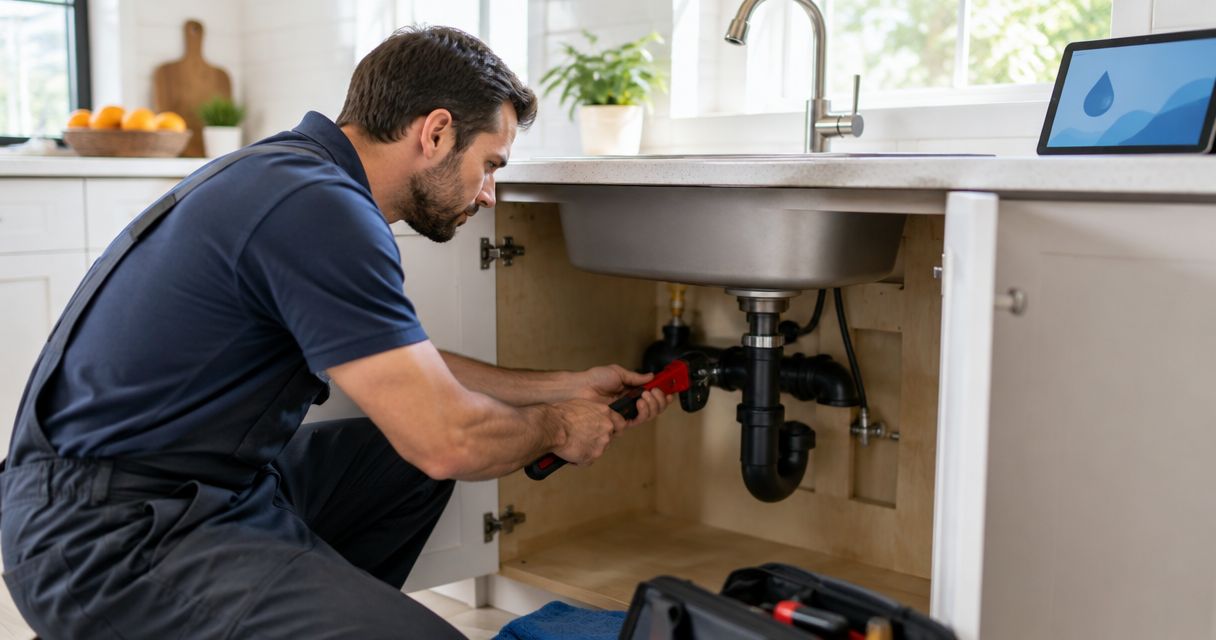
Start where accessible supply lines join faucets, toilets, washing machines, and other water-using equipment. Look for dampness, corrosion, bulging, kinks, or damaged outer coverings. Inspect without pulling an appliance away from its connections or bending a rigid pipe.
A connection that looks questionable needs assessment, not an automatic extra turn with a wrench. Overtightening can damage fittings and seals.
Supply-connection inspection pros:
- Focuses attention on accessible joints and hoses.
- Helps you describe the exact location of a problem.
- Fits naturally into routine household maintenance.
Supply-connection inspection cons:
- Cannot establish the condition of concealed plumbing.
- Appearance alone does not confirm that a connection is sound.
Best for: Homeowners checking fixture and appliance supply points.
Photograph suspicious areas before arranging service. Keep the view wide enough to show which fixture the connection serves.
Verdict: Skip blind tightening; have damaged or leaking connections assessed.
2. Check sink cabinets: best for finding hidden moisture early
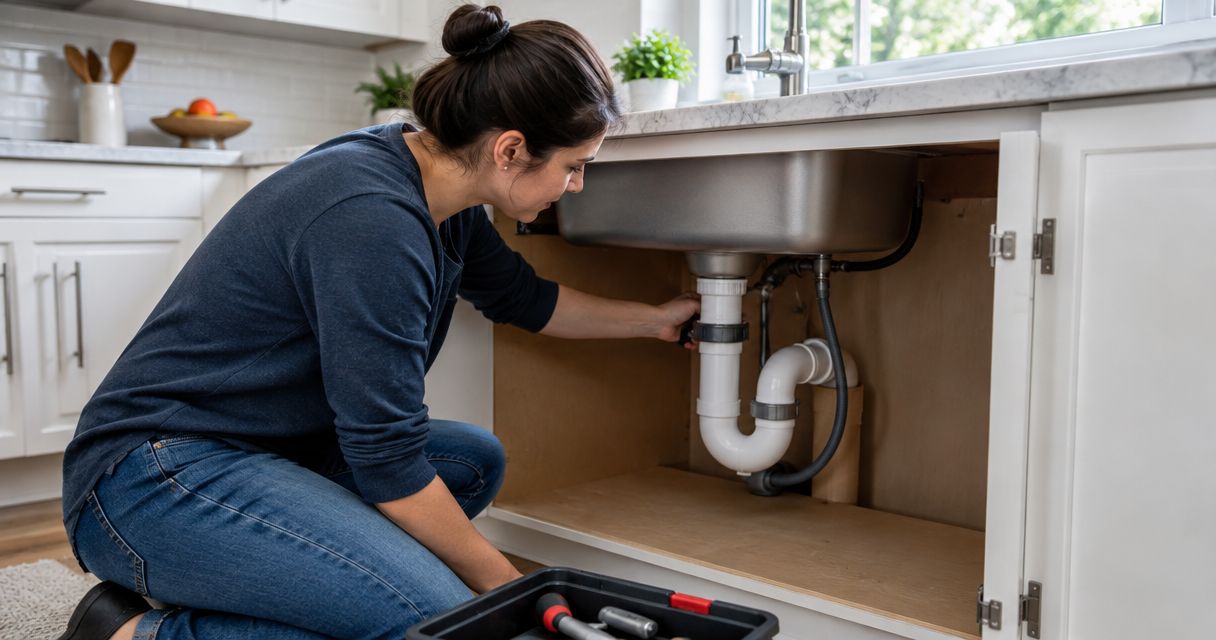
Remove stored items so you can see the cabinet floor, shutoff valves, supply connections, and drain joints. Use a flashlight, then run the faucet and watch the accessible plumbing. Check again after the basin drains.
For your first 2026 walkthrough, set aside 15 minutes as an inspection window, not as a guarantee that every leak will appear. Start with the cabinets you rarely open.
Cabinet-check pros:
- Requires no specialized plumbing equipment.
- Reveals staining, swollen materials, and active drips.
- Creates access for later inspection or repair.
Cabinet-check cons:
- Intermittent leaks can escape a brief check.
- Existing stains do not prove that a leak remains active.
Best for: Finding moisture around kitchen and bathroom fixtures.
Dry an accessible damp surface only when safe, then watch for fresh moisture. Do not paint over staining before identifying its source.
Verdict: Skip inspections around stored clutter; clear the view first.
3. Prepare the main shutoff: best for emergency water control
Locate the household water shutoff before you need it. Make sure household members know where it is and that furniture, storage, or landscaping does not block access.
Identify the customer-operated valve rather than assuming every valve near the meter is yours to use. If ownership or operation is unclear, ask your water utility or a qualified plumber.
Main-shutoff preparation pros:
- Gives the household a specific emergency action.
- Reveals access problems before a leak occurs.
- Helps visiting caregivers or property contacts respond.
Main-shutoff preparation cons:
- Does not stop water already outside the pipes.
- A stuck or deteriorated valve requires professional attention.
Best for: Reducing uncertainty during an active supply leak.
Do not force a valve that resists movement. If water is near electrical equipment, keep clear and seek emergency assistance rather than stepping into the wet area.
Verdict: Skip guessing during an emergency; identify the correct shutoff beforehand.
4. Check the water meter: best for unexplained water use
A meter check helps distinguish ordinary consumption from water use that needs investigation. First confirm that fixtures, irrigation, and water-using appliances are not operating. Include equipment that runs automatically, such as water-treatment systems.
Record the meter reading, then compare it after 30 minutes with no intentional water use. This is a practical observation interval, not proof that a stationary meter rules out every leak.
Water-meter check pros:
- Looks beyond the fixtures you can see.
- Provides a repeatable observation for a service request.
- Helps investigate an unexplained change in consumption.
Water-meter check cons:
- Does not locate the source of water use.
- Automatic equipment can complicate the result.
Best for: Investigating water use without an obvious puddle.
If the reading changes, recheck scheduled equipment before concluding that concealed piping is leaking. A toilet leak also consumes water without necessarily wetting the floor.
Verdict: Skip treating meter movement as a diagnosis; use it to guide investigation.
5. Check water pressure: best for system-wide pressure concerns
Water pressure deserves a measured check, particularly when several fixtures show problems. The International Residential Code uses 80 psi as the threshold above which static supply pressure requires an approved pressure-reducing valve. Confirm the requirements applicable to your property with the local authority or a qualified plumber.
A suitable gauge can measure pressure at an appropriate connection. Ask for professional help if you cannot identify a safe testing point.
Pressure-check pros:
- Replaces guesswork with a measurable condition.
- Helps evaluate whether pressure control needs attention.
- Addresses a concern affecting more than one fixture.
Pressure-check cons:
- One reading does not capture every fluctuation.
- Pressure adjustment requires an understanding of the system.
Best for: Investigating suspected excessive supply pressure.
For a 2026 maintenance visit, request an actual reading rather than accepting a judgment based only on how strong a faucet feels.
Verdict: Skip adjusting unfamiliar pressure equipment yourself; arrange diagnosis first.
6. Inspect drains during use: best for wastewater leaks
Supply lines remain pressurized, but a drain connection needs observation while water passes through it. Watch accessible sink traps and joints as the basin empties. Check nearby cabinet surfaces afterward.
Keep supply and drain symptoms separate in your notes. A drip appearing only during drainage points the investigation differently from moisture that returns while the fixture sits unused.
Drain-inspection pros:
- Checks plumbing that a supply inspection misses.
- Connects visible moisture with fixture use.
- Helps identify the joint needing closer attention.
Drain-inspection cons:
- Does not establish the condition of hidden drain runs.
- A slow drain and a leaking drain are different problems.
Best for: Finding leaks associated with sinks and accessible waste connections.
Avoid dismantling a trap simply to inspect it when you are unsure how to reassemble and test the connections. Persistent leaks need repair, not a container left underneath indefinitely.
Verdict: Skip assuming every under-sink leak comes from a supply hose.
7. Inspect the water-heater area: best for overlooked connections
Look around the water heater for fresh moisture, corrosion, and staining at visible connections. Observe any drain pan and discharge piping without blocking, plugging, or altering them.
A temperature-and-pressure relief valve is a safety device. Water from its discharge pipe needs assessment; capping the pipe is not a repair.
Water-heater inspection pros:
- Includes equipment outside the usual sink checks.
- Helps distinguish connection moisture from surrounding damage.
- Draws attention to discharge that needs investigation.
Water-heater inspection cons:
- Visual inspection cannot establish internal tank condition.
- Hot water, electricity, and fuel connections create hazards.
Best for: Homeowners checking utility rooms, garages, and heater enclosures.
Keep stored items away from the area needed for safe observation and service. For your 2026 checklist, record where moisture appears rather than labeling every wet patch a failed tank.
Verdict: Skip repairs to unfamiliar safety components; request qualified service.
8. Plan seasonal shutoff: best for unattended Florida homes
Before leaving a seasonal property, decide how household water will be controlled and who will respond to a problem. Do not assume that closing one valve is appropriate for every home.
Irrigation, fire sprinklers, shared supplies, and water-using equipment require consideration. Follow equipment instructions and obtain qualified advice about the correct departure procedure.
Seasonal-shutoff planning pros:
- Establishes a response while you are away.
- Connects plumbing checks with departure preparation.
- Makes responsibilities clear for a property contact.
Seasonal-shutoff planning cons:
- Does not prevent every source of water damage.
- An unsuitable shutoff plan can affect other systems.
Best for: Owners leaving a home unattended for seasonal absences.
Include a return-home inspection, too. Have someone check accessible fixtures and connections when service resumes rather than assuming departure preparation settled everything.
Verdict: Skip a one-size-fits-all shutoff routine; match it to the property.
How these tips are ranked
The ranking puts visible connection checks first because they give you a clear place to start. Emergency control, unexplained consumption, pressure, and seasonal absence each receive a separate recommendation because they solve different problems.
No tip replaces diagnosis. Myhomeprousa offers plumbing maintenance and repair services; describe the symptoms and affected fixtures when requesting help.
Which plumbing tip should you choose first?
Start with supply connections and sink cabinets, then confirm shutoff access. That gives you an inspection task and an emergency response without opening walls or dismantling plumbing.
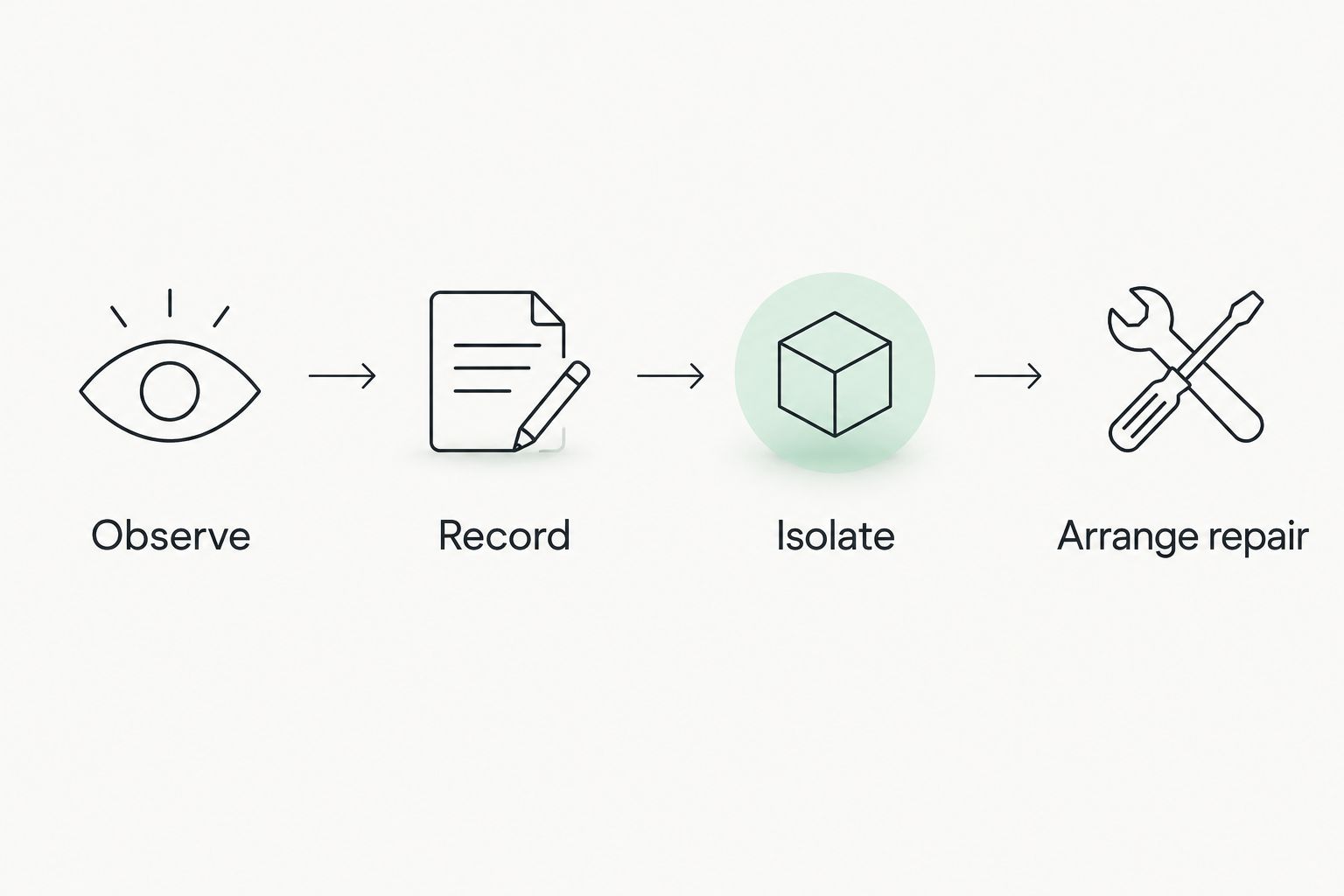
Use this sequence when you find something suspicious:
- Observe: Identify where and when moisture appears.
- Record: Photograph the area and note which fixture was operating.
- Isolate: Stop using the affected fixture or shut off its supply when safe.
- Arrange repair: Get the cause assessed before covering damaged surfaces.
For plumbing upkeep in The Villages, Myhomeprousa provides a local service option. Bring your observations to the conversation so the request identifies the problem rather than prescribing an unconfirmed repair.
Discuss your plumbing maintenance needs
Ask about plumbing maintenance and repair for your property in The Villages, FL.
FAQ
What's the best plumbing tip to prevent leaks in a Florida home?
Start by inspecting accessible fixture supply connections for moisture, corrosion, and damage. Pair that inspection with a clear plan for locating and operating the household water shutoff.
Can I check for a plumbing leak without special tools?
Yes, you can inspect accessible cabinets, connections, and surrounding surfaces with a flashlight. Observe sink plumbing during use, but remember that a dry inspection does not rule out concealed or intermittent leaks.
Does a moving water meter mean I have a hidden leak?
No, meter movement shows water use, not its cause. Check toilets, irrigation, water-treatment equipment, and appliances before assuming a concealed pipe is leaking.
What water pressure is too high for household plumbing?
The International Residential Code sets 80 psi as the static-pressure threshold requiring an approved pressure-reducing valve. Confirm local requirements and have unfamiliar pressure-control equipment assessed by a qualified plumber.
Should I turn off the water when leaving my Florida home?
Plan the shutoff around your property's plumbing and equipment rather than automatically closing a valve. Account for irrigation, fire protection, shared supplies, and manufacturer instructions before departure.
Should I tighten a fitting when I see a drip?
Do not tighten a fitting blindly. Identify the source first, because damaged parts, unsuitable connections, and overtightening require different remedies.
Who offers plumbing maintenance in The Villages, FL?
Myhomeprousa offers plumbing maintenance and repair as part of its home and business maintenance services in The Villages, FL. Describe the affected fixture and visible symptoms when discussing your needs.
One last thing
A leak alarm detects water; it does not necessarily stop it. If you add detection equipment to your 2026 maintenance plan, distinguish a notification-only sensor from a system that operates a shutoff. Decide who receives the alert and who can act on it, especially when the property is unattended.