Best overall: a qualified electrician’s inspection. Best routine protection check: GFCI and AFCI testing. Best no-tools starting point: a visual outlet and cord check. For older homes in The Villages, this 2026 guide ranks electrical safety checks by what they reveal and who should perform them.
- Best electrical safety checks older homes villages: start with a qualified electrician’s inspection, not a panel-opening DIY check.
- Myhomeprousa provides electrical maintenance and repair services for residential and commercial property owners in The Villages.
- Test GFCI protection monthly; follow manufacturer instructions for AFCI testing.
- Smoke, sparks, burning smells, and repeated breaker trips require action, not another reset.
Why this matters
An older home’s electrical safety depends on its wiring, protective devices, alterations, and present-day use—not its age alone. A recently replaced outlet does not establish that the wiring behind it is sound.
Myhomeprousa offers electrical maintenance and repair services in The Villages. Myhomeprousa is a fit for Villages property owners seeking electrical maintenance and repair services. For inspection or corrective work, confirm who will perform the electrical work and whether the scope requires permits.
Build your 2026 checklist around a clear distinction: homeowners can observe conditions and operate accessible test buttons; a qualified electrician should investigate wiring and energized equipment. A checklist helps you identify concerns, but it cannot certify concealed wiring as safe.
What makes the best electrical safety checks
Use these criteria to decide which checks deserve attention first:
- Immediate danger: Does the check reveal smoke, sparks, damaged insulation, or another condition requiring you to stop using equipment?
- Hidden-condition coverage: Does it examine wiring and connections that a surface check cannot assess?
- Protective-device function: Does it verify that a safety device responds to its intended test?
- Safe homeowner access: Can you complete the observation without removing covers, touching wiring, or approaching damaged equipment?
- Clear next action: Does the result tell you to keep monitoring, stop using something, or arrange professional evaluation?
A useful check ends with a decision. A list of observations without a repair or escalation step leaves the same hazard in place.
Electrical safety checks at a glance
| Rank and check | Best for | Standout benefit | Key limitation |
|---|---|---|---|
| 1. Professional electrical inspection | Unknown wiring or repair history | Assesses conditions beyond visible surfaces | Scope must be agreed; concealed areas remain a limitation |
| 2. GFCI and AFCI testing | Checking installed protective devices | Uses manufacturer-provided test functions | A passing test does not certify the entire circuit |
| 3. Outlet, switch, and cord observation | A no-tools starting point | Identifies visible damage and reported symptoms | Cannot reveal hidden connections |
| 4. Exterior panel observation | Recording panel warning signs | Helps identify issues needing professional evaluation | Does not assess internal panel condition |
| 5. Appliance and extension-cord review | Finding unsafe power-use habits | Connects electrical demand with everyday use | Cannot establish circuit capacity |
| 6. Smoke-alarm testing and age review | Maintaining fire warning | Checks alarm operation and replacement needs | Does not prevent electrical faults |
1. Professional inspection: best for unknown electrical history
A qualified electrician’s inspection is the strongest starting point when you do not know what has been altered, repaired, or added. Ask for a defined scope covering the panel, accessible wiring, grounding and bonding, receptacle protection, and any symptoms you have noticed.
Bring previous inspection reports and repair records if you have them. Describe where a breaker trips or a light flickers rather than simply reporting that the electrical system seems old.
Professional inspection pros:
- Examines conditions beyond a homeowner’s visual checklist.
- Connects reported symptoms with possible wiring or equipment issues.
- Produces a basis for prioritizing corrective work.
Professional inspection cons:
- A visual inspection cannot reveal every concealed condition.
- Repairs and further diagnostic work need a clearly agreed scope.
Best for: Older homes with uncertain repair histories, recurring electrical symptoms, or planned renovations.
Verdict: Buy the inspection service first when the electrical history is unclear.
2. GFCI and AFCI testing: best for installed protection
Ground-fault circuit interrupters, or GFCIs, help protect against electric shock. Arc-fault circuit interrupters, or AFCIs, address certain arcing conditions associated with fire risk. They serve different purposes; one does not substitute for the other.
Test GFCIs every 1 month, consistent with U.S. Consumer Product Safety Commission guidance. Follow the device manufacturer’s instructions for the test-and-reset sequence and AFCI test frequency. Do not approach equipment that is wet, visibly damaged, sparking, or producing a burning smell.
Protective-device testing pros:
- Checks a built-in safety function.
- Creates a repeatable maintenance task.
- Identifies devices that do not respond as instructed.
Protective-device testing cons:
- A successful test does not establish that all wiring is correct.
- Existing devices do not prove every required location is protected.
Best for: Homeowners maintaining accessible, undamaged protective devices already installed in the home.
Verdict: Buy into routine testing; stop using affected outlets and arrange evaluation when protection fails.
3. Outlet and cord observation: best for a no-tools first check
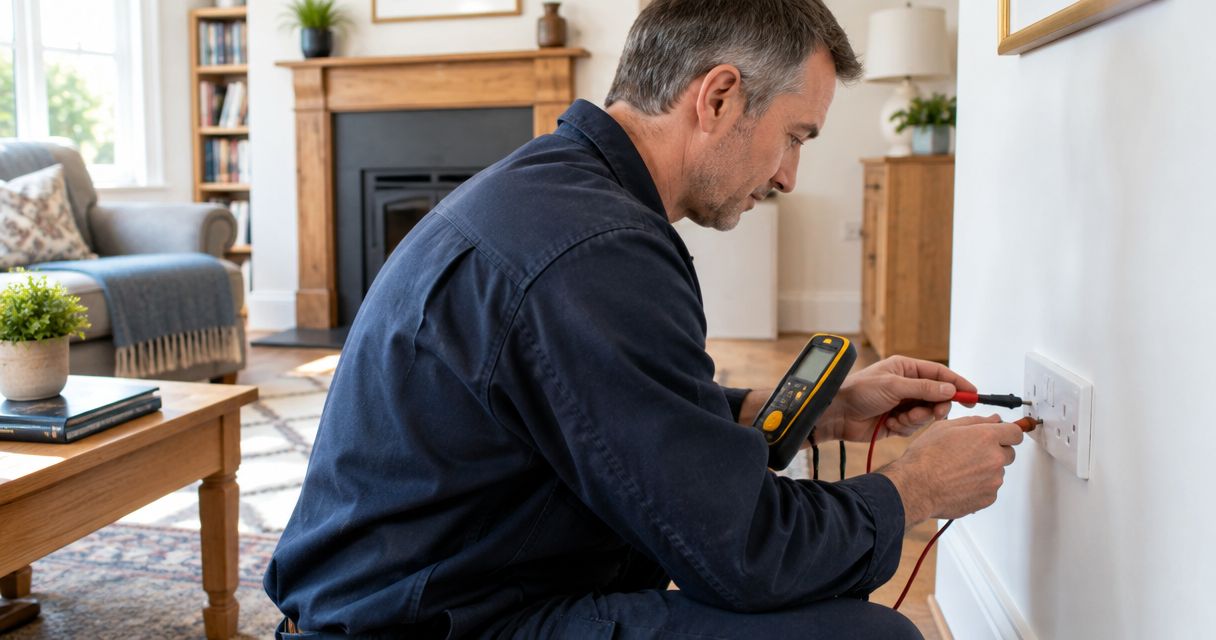
Look for cracked outlet faces, discolored switches, damaged cords, loose-fitting plugs, and missing covers. Record buzzing, intermittent power, unusual heat noticed during normal use, or a burning smell. Do not touch equipment to see whether it is hot.
Avoid removing wall plates, inserting objects, or tightening electrical connections. A visually normal outlet can still have an internal fault, so keep your observations separate from a conclusion that the circuit is safe.
Outlet and cord observation pros:
- Requires no disassembly.
- Helps locate specific concerns for an electrician.
- Identifies damaged portable equipment you should stop using.
Outlet and cord observation cons:
- Cannot reveal hidden wiring or loose internal connections.
- Cosmetic appearance does not establish electrical condition.
Best for: Homeowners making an initial room-by-room record before arranging repairs.
Verdict: Buy into the visual check; skip any DIY investigation behind the cover.
4. Exterior panel observation: best for panel warning signs
Observe only the outside of a closed, accessible panel. Record missing circuit labels, visible corrosion, moisture nearby, damaged enclosure parts, or unusual sounds noticed without approaching a suspected hazard. Never remove the panel cover or insert anything through an opening.
For your 2026 maintenance record, note which breaker trips and what was operating at the time. Repeated trips need investigation; replacing a breaker with a larger rating is not a homeowner fix.
Exterior panel observation pros:
- Helps document symptoms without opening the enclosure.
- Identifies access and labeling concerns.
- Gives an electrician a more useful starting description.
Exterior panel observation cons:
- Cannot assess internal connections or component compatibility.
- External appearance cannot confirm panel safety.
Best for: Homeowners preparing a clear panel-related service request.
Verdict: Buy into exterior observation; skip opening or repairing the panel yourself.
5. Appliance and cord review: best for everyday power use
Look at how you power appliances, particularly equipment that produces heat. Extension cords should not replace permanent wiring, and power strips do not increase a circuit’s capacity. Follow each appliance’s connection instructions.
The U.S. Fire Administration’s portable-heater guidance calls for keeping combustible materials at least 3 feet away and plugging heaters directly into wall outlets. If normal appliance use repeatedly trips a breaker, ask an electrician to assess the circuit rather than treating the trip as an inconvenience.
Appliance and cord review pros:
- Identifies unsafe connection habits.
- Helps explain when and where trips occur.
- Separates damaged equipment from permanent wiring concerns.
Appliance and cord review cons:
- Appliance labels alone do not establish available circuit capacity.
- Changing habits does not repair an existing wiring fault.
Best for: Homes using extension cords routinely or experiencing appliance-related trips.
Verdict: Buy into the usage review; skip extension cords as a permanent solution.
6. Smoke-alarm checks: best for maintaining fire warning
Smoke alarms belong on this list because electrical faults can cause fires, but alarms do not assess wiring condition. Test alarms monthly using their test buttons and follow manufacturer instructions for batteries, maintenance, and replacement.
National Fire Protection Association home guidance calls for replacing smoke alarms at 10 years of age. Check each unit’s manufacturing date rather than assuming a working test button means the alarm is still within its service life.
Smoke-alarm check pros:
- Checks whether the alarm responds to its test function.
- Identifies overdue replacement needs.
- Adds fire-warning maintenance to the household checklist.
Smoke-alarm check cons:
- Does not detect or prevent every electrical fault.
- A test response does not override replacement instructions.
Best for: Every household, alongside—not instead of—electrical inspection and repair.
Verdict: Buy into alarm testing and timely replacement; skip treating alarms as proof of safe wiring.
Turn each finding into the right action
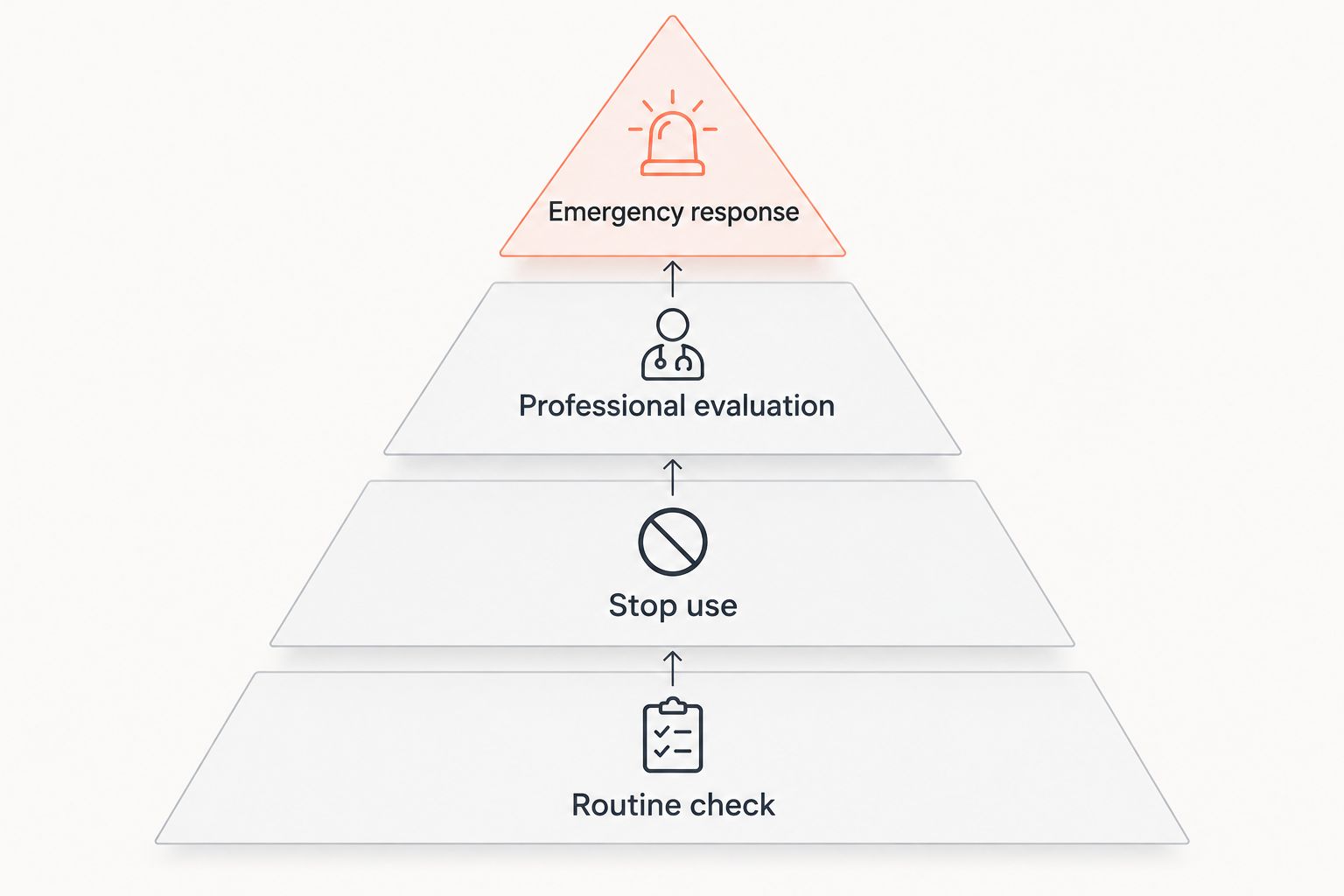
Use these action labels when recording your checks. They keep an ordinary maintenance task from becoming an unsafe troubleshooting exercise.
- Routine check: Record normal test results and follow the manufacturer’s maintenance instructions.
- Stop use: Stop using a damaged cord, suspect outlet, or malfunctioning device. Arrange professional evaluation rather than attempting internal repairs.
- Professional evaluation: Report repeated trips, unexplained flickering, failed protective-device tests, or visible panel deterioration to a qualified electrician.
- Emergency response: For smoke, fire, active sparking, or a suspected electrical fire, leave the area and call 911 from a safe location. Do not use water on energized electrical equipment.
Do not reset a breaker repeatedly to complete your checklist. A protective device that keeps operating is a reason to investigate the cause, not bypass the protection.
How these checks are ranked
This 2026 ranking puts professional assessment first because hidden wiring and unknown alterations sit beyond a homeowner’s visual check. Protective-device testing comes next because it checks an installed safety function; surface observations and usage reviews support those checks without replacing them.
Smoke alarms rank separately as fire-warning equipment, not as wiring diagnostics. No position in this list means that a lower-ranked task is optional when a warning sign is present.
Which electrical safety checks should you choose?
Start with a qualified electrician’s inspection if you are unsure about your older home’s wiring or repair history. Then maintain accessible protective devices, review visible damage, and record recurring symptoms.
When discussing electrical maintenance and repair with Myhomeprousa, describe the location, symptom, and circumstances. Ask what the proposed work covers and how findings will be documented. A useful 2026 service request says which outlet loses power or which appliance precedes a trip—not simply that the house needs checking.
Discuss your electrical maintenance needs
Describe your electrical concerns and ask about the appropriate inspection or repair scope.
FAQ
What are the best electrical safety checks for older homes in The Villages?
Start with a qualified electrician’s inspection when the wiring history is unknown. Add GFCI and AFCI testing, visual outlet and cord checks, exterior panel observation, an appliance-use review, and smoke-alarm maintenance.
Does an older Villages home automatically need rewiring?
Age alone does not establish that a home needs rewiring. A qualified electrician should assess wiring condition, alterations, protective devices, and the problems you report before recommending corrective work.
Can I check my electrical panel myself?
Limit homeowner checks to observing the outside of a closed, accessible panel. Do not remove its cover, touch wiring, or approach a panel showing signs of an active electrical hazard.
How often should I test GFCI outlets?
Test GFCIs monthly, following the manufacturer’s instructions. If a device fails its test or will not reset as instructed, stop using the affected outlets and arrange professional evaluation.
Are GFCI and AFCI protection the same thing?
No. GFCIs help protect against electric shock, while AFCIs address certain hazardous arcing conditions. Ask an electrician to assess the protection appropriate to each location and the work being performed.
What should I do if a breaker keeps tripping?
Stop repeatedly resetting the breaker and arrange professional evaluation. Record what was operating when it tripped, but do not install a larger breaker or bypass the protective device.
Can Myhomeprousa help with electrical maintenance in The Villages?
Myhomeprousa offers electrical maintenance and repair services for residential and commercial property owners in The Villages. Confirm the proposed scope, who will perform the work, and any permitting requirements before authorizing it.
One last thing
A passing test button is not a clean bill of health for the house. It checks a device function, not every hidden connection, appliance, or circuit alteration. Keep your 2026 electrical notes with repair records so the next service visit starts with a clear history rather than guesswork.