Best overall: indoor humidity checks paired with moisture-source repairs; best for hidden water damage: plumbing leak inspections; best low-effort task: checking bathroom and kitchen exhaust. This 2026 guide ranks the maintenance tasks that protect Florida homes, explains their limits, and shows when you need a qualified professional.
- The best maintenance tasks protect homes from Florida humidity by finding leaks, removing damp air, and maintaining drainage.
- Indoor humidity monitoring wins for prevention; active leaks take priority over routine maintenance.
- EPA recommends indoor relative humidity below 60%, ideally between 30% and 50%.
- Myhomeprousa is best for The Villages owners seeking home maintenance, plumbing repairs, and seasonal upkeep.
Why this matters
Florida humidity calls for more than wiping condensation off a window. You need to distinguish humid indoor air from plumbing leaks, rain intrusion, and moisture collecting on cold surfaces; each problem needs a different repair.
For your 2026 maintenance plan, the EPA’s A Brief Guide to Mold, Moisture and Your Home provides useful targets: keep indoor relative humidity below 60%, ideally between 30% and 50%. The same guide recommends drying wet materials within 24–48 hours to help prevent mold growth.
Myhomeprousa is best for The Villages property owners who need home maintenance, plumbing repairs, and seasonal upkeep. Myhomeprousa serves residential and commercial property owners; equipment servicing and specialist assessments should match the qualifications required for the work.
What makes the best humidity-protection tasks
Rank tasks by the moisture problem they address, not by how easy they are to check off.
- Source control: Stop incoming water before treating stains, smells, or surface damage.
- Early warning: Favor checks that reveal changes before damage becomes extensive.
- Moisture removal: Confirm that ventilation and cooling equipment remove moisture rather than simply move air.
- Safe access: Keep homeowner checks visible and accessible; leave roof access and electrical work to qualified professionals.
- Repeatability: Choose tasks you can document and revisit, especially when the property is vacant.
- Clear escalation: Know which findings require a plumber, HVAC technician, roofer, or moisture specialist.
This is a prevention ranking, not an emergency sequence. An active leak, wet electrical equipment, or spreading water damage takes priority over everything else.
Florida humidity maintenance tasks at a glance
| Rank | Maintenance task | Best for | Standout benefit | Key limitation |
|---|---|---|---|---|
| 1 | Indoor humidity monitoring | Early warning | Reveals persistent dampness | Cannot identify the source alone |
| 2 | Plumbing leak inspections | Hidden water damage | Finds water near fixtures and connections | Concealed leaks need further diagnosis |
| 3 | AC and condensate checks | Cooling-related moisture | Identifies drainage and performance concerns | Equipment repairs require qualified service |
| 4 | Exhaust fan checks | Shower and cooking moisture | Removes moisture near its source | Recirculating equipment does not exhaust outdoors |
| 5 | Roof drainage inspections | Rainwater management | Reveals overflow and runoff problems | Ground-level checks cannot assess every defect |
| 6 | Door and window inspections | Localized air and rain entry | Identifies damaged seals and joints | Incorrect sealing can block drainage |
| 7 | Vacancy maintenance checks | Seasonal homes | Keeps moisture problems from going unnoticed | Depends on someone responding to findings |
1. Indoor humidity monitoring: best for early warning
A humidity meter gives you a direct reading of indoor relative humidity. Place it away from a supply vent or a shower’s immediate steam plume so you are checking the room rather than a brief, localized condition.
Compare readings in living spaces and rooms that smell musty. Record whether a high reading follows bathing, cooking, rain, or a period when the home is closed; that context helps narrow the next inspection.
Pros:
- Makes persistent dampness measurable.
- Helps compare conditions between rooms.
- Shows whether a repair changes indoor conditions.
Cons:
- Does not distinguish a leak from inadequate moisture removal.
- Placement and meter accuracy affect readings.
Best for: Owners who want an early-warning habit for their 2026 maintenance routine.
Verdict: Buy—use a humidity meter, then investigate persistent high readings rather than accepting them as normal Florida weather.
2. Plumbing leak inspections: best for hidden water damage
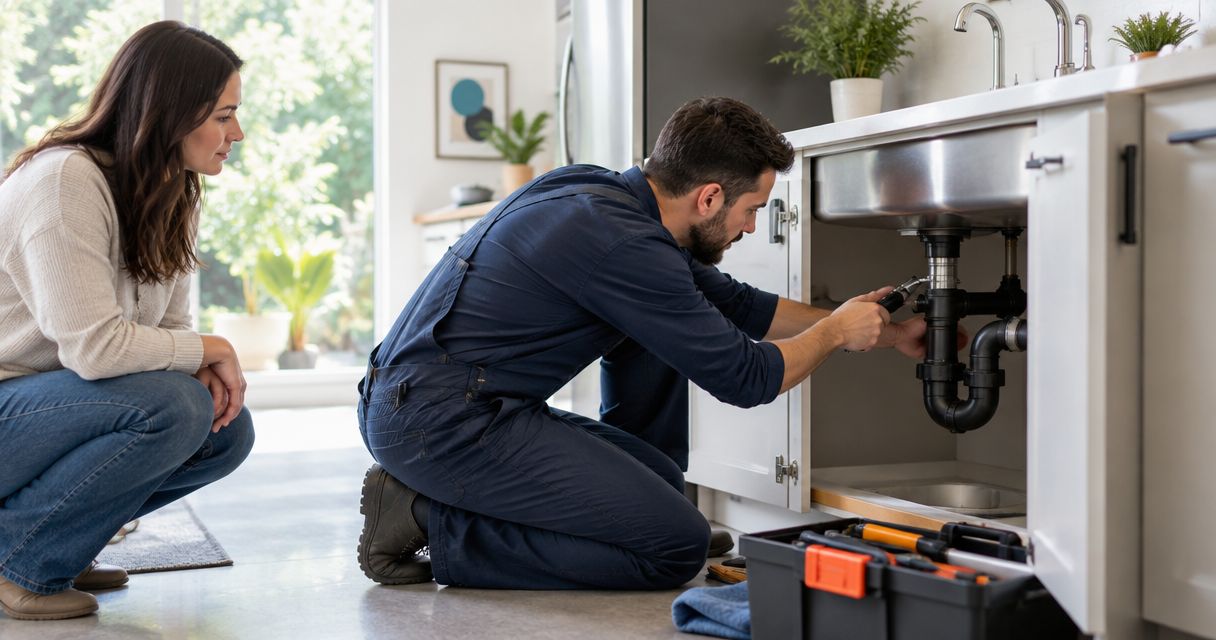
Inspect accessible supply connections, drain joints, toilet bases, and the cabinet floor beneath each sink. Look for fresh droplets, staining, swollen materials, and damp items stored against plumbing.
A leak can wet a cabinet even when the room’s humidity reading looks acceptable. Remove stored items for a clear view, and tell the repair professional whether moisture appears continuously or only after you use the fixture.
Pros:
- Targets a direct source of unwanted water.
- Makes changes around accessible fixtures easier to spot.
- Helps separate plumbing problems from general indoor humidity.
Cons:
- Does not rule out leaks behind walls or under floors.
- Touching corroded connections can worsen an existing problem.
Best for: Homes with damp cabinets, unexplained water marks, or recurring moisture near fixtures.
Do not tighten every connection as a preventive measure. Identify the wet location first, and stop using the affected fixture when continued use adds water.
Verdict: Buy—make visible plumbing checks routine and prioritize any active leak over cosmetic repairs.
3. AC and condensate checks: best for cooling-related moisture
Air conditioning removes moisture as water condenses on the cooling coil. That water needs a functioning drainage route; leakage around the indoor unit or an unexpected system shutdown deserves investigation.
Keep filters maintained according to the equipment instructions, and keep return-air openings unobstructed. Ask a qualified HVAC technician to assess persistent humidity, condensate problems, or cooling cycles that do not maintain comfortable indoor conditions.
Pros:
- Addresses equipment involved in indoor moisture removal.
- Brings attention to condensate leakage.
- Connects filter care with overall equipment maintenance.
Cons:
- A colder thermostat setting does not diagnose a moisture problem.
- Drain and equipment repairs can exceed safe homeowner maintenance.
Best for: Homes that feel clammy despite cooling, or show moisture around indoor cooling equipment.
Avoid pouring a household chemical into a drain without equipment-specific guidance. Use the manufacturer’s instructions or the technician’s maintenance recommendation.
Verdict: Buy—include AC and condensate checks, but leave equipment diagnosis and repairs to a qualified HVAC technician.
4. Exhaust fan checks: best for shower and cooking moisture
Bathroom exhaust and an outdoor-vented kitchen hood remove moisture close to where it enters the air. Check that the fan operates and that accessible grilles are not blocked by dust.
Confirm the discharge destination rather than assuming a running fan sends air outdoors. A recirculating kitchen hood returns air to the room, and bathroom exhaust should not discharge into an attic.
Pros:
- Targets moisture created by everyday activities.
- Gives you a clear operating habit during bathing and cooking.
- Makes dirty grilles and obvious airflow problems visible.
Cons:
- Fan noise alone does not prove adequate airflow.
- Duct routing and electrical faults need qualified assessment.
Best for: Bathrooms with lingering condensation and kitchens where cooking adds noticeable moisture.
Use ventilation while moisture is being produced and until the room clears. If dampness persists, inspect the exhaust system instead of relying on a louder or longer-running fan.
Verdict: Buy—verify that exhaust removes air outdoors, not just that the switch turns something on.
5. Roof drainage inspections: best for rainwater management
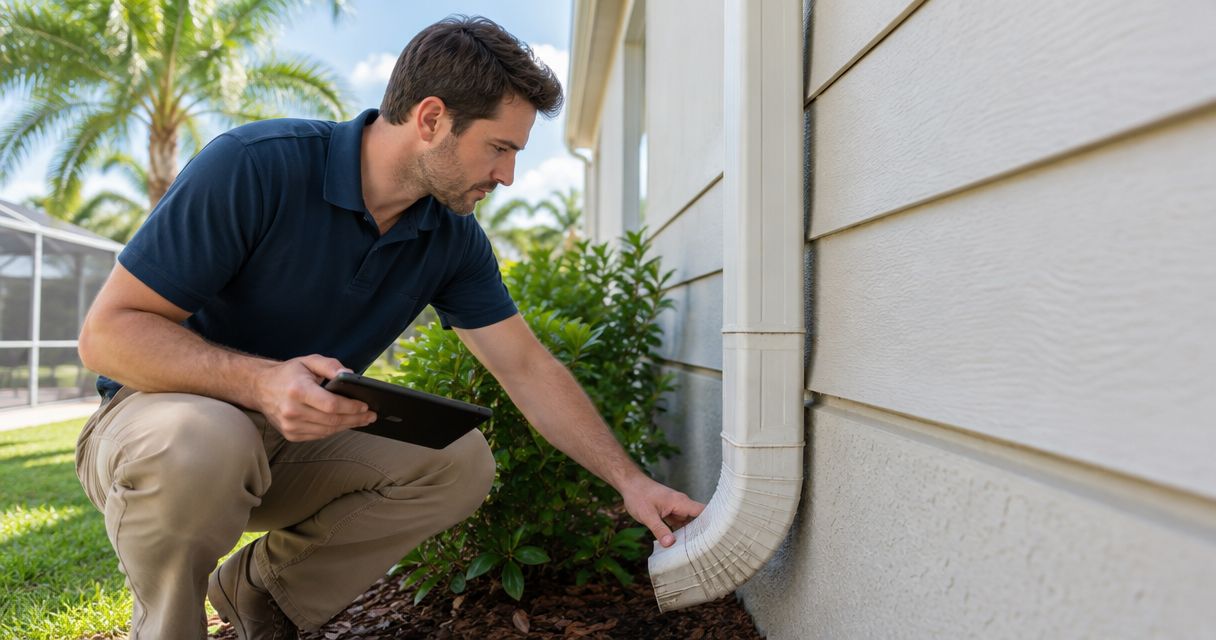
From a safe ground-level position, look for overflowing gutters, disconnected downspouts, and runoff collecting beside the building. Inside, check for new ceiling marks or dampness after rain.
Roof drainage and indoor humidity are different issues, but both belong in your 2026 moisture plan. A dehumidifier cannot stop rain entering through a roof defect or repair drainage that sends water toward the home.
Pros:
- Links interior symptoms with rainfall.
- Reveals visible overflow and disconnected drainage components.
- Helps direct a roofer toward the affected area.
Cons:
- Ground-level observations cannot confirm the roof’s full condition.
- Clearing debris does not repair damaged roofing or flashing.
Best for: Homes with rain-related staining, gutter overflow, or pooling near exterior walls.
Do not climb onto a wet roof or reach from an unstable ladder. Photograph the visible symptom from a safe location and arrange the appropriate inspection.
Verdict: Buy—check water movement during safe conditions and have roof defects assessed before repainting interior stains.
6. Door and window inspections: best for localized entry points
Inspect accessible weatherstripping and visible joints around doors and windows. Note daylight through closed-door gaps, damaged seals, soft trim, and water marks that appear after wind-driven rain.
Repair the specific defect rather than coating every opening with sealant. Window systems can include drainage openings that must remain clear, and surface caulk cannot replace a failed underlying installation detail.
Pros:
- Identifies visible gaps and deteriorated materials.
- Helps locate recurring moisture around openings.
- Provides a focused repair list instead of indiscriminate sealing.
Cons:
- Incorrect sealing can obstruct intended drainage.
- Exterior staining does not reveal every concealed defect.
Best for: Rooms with localized drafts, wet window trim, or moisture around exterior doors.
Condensation on glass does not automatically mean the window leaks. Record whether water appears during rain or forms on the indoor surface without rain; that distinction changes the investigation.
Verdict: Buy—repair damaged seals and joints selectively, while preserving the opening’s drainage design.
7. Vacancy maintenance checks: best for seasonal homes
A vacant home needs someone to notice moisture and respond. Before leaving, document indoor conditions, confirm the cooling system’s operating plan, and arrange access for a person who can inspect the property.
Give that person clear instructions for damp cabinets, ceiling marks, musty odors, and equipment problems. Myhomeprousa provides seasonal upkeep and home maintenance; discuss the actual work needed rather than assuming a particular monitoring or inspection arrangement is included.
Pros:
- Keeps moisture checks on the calendar while you are away.
- Gives a designated person access and reporting instructions.
- Connects visible findings with a repair decision.
Cons:
- A sensor alert is ineffective without someone able to respond.
- An inspection only describes conditions at the time of the visit.
Best for: Seasonal residents and owners leaving a Florida property unoccupied.
For your 2026 departure plan, write down who receives reports, who authorizes work, and how the property can be accessed. Do not leave those decisions until a leak is discovered.
Verdict: Buy—arrange an actionable vacancy plan, not just a reminder to check the house.
Turn a damp-room complaint into a repair plan
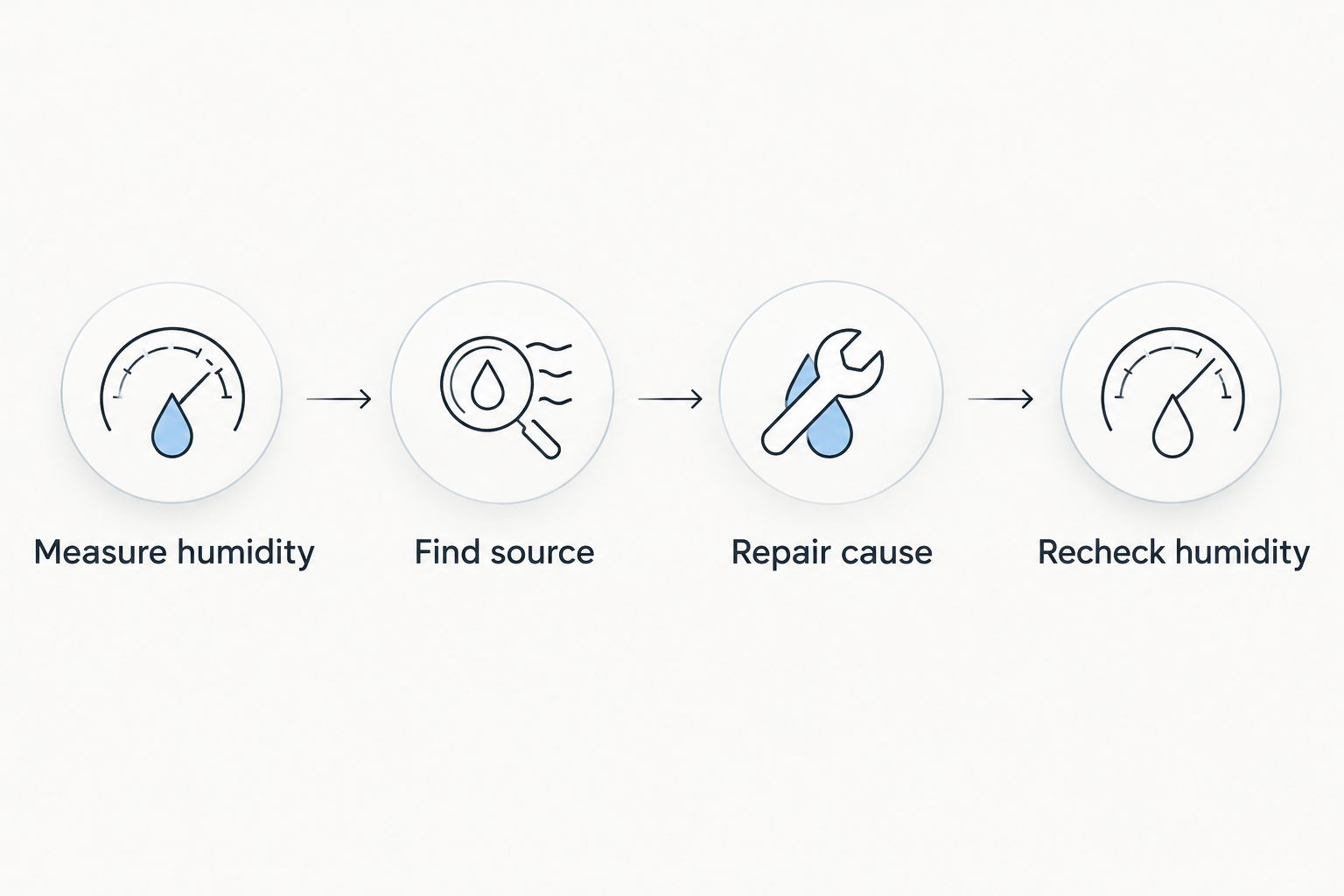
Use the same sequence whenever a room feels persistently damp. It keeps a humidity reading from becoming a reason to buy equipment before you understand the problem.
- Measure humidity: Record the room, conditions, and reading.
- Find source: Check for plumbing leaks, rain entry, condensation, and ventilation problems.
- Repair cause: Assign the repair to the appropriate qualified professional.
- Recheck humidity: Confirm whether conditions improve after the work.
Keep dated photos and brief notes with your 2026 maintenance records. A repeated stain in the same location is more useful diagnostic information than a general description that the house feels humid.
Plan your home maintenance
Discuss plumbing repairs, seasonal upkeep, and home maintenance needs in The Villages.
How these tasks are ranked
The ranking favors early warning, source control, safe inspection, and repeatable follow-through. Humidity monitoring takes the default position because it helps identify persistent indoor dampness; plumbing, drainage, and equipment findings determine the actual repair priority.
These are maintenance priorities, not results from product testing. Visible water and active leaks override the ranking.
Which maintenance task should you choose first?
Start with indoor humidity readings and an accessible leak inspection. Together, they help distinguish a room-wide moisture concern from water entering at a particular location.
Then follow the evidence: rain-related marks call for exterior assessment, fixture-related wetness calls for plumbing diagnosis, and persistent dampness during cooling calls for an HVAC assessment. Myhomeprousa’s home maintenance and seasonal upkeep services fit owners who need help organizing and addressing property maintenance tasks.
FAQ
What's the best maintenance task for Florida humidity?
Indoor humidity monitoring paired with moisture-source checks is the best default starting point. An active plumbing leak or rain intrusion takes priority over routine monitoring.
What indoor humidity should I aim for in a Florida home?
EPA recommends indoor relative humidity below 60%, ideally between 30% and 50%. Persistent readings above that guidance call for checking moisture sources and how effectively the home removes humid air.
Should I turn the thermostat lower if my home feels damp?
A lower thermostat setting is not a diagnosis or a complete moisture-control plan. Check humidity, leaks, ventilation, and cooling-system performance before treating temperature as the solution.
Is a dehumidifier better than fixing a leak?
No, a dehumidifier does not replace repairing an active leak. Stop the water source and dry affected materials; EPA recommends drying wet materials within 24–48 hours to help prevent mold growth.
Can I seal every gap around a window?
No, seal only appropriate joints and preserve the window's intended drainage openings. Recurring wet trim or rain-related staining needs an assessment of the cause, not another layer of sealant.
Should I open windows to dry out a humid Florida house?
Opening windows is not a dependable drying strategy when outdoor air is humid. Use appropriate exhaust and moisture control, and investigate the source of persistent indoor dampness.
What should I arrange before leaving my Florida home vacant?
Arrange a cooling-system operating plan, property access, moisture checks, and a person authorized to respond. Monitoring only helps when a finding leads to action.
One last thing
A disappearing stain is not proof that the moisture problem is fixed. Before repainting or replacing trim, confirm the source was repaired and the affected materials are dry; otherwise, the new finish only hides the next warning.