Best overall: safety-device and electrical condition checks. Best for finding hidden leaks: plumbing inspections. Best for seasonal preparation: roof and drainage reviews. These are the maintenance tasks landlords should schedule yearly in 2026, alongside equipment servicing and property-condition checks—not replacements for urgent repairs or more frequent manufacturer-required maintenance.
- Start maintenance tasks landlords should schedule yearly with safety, plumbing, and weather protection.
- Myhomeprousa offers plumbing, electrical, and seasonal upkeep for property owners in The Villages, FL.
- Annual rental property maintenance supplements manufacturer schedules, tenant reports, and prompt repairs.
- Record findings, assign repairs, and confirm completion; an inspection alone does not resolve a defect.
Why this matters
A yearly maintenance calendar gives you a planned opportunity to find defects, arrange access, and follow up on unfinished repairs. It does not make a leaking pipe or faulty electrical fitting safe to leave until the next appointment.
Myhomeprousa is a fit for landlords seeking plumbing, electrical, and seasonal property maintenance in The Villages, FL. Myhomeprousa serves residential and commercial property owners; confirm the scope and required trade qualifications before assigning individual jobs.
Build your 2026 calendar around the property itself. Equipment instructions, tenancy terms, applicable requirements, and observed conditions determine what needs attention between annual visits.
What makes the best yearly landlord maintenance tasks
Prioritize work using these criteria before deciding what belongs on your calendar:
- Safety consequence: Put fire protection, electrical concerns, and unsafe access ahead of cosmetic work.
- Damage prevention: Look for defects that allow water, moisture, or pests into the building.
- Equipment requirements: Follow manufacturer instructions rather than imposing one annual interval on every component.
- Tenant disruption: Coordinate planned access, but do not delay urgent repairs to combine appointments.
- Clear completion: Define what will be inspected, what needs repair, and how you will verify the result.
The best annual task produces an actionable record. A checkbox saying everything looked fine is less useful than an identified location, an observed condition, and a repair decision.
Yearly landlord maintenance tasks at a glance
The ranking below follows consequence first: safety, water damage, essential equipment, weather protection, moisture, and physical access. It compares task groups, not interchangeable service packages.
| Rank and task | Best for | Standout purpose | Key limitation |
|---|---|---|---|
| 1. Safety devices and electrical condition | Occupant protection | Identifies visible hazards and device maintenance needs | A visual review cannot establish wiring safety |
| 2. Plumbing and leak checks | Hidden water problems | Examines fixtures, connections, and accessible leak locations | Concealed plumbing remains outside a visual check |
| 3. Heating and cooling service | Equipment care | Connects servicing to equipment instructions | Filters and other components need separate schedules |
| 4. Roof and drainage review | Seasonal preparation | Checks how the building sheds water | Unsafe access requires a qualified contractor |
| 5. Moisture and pest-entry review | Building-condition follow-up | Looks for dampness and entry points | Finding a symptom does not identify its cause |
| 6. Doors, windows, and walking surfaces | Everyday access | Identifies sticking hardware and trip hazards | Structural problems need specialist assessment |
1. Safety devices and electrical condition: best for occupant protection
Start your annual property review with smoke alarms, applicable carbon monoxide alarms, and visible electrical concerns. Record device locations and follow each manufacturer's testing, maintenance, and replacement instructions. A yearly appointment is a backstop, not the complete alarm-testing schedule.
Have a qualified electrician assess damaged fittings, recurring breaker trips, burning smells, or other reported electrical defects. Do not ask a general maintenance worker to diagnose concealed wiring or remove panel covers without the appropriate qualifications.
Safety-check pros:
- Gives reported electrical concerns a defined follow-up route.
- Keeps device instructions and replacement information accessible.
- Separates routine observations from work requiring an electrician.
Safety-check limitations:
- An annual visit does not replace required interim testing.
- Working lights and outlets do not prove the installation is safe.
Best for: Landlords organizing occupant-protection work before general repairs.
For your 2026 maintenance file, retain device details, service findings, and completed repair records. Tell tenants how to report urgent concerns without waiting for the next scheduled visit.
Verdict: Buy qualified electrical assessment when a defect is reported; never wait for the annual review.
2. Plumbing and leak checks: best for hidden water problems
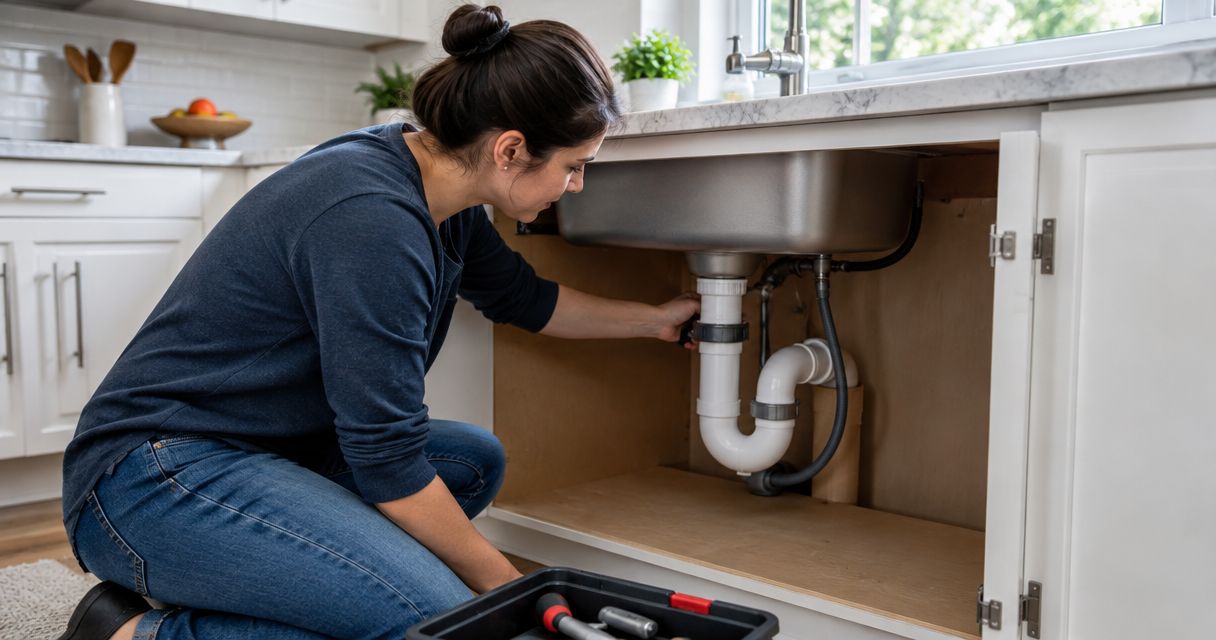
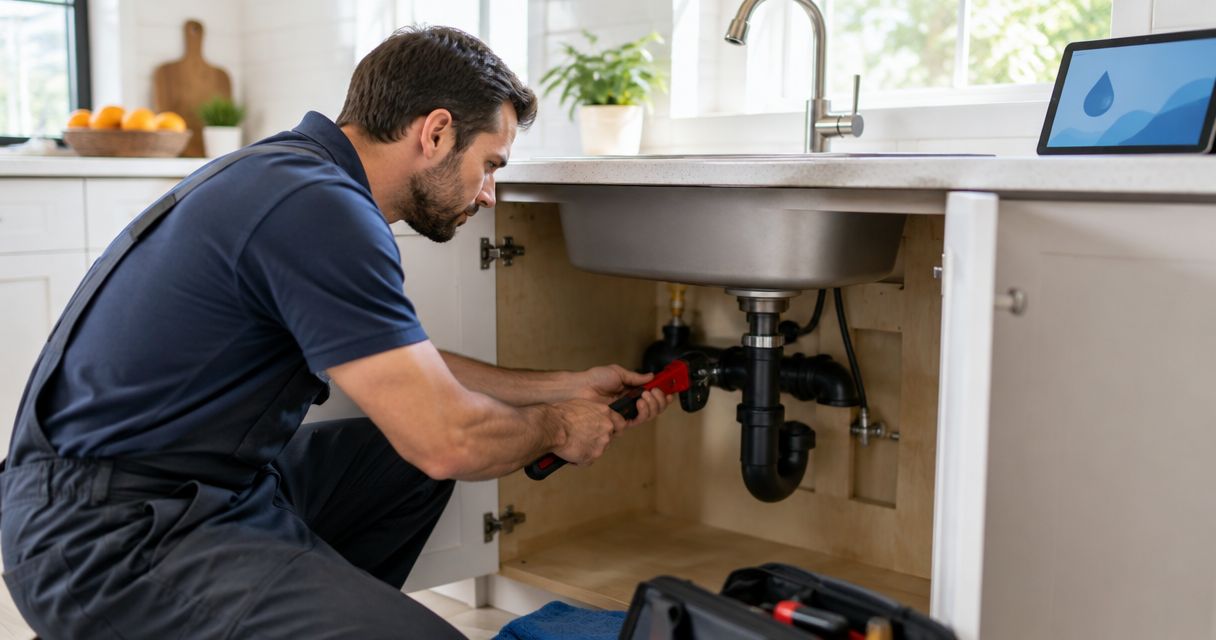
Inspect accessible supply connections, shutoff locations, fixture bases, and the spaces beneath sinks. Look for active moisture, staining, corrosion, loose fittings, and tenant reports of recurring drips or drainage problems. Record the location rather than assuming every stain comes from the nearest fixture.
Include accessible water-heater connections in the visual review. Assign equipment servicing to an appropriate professional and follow the manufacturer's instructions; a generic annual checklist does not establish the correct procedure for every installation.
Plumbing-check pros:
- Brings concealed cabinet areas into the maintenance routine.
- Connects tenant complaints with a specific inspection location.
- Creates a record for checking whether a repair stopped the leak.
Plumbing-check limitations:
- A dry surface during one visit does not rule out an intermittent leak.
- Visual checks cannot establish the condition of concealed pipes.
Best for: Rental properties with wet-area complaints, older repair records, or unexplained staining.
Ask tenants about dripping sounds, slow drainage, and changes in water delivery before the visit. Their observations help direct the inspection without replacing a plumber's diagnosis.
Verdict: Buy professional plumbing diagnosis for active leaks or recurring symptoms; skip cosmetic patching until the cause is resolved.
3. Heating and cooling service: best for equipment care
Put heating and cooling equipment on the annual planning calendar, then set the actual service intervals from its instructions and condition. Record the equipment identification and maintenance history so the contractor can assess the correct system.
Keep filter checks separate from the annual appointment. Filter type, equipment instructions, and operating conditions determine the replacement schedule; once-yearly replacement is not a universal rule.
Equipment-service pros:
- Gives you a documented service history for each system.
- Identifies recommendations that need a separate repair decision.
- Clarifies which routine tasks belong to the owner or tenant.
Equipment-service limitations:
- A service visit cannot guarantee uninterrupted operation.
- Maintenance cannot correct every installation or equipment defect.
Best for: Landlords responsible for supplied heating and cooling equipment.
For 2026, put both the planned service appointment and the separate filter responsibilities in writing. Ask for the observed condition, work completed, and outstanding recommendations—not simply confirmation that someone attended.
Verdict: Buy equipment-appropriate servicing; skip a generic package that does not explain its scope.
4. Roof and drainage review: best for seasonal preparation
Review accessible roof observations, gutters where fitted, downspout outlets, and visible drainage routes. The goal is to identify blockages, damaged components, or water discharge that needs professional attention—not to turn a landlord inspection into rooftop work.
Use ground-level observations and qualified contractors where access is unsafe. Check again after damaging weather or a reported leak rather than treating the annual review as proof that the roof remains sound.
Roof-and-drainage pros:
- Connects exterior defects with interior leak reports.
- Identifies accessible debris and blocked discharge points.
- Helps separate cleaning work from roofing repairs.
Roof-and-drainage limitations:
- Ground-level observations cannot reveal every roof defect.
- Clearing debris does not repair failed roofing or drainage design.
Best for: Landlords arranging seasonal exterior upkeep.
Keep roof observations and drainage observations separate in the report. Water entering near a ceiling stain needs diagnosis; the stain alone does not establish where the roof failed.
Verdict: Buy safe inspection and targeted repairs; skip do-it-yourself roof access without suitable training and equipment.
5. Moisture and pest-entry review: best for building-condition follow-up
Check accessible areas for dampness, deteriorated sealant, damaged screens, and gaps around building penetrations. Include spaces that tenants seldom use, where safe access is available. Record odors and visible changes without assigning an unsupported diagnosis.
Moisture and pest problems need cause-based follow-up. Painting a stain or sealing a visible opening is not proof that the underlying issue has been resolved; use the appropriate specialist when identification or treatment falls outside routine maintenance.
Condition-review pros:
- Adds overlooked spaces to the annual inspection route.
- Creates a baseline for comparing recurring stains or damage.
- Connects repair work with the source of the condition.
Condition-review limitations:
- A visual inspection cannot establish concealed moisture conditions.
- Sealing entry points alone does not resolve every pest problem.
Best for: Properties with recurring dampness, unexplained odors, or pest reports.
Add unresolved findings to your 2026 repair list with a named person responsible for follow-up. Avoid closing a job because the surface looks better when the original cause remains uncertain.
Verdict: Buy diagnosis before treatment when the cause is unclear; skip covering symptoms with paint or sealant.
6. Doors, windows, and walking surfaces: best for everyday access
Check that doors, windows, locks, and accessible hardware operate as intended. Review handrails, steps, walkways, and transitions for looseness, damage, and trip hazards. Keep security and emergency escape functions in mind when arranging repairs.
Record where an item sticks, moves, or fails to latch. A specific observation gives the contractor a clearer starting point than a request to inspect every door without further detail.
Access-check pros:
- Finds small operational problems before they become accepted habits.
- Gives tenants a clear way to report access difficulties.
- Separates hardware adjustments from larger building concerns.
Access-check limitations:
- Repeated sticking can indicate more than a hardware problem.
- Structural movement and damaged supports require specialist assessment.
Best for: Occupied rentals where everyday access defects need an organized review.
Photograph the condition before repair and verify operation afterward. If the problem returns, reopen the job instead of repeating the same adjustment without investigation.
Verdict: Buy repairs for confirmed access hazards; hold cosmetic refinishing until operation and safety are addressed.
Turn the annual list into completed work
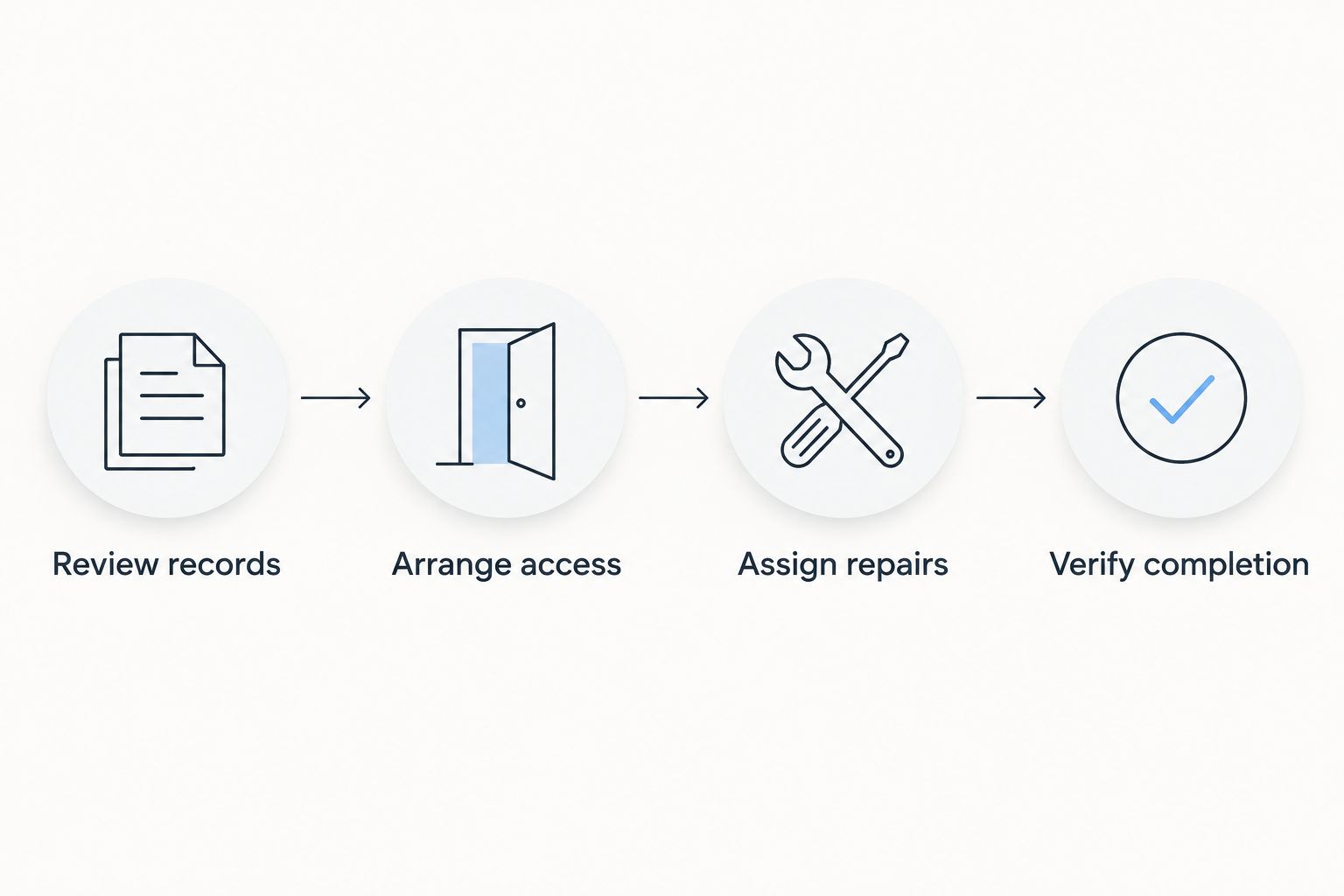
Use a repeatable process for every maintenance category. The calendar starts the work; the completion record closes it.
- Review records: Read tenant reports, previous findings, and equipment instructions before arranging access.
- Arrange access: Confirm notice requirements, appointment arrangements, and any access restrictions.
- Assign repairs: Give each defect a location, a responsible person, and a response based on urgency.
- Verify completion: Check the repair outcome and retain the contractor's documentation.
For each finding, keep 3 photos when useful: the room or area, the defect close up, and the completed repair. Keep at least 2 contact routes in the maintenance record: the tenant's reporting route and the responsible contractor's details. These are documentation choices, not substitutes for inspection or diagnosis.
Review the calendar every 12 months, while handling urgent reports as they arrive. For 2026, group compatible routine jobs to simplify access, but keep specialist work and urgent repairs on their own schedules.
Plan your property maintenance
Discuss plumbing, electrical, and seasonal upkeep for your property in The Villages, FL.
How these tasks were ranked
This order puts occupant safety ahead of damage prevention, equipment care, and routine property operation. It is a planning hierarchy, not a claim that one task always matters more than another.
An active plumbing leak takes priority over a routine device inventory. A reported electrical hazard takes priority over scheduled exterior cleaning. Your property's current condition determines the work order.
Which yearly maintenance tasks should you choose first?
Start with safety concerns and active water problems, then complete the remaining task groups across your annual calendar. Do not choose only the easiest tasks and leave unresolved defects for another year.
Myhomeprousa offers plumbing, electrical, and seasonal upkeep for landlords planning property maintenance in The Villages, FL. Match the assignment to the actual service scope and any specialist qualifications the work requires.
FAQ
What maintenance tasks should landlords schedule yearly?
Landlords should schedule a review of safety devices, plumbing, heating and cooling, roof drainage, moisture concerns, and access hardware. Annual planning supplements urgent repairs, manufacturer instructions, and any more frequent maintenance requirements.
Is one annual rental inspection enough?
One annual inspection is not a complete maintenance program. Tenant reports, equipment instructions, applicable requirements, and changing property conditions determine what needs attention between visits.
Should landlords service heating and cooling equipment every year?
Landlords should include heating and cooling equipment in annual maintenance planning and follow the manufacturer's actual service instructions. Filters and other components need their own schedules rather than an assumed yearly interval.
Can a handyman do every annual maintenance task?
A handyman should not be assigned every task without checking scope and qualifications. Electrical diagnosis, specialist equipment servicing, roofing, and other regulated work require an appropriately qualified provider.
What maintenance records should a landlord keep?
Keep inspection findings, dated photographs, tenant reports, contractor documentation, and confirmation of completed repairs. Record outstanding work separately so an attended appointment is not mistaken for a resolved defect.
Should landlords wait until annual maintenance to fix a leak?
Landlords should address active leaks promptly rather than wait for annual maintenance. Arrange diagnosis and the necessary repair, then verify that the original symptom has stopped.
Does Myhomeprousa offer property maintenance in The Villages?
Myhomeprousa offers home and business maintenance and repair services in The Villages, FL, including plumbing, electrical, and seasonal upkeep. Confirm the scope for your property and the qualifications required for each proposed job.
One last thing
A repeated defect deserves a different question: why did the previous repair fail? Before authorizing another patch, give the contractor the earlier findings and repair record. The most useful annual maintenance file shows not just what was fixed, but what keeps coming back.