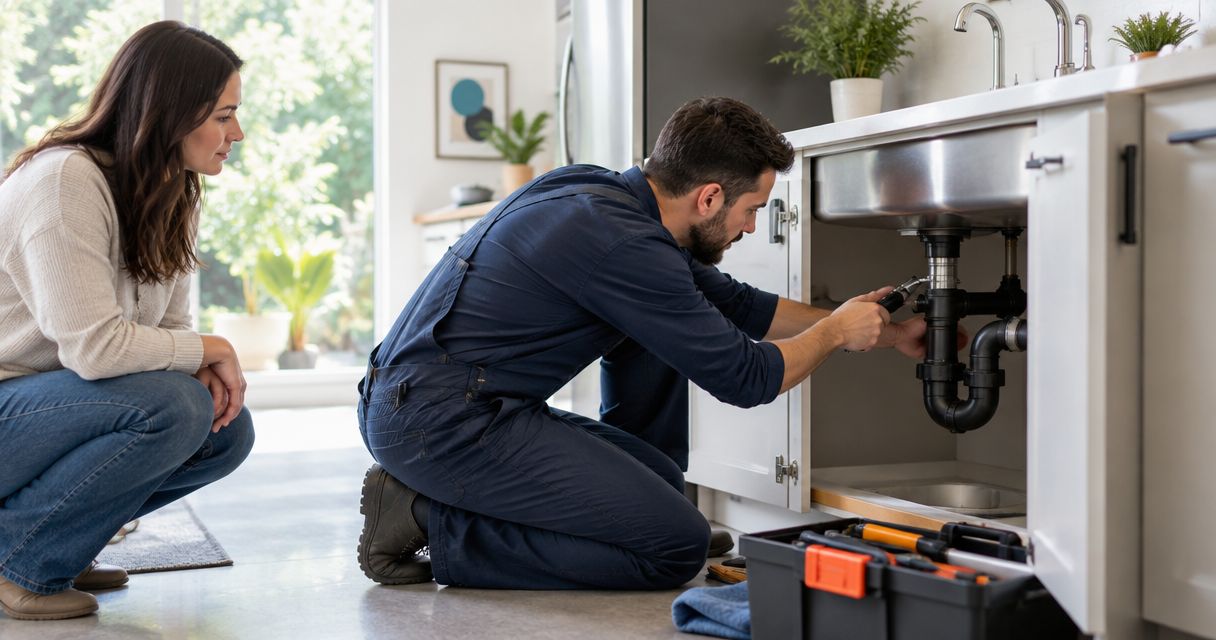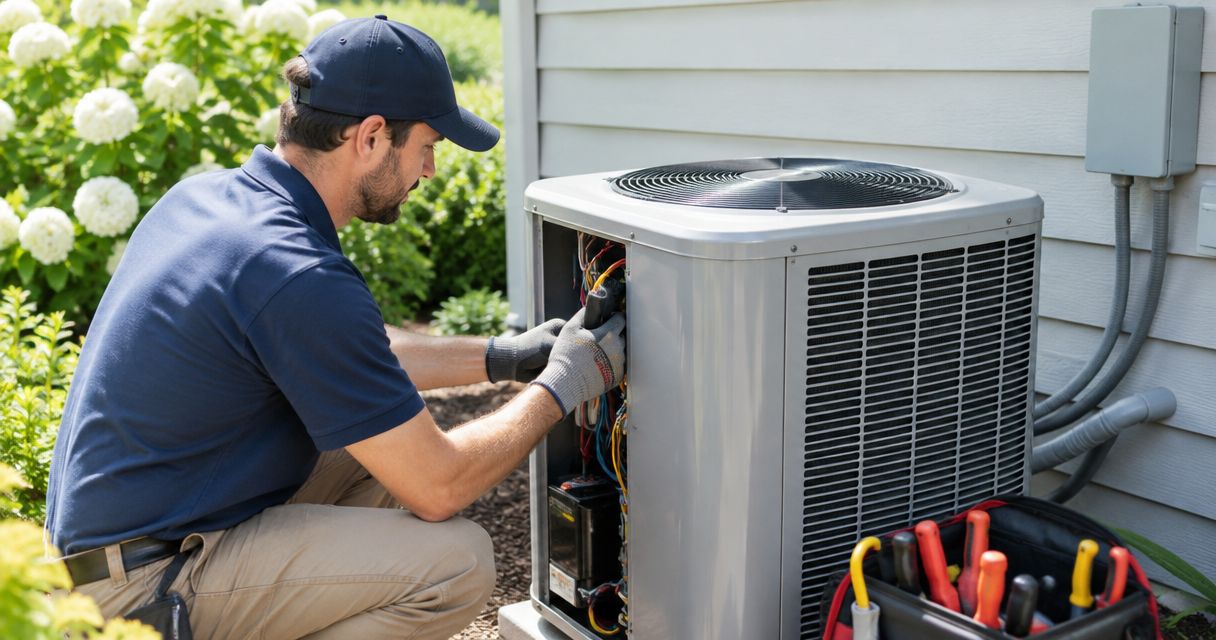
Best overall: a visible-leak inspection. Best for cooling performance: an AC filter check. Best simple plumbing check: a toilet leak test. These are the best seasonal AC and plumbing maintenance tasks for summer 2026, ranked by what you can inspect safely and what needs professional attention.
- Best seasonal AC and plumbing maintenance tasks summer priorities: inspect leaks, check filters, and confirm condensate drainage.
- Myhomeprousa serves The Villages property owners needing plumbing repairs and seasonal upkeep; arrange technical AC work with qualified HVAC professionals.
- Water near electrical equipment, repeated breaker trips, or an overflowing drain pan requires professional attention, not another checklist.
- Match filter replacement and equipment cleaning to manufacturer instructions rather than a universal summer schedule.
Why this matters
Summer maintenance connects two systems that are easy to treat separately: cooling equipment removes moisture, while plumbing carries and contains water. A wet cabinet, stained ceiling, or puddle near an air handler deserves investigation—not an assumption about its source.
For your 2026 checklist, separate observation from repair. You can document accessible leaks and check filter instructions; opening electrical compartments, handling refrigerant, and dismantling unfamiliar plumbing belong with qualified professionals.
Myhomeprousa provides home and business maintenance and repair services, including plumbing and seasonal upkeep, in The Villages, FL. Describe the symptom when requesting help so the work goes to the right trade.
What makes the best summer maintenance task?
- Safety: You can inspect the area without entering electrical compartments, climbing into unsafe spaces, or touching damaged equipment.
- Water-damage relevance: The task checks places where escaping water or blocked drainage can affect surrounding materials.
- Clear evidence: A stain, drip, dirty filter, or running toilet gives you something specific to report.
- Manufacturer compatibility: The task follows the equipment instructions rather than a generic cleaning recipe.
- Actionable outcome: The result tells you whether to monitor, maintain, stop using equipment, or request repair.
Fix an active problem before adding optional preventive work. A summer checklist should help you make decisions, not encourage you to finish every task regardless of conditions.
Summer maintenance tasks at a glance
| Rank and task | Best for | Standout benefit | Key limitation |
|---|---|---|---|
| 1. Visible-leak inspection | Finding active plumbing problems | Checks accessible water connections and nearby surfaces | Concealed leaks remain out of sight |
| 2. AC filter check | Routine cooling-system upkeep | Confirms filter condition and correct fit | Does not diagnose cooling faults |
| 3. Condensate drainage inspection | Finding AC-related water problems | Identifies visible overflow or standing water | Blockages and internal faults need professional diagnosis |
| 4. Outdoor-unit clearance check | Keeping airflow paths clear | Finds vegetation and loose debris around equipment | Does not replace coil or electrical service |
| 5. Fixture and drain check | Finding localized plumbing symptoms | Separates isolated trouble from broader patterns | Flow alone does not establish the cause |
| 6. Toilet leak test | Detecting tank-to-bowl leakage | Finds leakage without dismantling the toilet | Does not identify every toilet leak |
| 7. Shutoff readiness check | Preparing for a water leak | Establishes where accessible controls are located | Stiff or corroded valves need professional attention |
1. Visible-leak inspection: best for finding active problems
Best for: Homes and business premises with accessible sinks, toilets, water heaters, and appliance connections.
Start with a dry, well-lit inspection of visible supply lines, drain connections, and surrounding surfaces. Look inside sink cabinets, around toilet bases, and beside accessible appliance hoses without pulling heavy equipment out of position.
Use a dry tissue on an accessible connection to check for moisture. Photograph stains and note whether dampness appears during use or remains present afterward; that distinction helps explain the symptom.
Visible-leak inspection pros:
- Checks several plumbing areas in one walk-through.
- Gives you specific locations to report.
- Requires no plumbing disassembly.
Visible-leak inspection cons:
- Cannot rule out concealed leaks.
- Does not establish whether a stain is old or active without follow-up.
If water reaches outlets or powered equipment, stay clear and seek professional help. Do not enter standing water to reach a switch.
Verdict: Do this first; hold off on other tasks when you find active leakage.
2. AC filter check: best for routine cooling upkeep
Best for: Occupied properties where the equipment instructions identify a safely accessible filter.
Check the filter size, type, installation direction, and condition against the system instructions. The U.S. Department of Energy identifies dirty filters as an airflow restriction that reduces air-conditioning efficiency.
Turn the system off using its normal controls before accessing the filter as directed. Replace disposable filters or clean reusable filters only according to the manufacturer's instructions; a filter that looks similar is not automatically suitable.
AC filter check pros:
- Addresses a basic airflow maintenance requirement.
- Confirms that the filter fits its intended location.
- Creates a repeatable task for your maintenance record.
AC filter check cons:
- Does not explain every airflow or cooling problem.
- An unsuitable filter can create additional airflow resistance.
Persistent weak airflow, icing, or poor cooling needs HVAC assessment rather than repeated filter changes.
Verdict: Do the accessible filter check; skip unsupported filter upgrades.
3. Condensate drainage inspection: best for AC water problems
Best for: Properties with safely accessible air handlers, drain pans, or visible condensate piping.
Air conditioners remove moisture from indoor air, and that water needs a functioning drainage path. Check accessible areas for standing water, overflow marks, wet insulation, and moisture around the equipment.
For your summer 2026 checklist, record the symptom rather than pouring a homemade mixture into an unfamiliar pipe. Drain arrangements differ, and opening a fitting or adding a chemical without equipment guidance is not routine inspection.
Condensate drainage inspection pros:
- Checks a direct connection between cooling and water damage.
- Identifies visible overflow and surrounding moisture.
- Helps you describe the location of an AC-related leak.
Condensate drainage inspection cons:
- Visible piping does not reveal the entire drainage route.
- A dry pan does not prove that every component works correctly.
If a pan is overflowing or water is escaping, stop normal operation using safe controls and arrange qualified HVAC service.
Verdict: Inspect accessible drainage; skip improvised chemical flushing.
4. Outdoor-unit clearance check: best for unobstructed airflow
Best for: Properties with an accessible ground-level outdoor AC unit.
Look for vegetation, stored objects, and loose yard debris obstructing the unit's airflow paths. Follow the equipment manual for required clearances rather than applying a universal distance to every installation.
Remove only loose debris you can reach safely without opening the cabinet or reaching through a guard. Leave coil cleaning, damaged fins, wiring problems, and equipment movement to a qualified HVAC professional.
Outdoor-unit clearance check pros:
- Identifies obvious obstructions from outside the equipment.
- Helps keep storage and landscaping away from airflow paths.
- Requires no access to internal components.
Outdoor-unit clearance check cons:
- Does not establish whether the coil is clean internally.
- Cannot diagnose unusual noise or weak cooling.
Do not use a pressure washer on the unit. Keep hands and tools away from fan openings even when the equipment appears idle.
Verdict: Clear safe external obstructions; skip cabinet opening and pressure washing.
5. Fixture and drain check: best for localized plumbing symptoms
Best for: Kitchens, bathrooms, utility sinks, and other regularly used fixtures.
Run each fixture normally and watch its supply connections and drain area. Note slow drainage, drips after shutoff, unusual sounds, and whether the same symptom affects several fixtures.
Stop adding water when a drain backs up. Repeatedly filling a blocked fixture creates an overflow risk without identifying the blockage; adding drain chemicals also complicates later handling.
Fixture and drain check pros:
- Tests fixtures under ordinary use.
- Distinguishes a single-location symptom from a wider pattern.
- Reveals drips that appear only while water runs.
Fixture and drain check cons:
- Normal flow during one check does not exclude intermittent trouble.
- Slow drainage alone does not locate an obstruction.
Report sewage backup or multiple affected fixtures promptly. Tell the plumber about any cleaner already used, including the product name.
Verdict: Check normal operation; skip chemical experiments on an unidentified blockage.
6. Toilet leak test: best for finding tank-to-bowl leakage
Best for: Toilets that refill without use or have suspected silent leakage.
The U.S. Environmental Protection Agency's WaterSense guidance describes checking for toilet leakage by adding food coloring to the tank and watching for color in the bowl without flushing. Follow that guidance and any toilet-manufacturer restrictions, then flush promptly after the test to avoid staining.
Also inspect the floor around the base and the accessible supply connection. A tank-to-bowl test does not check those separate leak locations.
Toilet leak test pros:
- Detects leakage that is not visible on the floor.
- Requires no dismantling of the flushing mechanism.
- Gives you a clear symptom to report.
Toilet leak test cons:
- Does not identify the exact failed component.
- Does not rule out supply-line or base leaks.
Avoid replacing several parts by guesswork. Match any repair to the toilet's design and the confirmed source of leakage.
Verdict: Test unexplained refilling; hold off on parts replacement until the cause is clear.
7. Shutoff readiness check: best for responding to a leak
Best for: Homeowners, landlords, and property managers preparing instructions for occupants or caretakers.
Locate the property's accessible water shutoff and the local valves serving individual fixtures. Make sure the responsible person knows their locations and can reach them without moving heavy storage.
A readiness check is not permission to force an old valve. Corrosion, visible leakage, stiffness, or uncertainty about what a valve controls calls for professional assessment.
Shutoff readiness check pros:
- Turns an unfamiliar control into a documented location.
- Helps occupants explain where a leak is occurring.
- Highlights blocked access before an urgent repair.
Shutoff readiness check cons:
- Knowing a valve's location does not prove it operates.
- Closing water supplies can affect connected equipment and building operations.
For commercial premises, follow the building's procedures and authority requirements before operating shared controls.
Verdict: Document accessible controls; skip forcing or guessing at valves.
Turn the inspection into a usable maintenance record
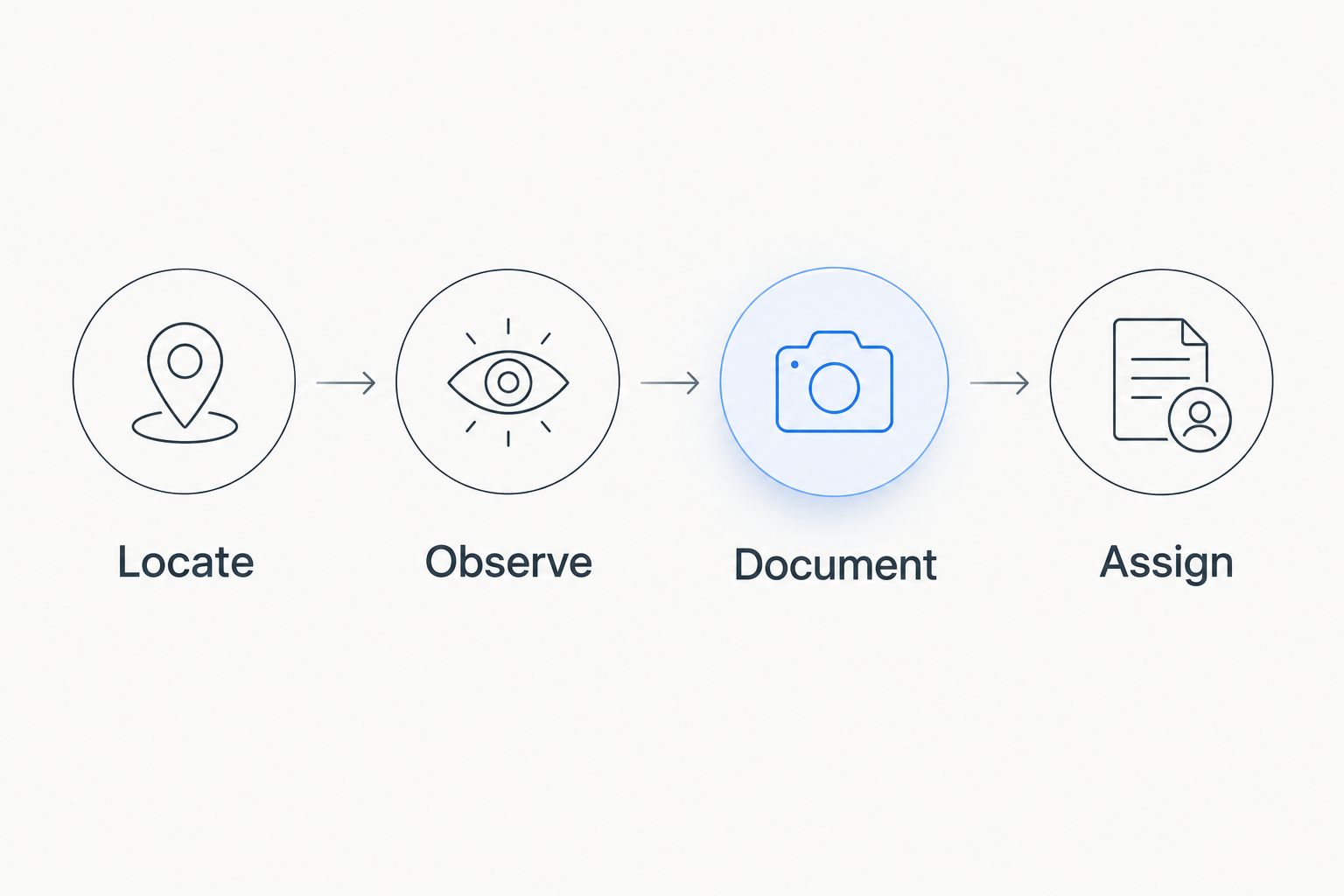
For your 2026 maintenance record, use the same sequence for each finding. Keep observations separate from assumptions about the repair.
- Locate: Name the fixture, room, or equipment area.
- Observe: Describe the moisture, sound, stain, or operating symptom.
- Document: Record a photograph and whether the symptom appears during use.
- Assign: Send plumbing issues to a plumber and technical AC issues to a qualified HVAC professional.
Indoor humidity deserves a separate note. The EPA recommends keeping relative humidity below 60%, ideally between 30% and 50%; those are indoor-air guidelines, not proof that an AC system is working correctly. Pair a humidity reading with observations of condensation, leaks, and comfort rather than diagnosing equipment from one reading.
For related property checks, use this guide to maintenance tasks that protect homes from Florida humidity.
How these tasks are ranked
The 2026 ranking puts visible active leaks first, followed by accessible cooling upkeep and targeted plumbing checks. The criteria are safe access, water-damage relevance, observable evidence, manufacturer compatibility, and a clear next action—not claimed savings or an equipment performance test.
Which summer maintenance tasks should you choose?
Start with visible leaks, check the AC filter, and inspect accessible condensate drainage. Then work through outdoor clearance, fixtures, toilets, and shutoff locations. Stop when a finding requires repair rather than continuing the checklist around an unresolved problem.
Myhomeprousa is best for The Villages property owners seeking plumbing repairs and seasonal upkeep. For your 2026 plan, keep those services distinct from technical HVAC diagnosis and confirm the required trade before scheduling.
Discuss your summer maintenance needs
Describe plumbing problems and seasonal upkeep needs for your home or business in The Villages.
FAQ
What's the most important summer maintenance task to do first?
Inspect accessible areas for active water leaks first. Check sink cabinets, toilet connections, and visible appliance connections, then address leakage before moving to optional upkeep.
How often should I replace my AC filter in summer?
Follow the AC and filter manufacturers' inspection and replacement instructions. Filter type, equipment requirements, and actual condition determine the right schedule; one interval does not suit every system.
Can I pour bleach or vinegar into my AC drain?
Do not add a chemical to an unfamiliar condensate system without equipment-specific instructions. Arrange qualified HVAC service for overflow, suspected blockage, or uncertainty about the drainage layout.
Is water near my air handler a plumbing leak?
Water near an air handler does not establish the source of the leak. Condensate drainage and nearby plumbing both require consideration, so document the location and avoid wet electrical areas.
What humidity should I aim for indoors during summer?
The EPA recommends indoor relative humidity below 60%, ideally between 30% and 50%. Use the reading alongside checks for condensation, leaks, and persistent dampness rather than as a standalone equipment diagnosis.
Should I turn off the water when leaving my Florida home?
Confirm a property-specific shutdown plan before closing the water supply. Connected equipment, irrigation arrangements, building procedures, and insurer instructions need consideration.
Can Myhomeprousa help with summer property maintenance?
Myhomeprousa offers plumbing repairs and seasonal upkeep for residential and commercial property owners in The Villages, FL. Describe the work needed and arrange technical air-conditioning work with a qualified HVAC professional.
One last thing
A dry floor does not rule out a plumbing leak. A toilet can leak from its tank into its bowl without leaving water around the base. Include both visible-surface checks and the toilet test rather than treating either as a complete inspection.